
Master Rabindra Sangeet: Sangeet Visharad Part-1 (Fourth Year) Complete Guide – Vocal & Instrumental
Rabindra Sangeet is not just a musical genre—it is an emotional, literary, and spiritual journey crafted by Gurudev Rabindranath Tagore, the Nobel laureate poet, philosopher, and composer. With over 2,200 songs, Rabindra Sangeet stands as one of the richest musical traditions of India. For students pursuing Sangeet Visharad Part-I (Fourth Year), this stage marks a crucial milestone where artistic expression meets technical mastery, both vocally and instrumentally.
Understanding the Importance of Sangeet Visharad Part-I

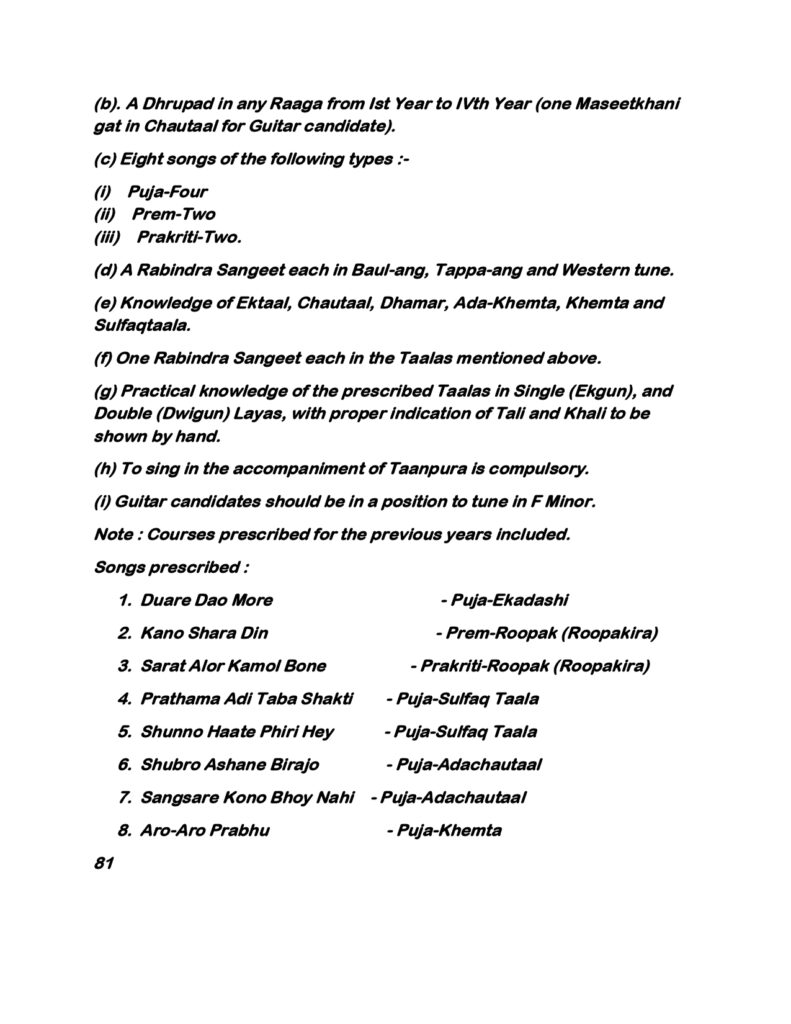
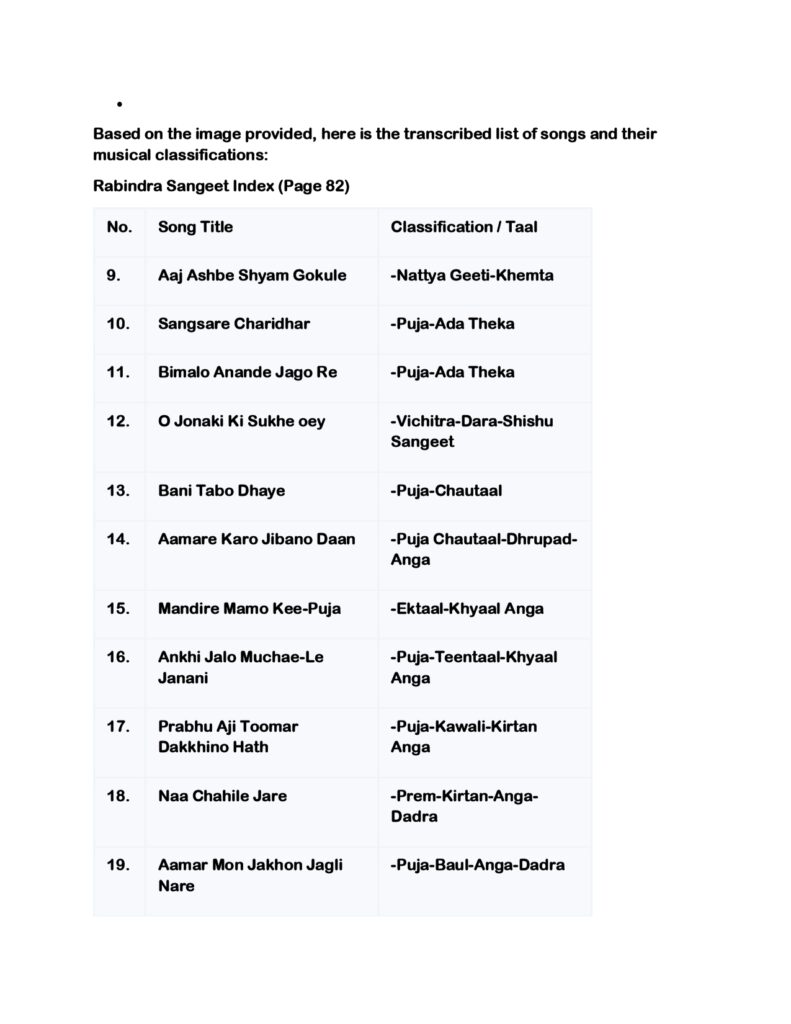
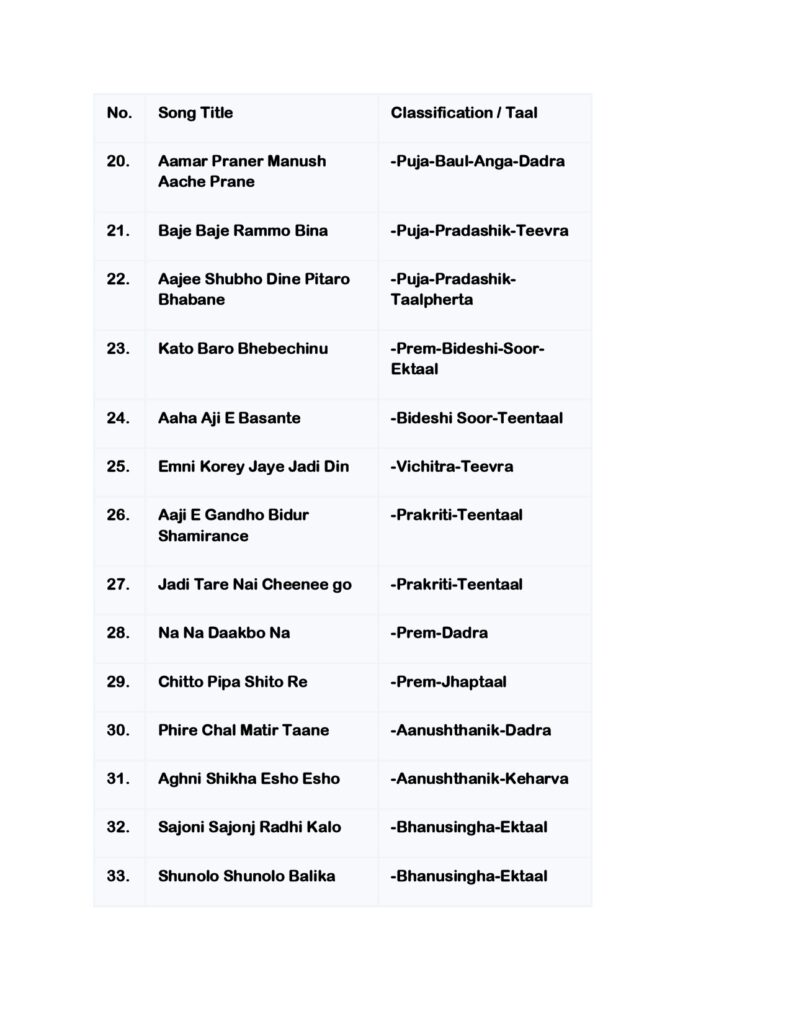
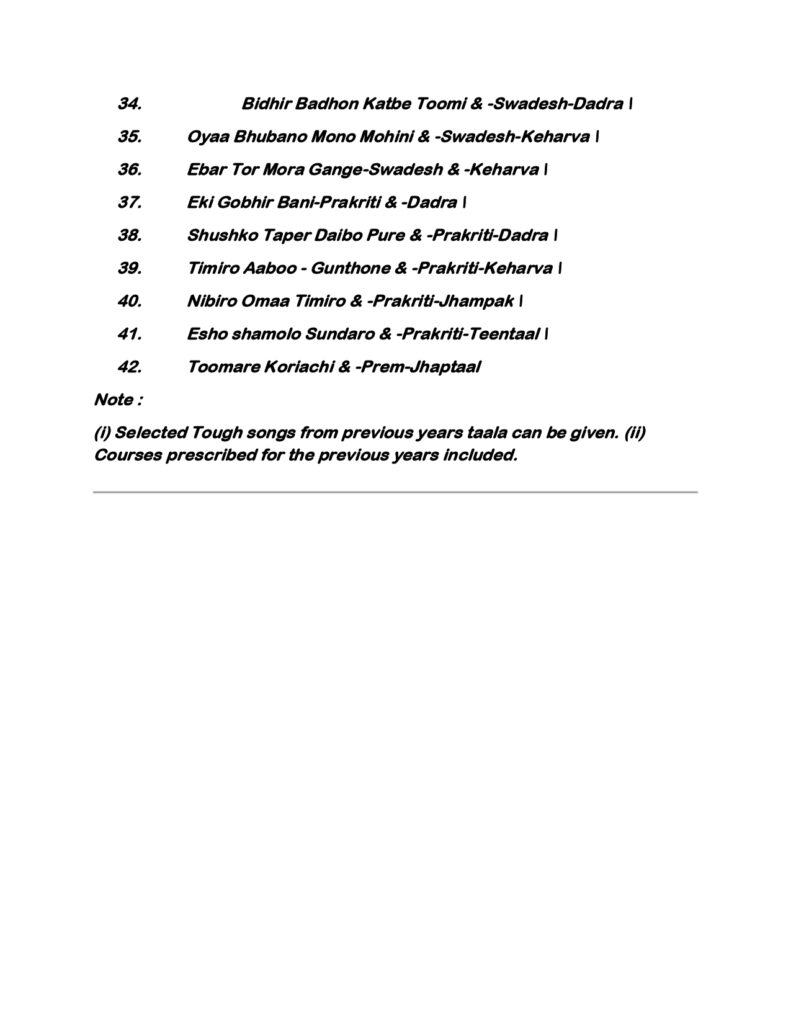
Sangeet Visharad is a prestigious qualification in Indian classical and semi-classical music education. Part-I (Fourth Year) represents an advanced level of learning, where students move beyond basic understanding and begin to interpret Rabindra Sangeet with depth, authenticity, and confidence.
At this level, learners are expected to:
- Demonstrate strong command over sur (notes) and laya (rhythm)
- Understand the philosophical meaning behind Tagore’s compositions
- Perform Rabindra Sangeet in both Vocal and Instrumental formats with stylistic purity
Essence of Rabindra Sangeet
Rabindra Sangeet beautifully blends Hindustani classical ragas, folk traditions, Baul music, and even Western melodic influences. The uniqueness lies in its emotional range—devotion, love, patriotism, nature, sorrow, and joy—all expressed with refined simplicity.
Unlike heavy classical improvisation, Rabindra Sangeet emphasizes:
- Bhava (emotion)
- Clear pronunciation of lyrics
- Faithful rendition of melody
This makes it both intellectually demanding and emotionally fulfilling.
Vocal Training in Fourth Year Rabindra Sangeet
In the vocal curriculum, students focus on advanced compositions prescribed by the syllabus. Emphasis is placed on:
- Voice modulation and clarity
- Proper uchharan (pronunciation) of Bengali lyrics
- Maintaining the original notation and tempo
- Expressive singing aligned with the song’s mood
Students are trained to avoid unnecessary ornamentation and instead highlight the lyrical beauty and melodic structure envisioned by Tagore. Regular riyaaz (practice) helps in achieving stability across octaves and sustaining long phrases effortlessly.
Instrumental Learning: Bringing Rabindra Sangeet to Life
Instrumental learners—whether playing Harmonium, Tabla, Violin, Flute, or other approved instruments—are taught to replicate the vocal style of Rabindra Sangeet. The goal is to make the instrument “sing.”
Key focus areas include:
- Accurate rendition of swaralipi (notation)
- Maintaining song-specific taals
- Synchronization between melody and rhythm
- Sensitivity to lyrical pauses and emotional transitions
For tabla players, understanding the subtle rhythmic framework without overpowering the melody is essential.
Role of Taal and Raga
Rabindra Sangeet employs a variety of taals such as Dadra, Keharwa, Tritaal, and Jhaptal, often in softer, more lyrical forms. Students in Part-I must identify and perform compositions with correct rhythmic cycles. While raga purity is respected, Rabindra Sangeet allows creative freedom within boundaries. This balance between structure and expression is a key learning outcome at the fourth-year level.
Examination and Performance Expectations
The Sangeet Visharad Part-I examination typically includes:
- Practical performance (Vocal or Instrumental)
- Theory examination covering composers, song meanings, taals, and notation
- Ability to explain the emotional and musical context of compositions
Examiners look for musical maturity, confidence, and adherence to Rabindra Sangeet aesthetics rather than flashy technique.
Cultural and Artistic Significance
Rabindra Sangeet continues to influence modern Indian music, films, stage productions, and global cultural festivals. Institutions like Visva-Bharati University, Shantiniketan, have played a vital role in preserving its authenticity.
Today, Rabindra Sangeet is performed not only in India but also across Bangladesh, Europe, the USA, and beyond, reflecting its timeless global appeal.
Conclusion: A Journey Worth Mastering
Sangeet Visharad Part-I (Fourth Year) in Rabindra Sangeet is more than an academic pursuit—it is a journey into refined artistry and soulful expression. Whether through voice or instrument, mastering this level equips students with deep musical understanding, cultural awareness, and emotional sensitivity.
For aspiring musicians, educators, and performers, Rabindra Sangeet offers a lifelong connection to music that transcends time. Embrace the discipline, immerse yourself in Tagore’s world, and let the music speak through you.
https://www.facebook.com/sbsinghtablaguru