
Indication of the-MASTER Tilwara Taal (16 Beats) 🎶 | The Definitive Guide to Mukhda, Gat, Tukra, Mohra & Paran
MASTER Tilwara Taal (16 Beats) 🎶 | The Definitive Guide to Mukhda, Gat, Tukra, Mohra & Paran
The rhythmic heart of Indian classical music beats with an astonishing complexity and beauty, and at its core lies the ancient system of Taal. For any serious student or enthusiast of Hindustani classical music, mastering the intricate cycles of Taal is a journey of profound discovery. Among the regal giants of this system, Tilwara Taal stands tall – a magnificent 16-beat cycle that, while sharing its rhythmic length with the ubiquitous Teen Taal, possesses a unique character and gravitas that sets it apart.
This definitive guide will not only introduce you to the grandeur of Tilwara Taal but will also equip you with a deep understanding of its essential compositional elements: Mukhda, Mohra, Gat, Tukra, and Paran. Prepare to unlock the secrets of this majestic rhythm and elevate your musical journey.
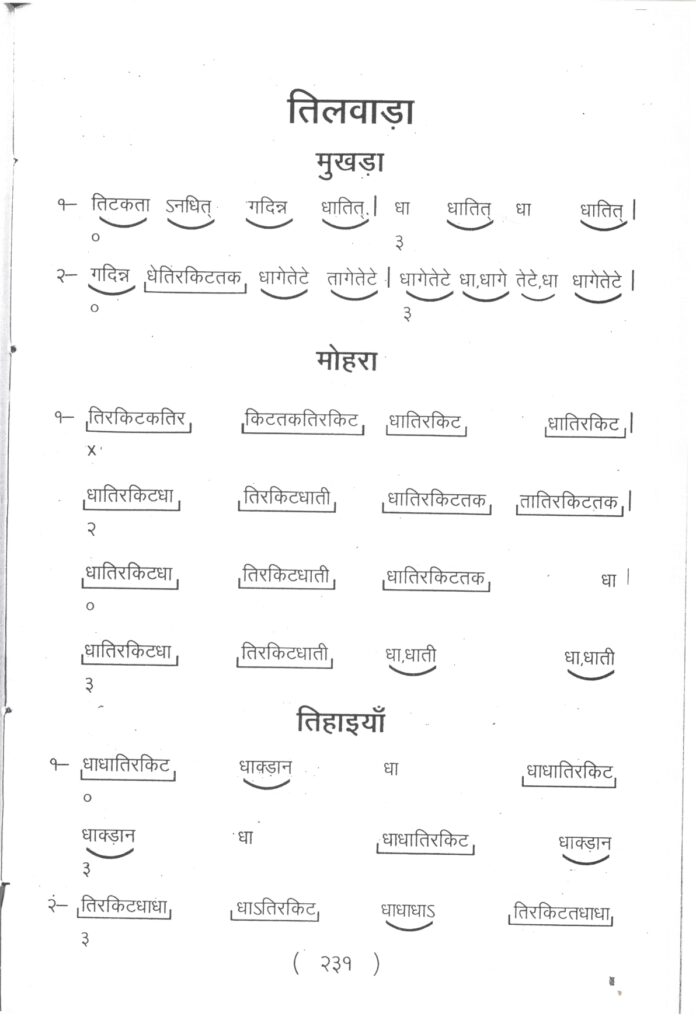
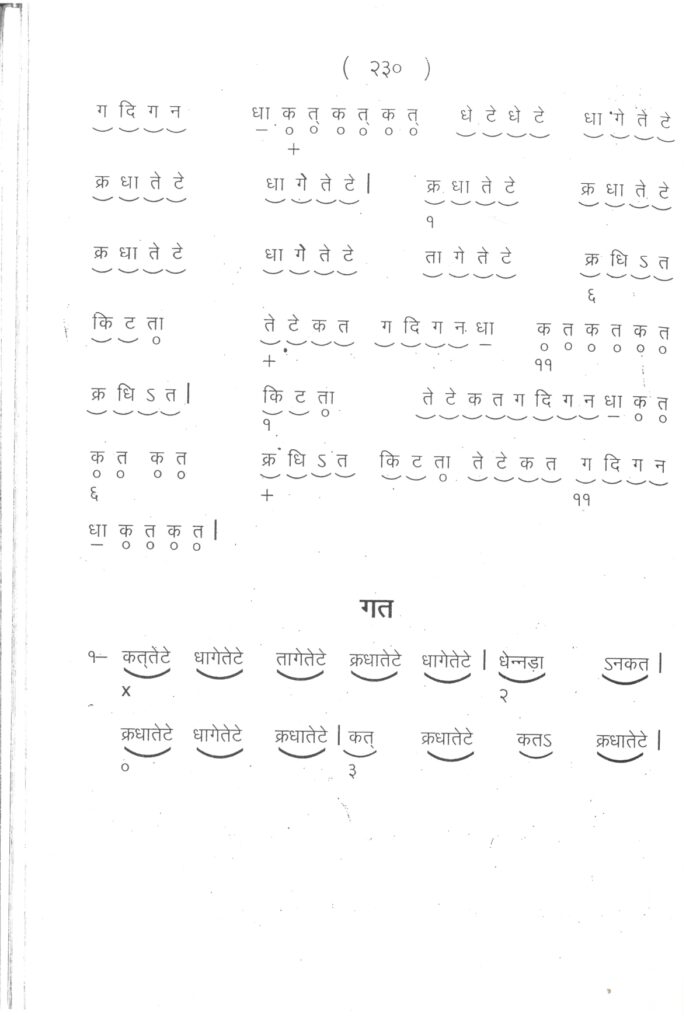
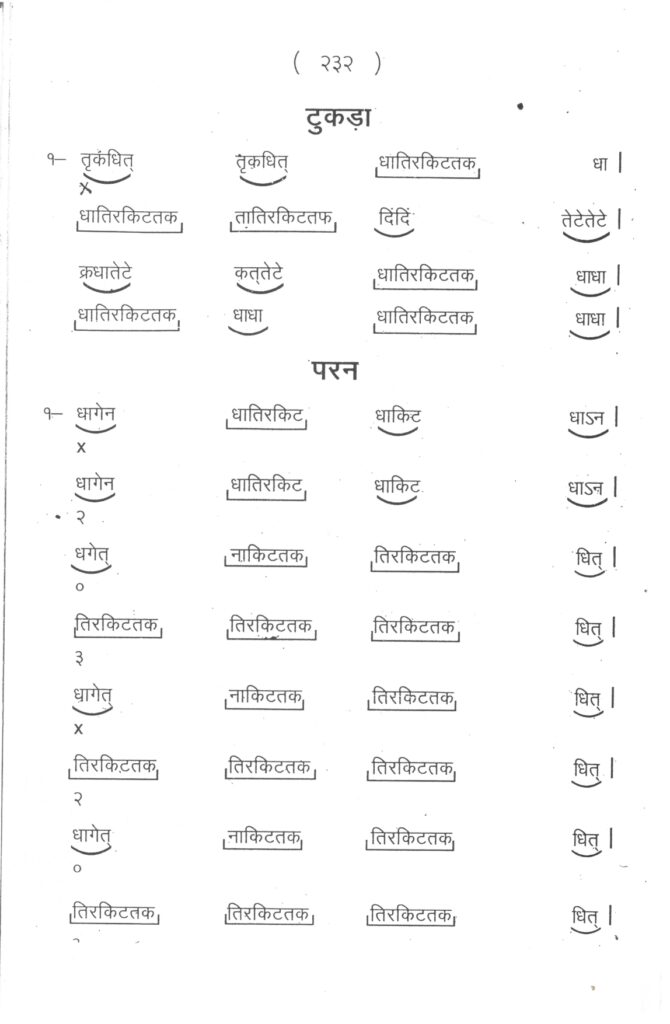
Understanding Tilwara Taal: The 16-Beat Marvel
Tilwara Taal, like Teen Taal, is a 16-beat cycle, but its internal division and the emphasis on its beats give it a distinct feel. While Teen Taal is typically divided into 4 sections of 4 beats each (4+4+4+4) with a clap on 1, 5, 13 and a wave (khali) on 9, Tilwara Taal has a more open and expansive structure that often feels grander and more deliberate.
Vibhags (Divisions) and Talis-Khali (Claps and Waves):
Tilwara Taal is divided into four sections of 4 beats each.
- Sum (Sam): The first beat (beat 1) is the most important beat, known as the ‘Sam,’ marked by a strong clap. This is the rhythmic home.
- Talis: Claps on beats 1, 5, and 13.
- Khali: A wave of the hand (empty beat) on beat 9, indicating a moment of repose or lift.
The unique character of Tilwara often comes from the specific bols (mnemonic syllables) used in its basic rhythmic pattern, or Theka. These bols contribute to its weighty and dignified sound, making it a favorite for accompanying slow, elaborate vocal and instrumental compositions (vilambit compositions).
The Essential Building Blocks of Tilwara:
Once you grasp the fundamental cycle of Tilwara, the next step is to explore the compositional forms that adorn and expand upon it. These elements are the vocabulary of a tabla player, allowing them to engage in rhythmic dialogue with a soloist.
1. Mukhda (The Face/Introduction)
A Mukhda (literally “face”) is a short, attractive rhythmic phrase that leads gracefully to the ‘Sam’ (the first beat) of the Taal. It acts as an introduction or a melodic prelude, often played at the end of a melodic phrase by the soloist, signaling the tabla player to join on the Sam. Mukhdas are usually 1 to 4 beats in length, though they can sometimes extend longer. Their beauty lies in their melodic and rhythmic appeal, creating anticipation for the return to the rhythmic home.
- Function: To lead to the Sam, often serving as a rhythmic “pick-up” or flourish.
- Key Characteristic: Short, sweet, and always resolves powerfully on the Sam.
2. Mohra (The Forehead Ornament)
Similar to a Mukhda, a Mohra is also a short, concluding phrase that leads to the Sam. However, Mohras are generally slightly longer and more developed than Mukhdas, often incorporating a wider variety of bols or a more intricate rhythmic pattern. While both lead to the Sam, Mohras tend to have a bit more weight and complexity in their structure, acting as a more elaborate rhythmic “ornament” to the beginning of the cycle.
- Function: A more elaborate rhythmic phrase leading to the Sam.
- Key Characteristic: More developed than a Mukhda, yet still concise and resolving on Sam.
3. Gat (The Walk/Movement)
A Gat (literally “gait” or “walk”) is a fixed compositional piece played on the tabla. Unlike Mukhdas or Mohras which lead to the Sam, a Gat typically starts on the Sam and covers a full cycle or multiple cycles of the Taal, showcasing a particular rhythmic pattern or style. Gats are often beautiful and melodic, demonstrating the tabla’s ability to create independent musical statements. They are often learned as set pieces and can be played repeatedly.
- Function: A self-contained, often melodic, rhythmic composition.
- Key Characteristic: Starts and ends on the Sam, typically spans a full cycle or more.
4. Tukra (A Piece/Fragment)
A Tukra (literally “piece” or “fragment”) is a short, rhythmic composition that can start at any point within the Taal cycle but always concludes on the Sam. Tukras are often more dynamic and percussive than Gats, featuring sharp accents and a driving rhythmic momentum. They are excellent for showcasing technical virtuosity and adding excitement to a performance. A Tukra can be anywhere from a few beats to several cycles long, but its defining feature is its powerful, conclusive arrival at the Sam.
- Function: Dynamic, percussive rhythmic flourishes that build tension and resolve on the Sam.
- Key Characteristic: Can start anywhere, ends emphatically on the Sam.
5. Paran (The Conclusion/End)
A Paran is a grand, elaborate composition typically found in Pakhawaj (another double-headed drum) repertoire but also adapted for Tabla. Parans are characterized by their robust bols, powerful delivery, and often lengthy and intricate rhythmic structures. They frequently incorporate bols inspired by dance, warfare, or nature. A Paran can span multiple cycles of the Taal and usually culminates in a forceful, often thrice-repeated phrase (Tihaai) that resolves perfectly on the Sam. Parans are used to create a dramatic and exhilarating conclusion to a section or piece.
- Function: A grand, powerful, and often lengthy composition designed for a dramatic conclusion.
- Key Characteristic: Robust bols, often from Pakhawaj tradition, usually ends with a Tihaai resolving on Sam.
Here’s an example of a Tabla Paran.

Why Master Tilwara Taal and Its Components?
Mastering Tilwara Taal and its various compositional forms is not merely about learning patterns; it’s about internalizing the very language of rhythm.
- Deepens Musical Understanding: You’ll develop a profound appreciation for rhythmic structure and improvisation.
- Enhances Performance: For tabla players, it provides a vast repertoire for accompanying diverse musical forms. For vocalists and instrumentalists, understanding these elements allows for more intuitive and dynamic interaction with percussion.
- Unlocks Creativity: These forms serve as templates for your own rhythmic creations and improvisations.
- Connects to Tradition: You become part of a centuries-old lineage of rhythmic mastery.
Your Journey Begins Now
Tilwara Taal, with its majestic 16 beats, offers a rich canvas for rhythmic expression. By diligently practicing its Theka and meticulously studying its Mukhdas, Mohras, Gats, Tukras, and Parans, you will not only conquer this formidable Taal but also significantly enrich your entire musical perspective. Embrace the challenge, enjoy the process, and let the powerful rhythms of Tilwara Taal resonate within you. Happy practicing!
https://www.youtube.com/@BhagawanSingh
https://www.facebook.com/sbsinghtablaguru