
Teen Taal Tukda: 16-Beat Tabla Bols – Learn the Beauty of Indian Classical Rhythm
Introduction
Indian classical music is famous throughout the world for its beautiful melodies, powerful rhythms, and rich musical traditions. Among the many rhythmic cycles in Indian classical music, Teen Taal (Teentaal) holds a very special position. It is one of the most popular taals in tabla playing and consists of 16 beats (Matras), divided into four equal sections of four beats each.
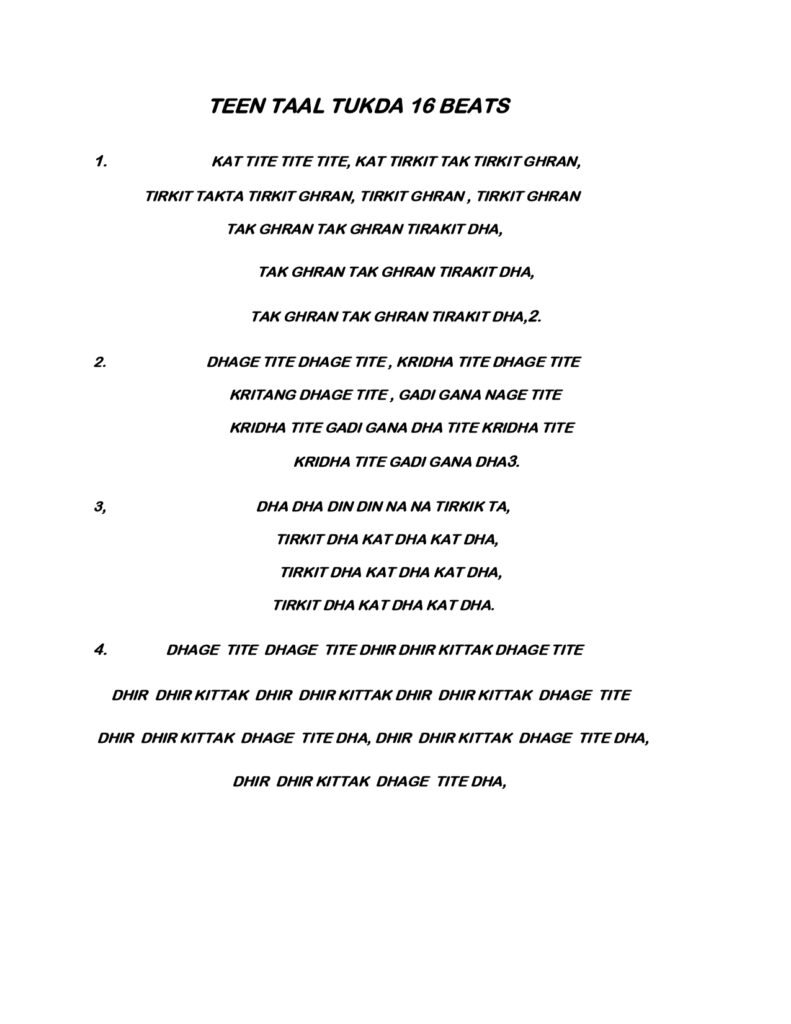
A Teen Taal Tukda is an attractive and rhythmic tabla composition that allows students and professional tabla artists to demonstrate their musical knowledge, creativity, speed, and command over rhythm. Learning Teen Taal Tukda is an important step for every tabla student who wants to improve their performance.
1. Understanding the 16-Beat Teen Taal
Teen Taal consists of 16 Matras and four Vibhags. Each Vibhag contains four beats. Its traditional structure is:
- Total Matras: 16
- First Vibhag: 4 beats
- Second Vibhag: 4 beats
- Third Vibhag: 4 beats
- Fourth Vibhag: 4 beats
- Tali: 1, 5 and 13
- Khali: 9
- Sam: First beat of the cycle
The counting is:
1 2 3 4 | 5 6 7 8 | 9 10 11 12 | 13 14 15 16
Understanding these 16 beats is essential for performing any Teen Taal composition correctly.
2. What Is a Teen Taal Tukda?
A Tukda is a short, structured tabla composition that generally finishes on Sam. It contains different combinations of traditional tabla bols arranged in a rhythmic pattern.The beauty of a Tukda lies in its attractive arrangement, clear pronunciation, rhythmic accuracy, and powerful ending. It is commonly performed during tabla solo presentations and classical music programmes.For students, learning Tukdas improves their understanding of rhythm and develops confidence in performing before an audience.
3. Teen Taal Tukda – Traditional Tabla Bols
Here is an example of a rhythmic bol pattern for practice:
Dha Tirakita Dha Dha | Tirakita Dha Ge Na
Dha Tirakita Dha Dha | Tirakita Dha Ge Na
Ta Tirakita Ta Ta | Tirakita Dha Ge Na
Dha Tirakita Dha Dha | Dha Ge Na – Sam
Students should practise each phrase slowly and maintain the correct rhythmic cycle. They should also learn to pronounce every bol properly before playing it on the tabla.
4. Importance of Tabla Bols
Tabla bols are the foundation of tabla education. Every student must understand the pronunciation, sound, and playing technique of different bols.
Some commonly used tabla bols include:
- Dha
- Dhin
- Na
- Tin
- Ta
- Ge
- Ke
- Tirakita
- Tak
- Dhage
Combining these bols creates beautiful rhythmic compositions. A good tabla artist always maintains clarity and balance while playing.
5. Improve Your Rhythm and Layakari
Layakari is an important aspect of Indian classical rhythm. It involves playing rhythmic patterns in different speeds and mathematical arrangements while maintaining the original taal.Practising Teen Taal Tukda helps students develop a strong sense of rhythm, timing, concentration, and mathematical understanding.Students should begin with Vilambit or slow practice, gradually move towards Madhya Laya, and eventually practise at Drut Laya according to their ability.The most important thing is to maintain the correct rhythm rather than simply increasing speed.
6. The Importance of Sam in Teen Taal
Sam is the first beat of the rhythmic cycle and has great importance in Indian classical music.A beautiful Tukda should reach Sam accurately. This requires proper understanding of Matras, rhythmic calculations, and the arrangement of bols.When a tabla player reaches Sam with confidence and precision, the composition creates a powerful musical impact.This is why every tabla student should practise counting the 16 beats while reciting and playing the Tukda.
7. Learn Tabla with Proper Guidance
Learning tabla requires dedication, patience, regular practice, and the guidance of an experienced teacher. At Tabla Nawaz Academy, students receive systematic training in Indian classical tabla. They learn traditional compositions, including Teen Taal Tukda, Kayda, Palta, Rela, Tihai, Chakradar, Paran, and other important rhythmic patterns.The academy encourages students to develop their musical knowledge, practical skills, stage confidence, and understanding of traditional tabla techniques.With proper guidance, students can prepare themselves for examinations, competitions, cultural programmes, and professional performances.
8. Daily Practice Is the Key to Success
Every tabla student should make regular practice a part of their daily routine. Start by reciting the bols, then practise slowly on the tabla. Pay attention to hand movements, sound quality, timing, and rhythm.Listening to experienced tabla artists and observing their performances can also help students understand the beauty of Indian classical music.Remember, becoming a skilled tabla player requires discipline, determination, and continuous learning.
Conclusion
Teen Taal Tukda is much more than a 16-beat rhythmic composition. It represents the beauty, mathematics, discipline, and creativity of Indian classical tabla music.
By learning the correct tabla bols, understanding the structure of Teen Taal, and practising regularly, students can improve their musical abilities and perform with confidence.
Keep Learning, Keep Practising, and Keep the Tradition of Indian Classical Tabla Alive!
Tabla Nawaz Academy – Promoting the Beauty of Tabla and Indian Classical Music.
Meta Description: Learn Teen Taal Tukda with 16-beat tabla bols, traditional rhythms, Sam, Tali, Khali and practical tabla lessons at Tabla Nawaz Academy.
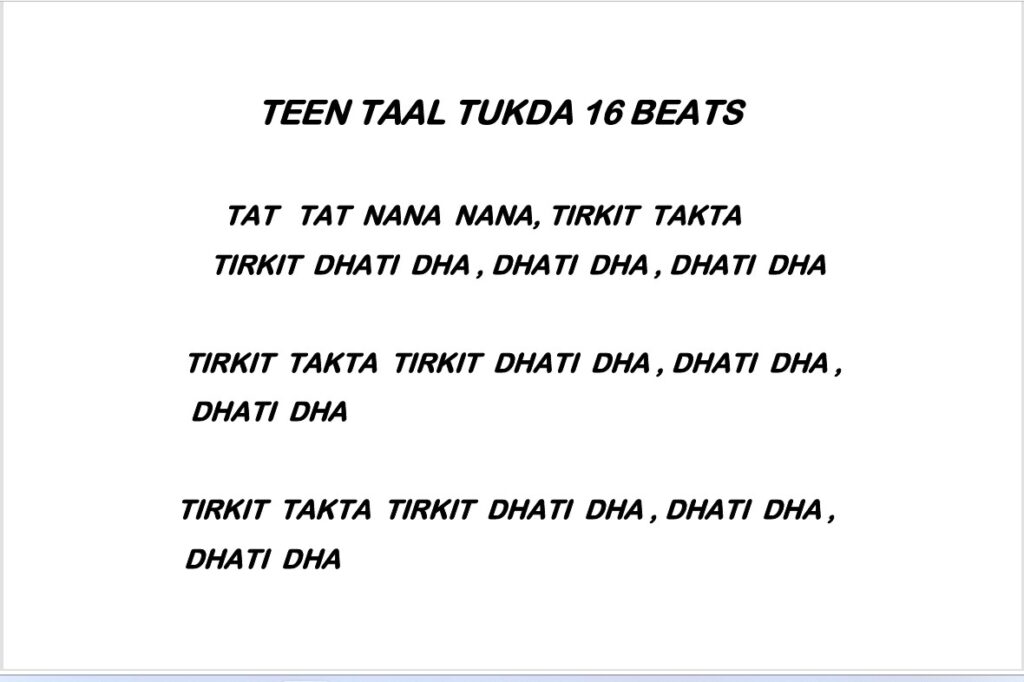
Tukra No-2

Mukhra


https://www.youtube.com/@BhagawanSingh
Teen Taal Tukda