
Introducing the- Sool Taal 10 Beats Tukda: The Ultimate 2026 Guide to Speed & Precision
In the vast universe of Indian classical rhythm, few talas challenge a tabla player’s sense of balance, clarity, and control like Sool Taal. With its 10-beat (matra) structure, Sool Taal occupies a unique space—less common than Teen Taal or Ek Taal, yet deeply respected for its complexity and elegance. In 2026, as tabla education becomes more globally accessible, mastering the Sool Taal Tukda has emerged as a powerful benchmark of speed and precision for serious students and performers.
Understanding Sool Taal: The Foundation


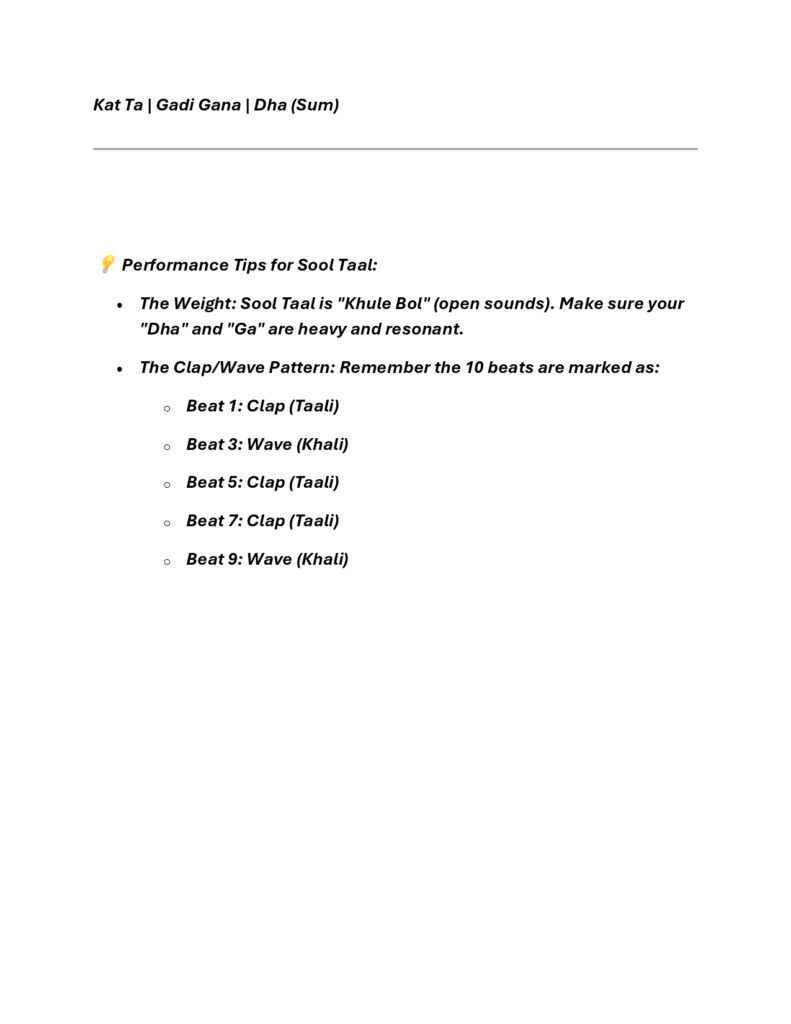
Sool Taal consists of 10 matras, traditionally divided into four vibhags in the pattern 2 + 2 + 2 + 2 + 2. Each division is marked with a taali, making it a taali-dominant taal that demands continuous awareness of the cycle. Unlike more familiar talas, Sool Taal offers no khaali to rest the mind—every beat requires focus. This continuous structure makes Sool Taal both mentally and technically demanding. A small lapse in counting or phrasing can disturb the entire cycle. Therefore, before attempting tukdas, a strong internalization of the theka and lay (tempo) is essential.
What Makes a Sool Taal Tukda Special?
A tukda is a short, powerful composition designed to conclude decisively on the sam. In Sool Taal, the tukda becomes even more significant because the 10-beat cycle does not allow much rhythmic “breathing space.” Every bol must be placed with intention.
Sool Taal tukdas are admired for:
- Compact structure
- High-speed execution
- Clear bol articulation
- Mathematical accuracy
- Perfect sam landing
In performance and examinations, a clean Sool Taal tukda demonstrates a tabla player’s command over rhythm, speed, and mental calculation.
Speed Meets Precision: The Core Challenge
The biggest challenge of a Sool Taal tukda lies in maintaining speed without losing clarity. Because the taal is shorter than Teen Taal, phrases repeat more quickly, leaving little margin for error. Rapid bol patterns like Dha Tite Kita, Tirkit, and Kat Tak must remain crisp even at fast tempos. Precision is equally important. Each phrase must align exactly with the 10-beat framework. Overplaying or underplaying by even half a matra can disrupt the tukda’s final tihai or sam resolution. This makes Sool Taal an excellent training ground for developing rhythmic discipline.
Step-by-Step Practice Approach (2026 Method)
Modern tabla pedagogy in 2026 emphasizes structured learning. Here is a practical approach to mastering Sool Taal tukdas:
- Internalize the Theka
Practice the Sool Taal theka slowly with clear counting. Vocalize the matras while playing to strengthen internal rhythm. - Start in Vilambit Laya
Begin tukda practice at a slow tempo. Focus on bol clarity and even spacing rather than speed. - Gradual Tempo Increase
Use a metronome or lehra app to increase speed incrementally. Never sacrifice clarity for pace. - Isolate Problem Phrases
Break the tukda into smaller segments. Practice difficult bol clusters separately before rejoining them. - Sam Awareness Training
Practice ending the tukda repeatedly on sam. This builds confidence and performance readiness.
Sool Taal Tukda in Exams and Performance
In academic settings such as Visharad, Praveen, and diploma examinations, presenting a well-structured Sool Taal tukda leaves a strong impression on examiners. It reflects advanced understanding and dedication beyond common talas. On stage, Sool Taal tukdas add variety and sophistication to tabla solos. Audiences—especially knowledgeable listeners—recognize the courage and skill required to perform confidently in this taal.
Why Sool Taal Matters in 2026
As Indian classical music continues to gain international attention, there is growing interest in rare and semi-rare talas. Sool Taal represents depth, authenticity, and classical seriousness. Mastering its tukdas prepares tabla players for both traditional concerts and global platforms.
Conclusion
The Sool Taal 10 Beats Tukda is more than a rhythmic exercise—it is a test of musical maturity. In 2026, it stands as a symbol of speed guided by discipline and precision shaped by understanding. For tabla players seeking to elevate their art, conquering Sool Taal tukdas is not just an achievement—it is a transformation.
https://www.facebook.com/sbsinghtablaguru
https://www.youtube.com/@BhagawanSingh