
The Master Rupak Taal Kayda 4: Dha Tirkit Dha Tirkit Dhina Gina – Complete Tabla Tutorial
Introduction: Discover the Beauty of Rupak Taal
Rupak Taal is one of the most beautiful and versatile rhythms in Indian classical tabla music. With its distinctive seven-beat cycle, it offers tabla students an excellent opportunity to develop rhythmic accuracy, clarity, speed, and creativity.
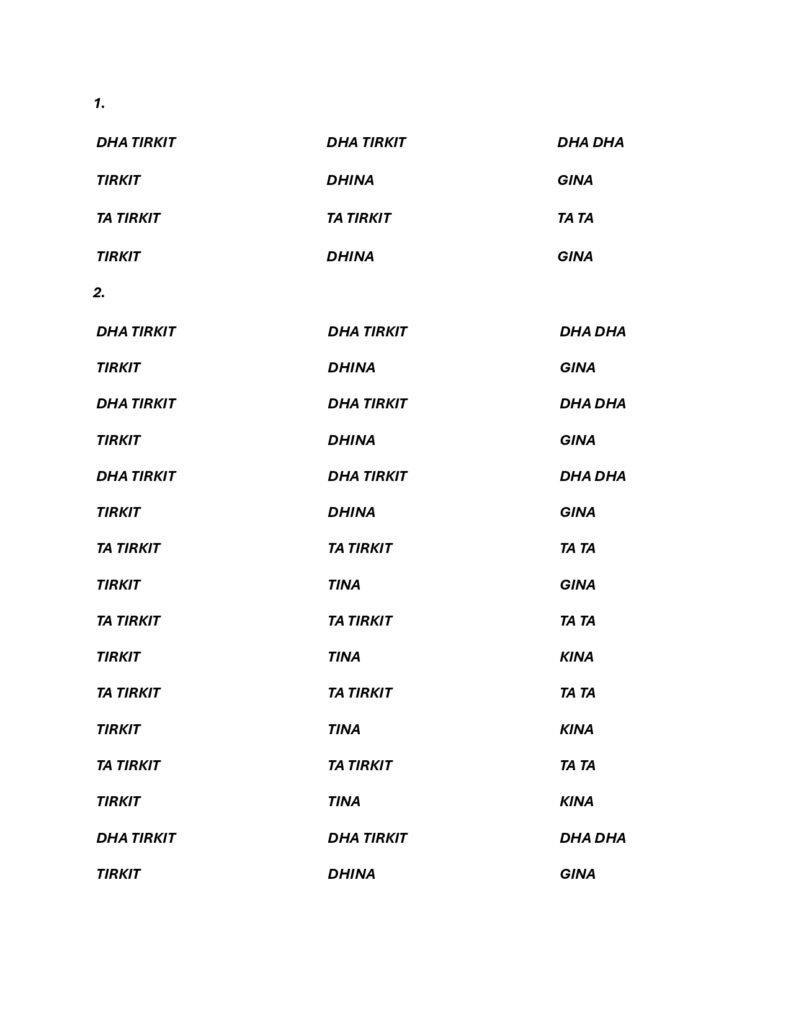
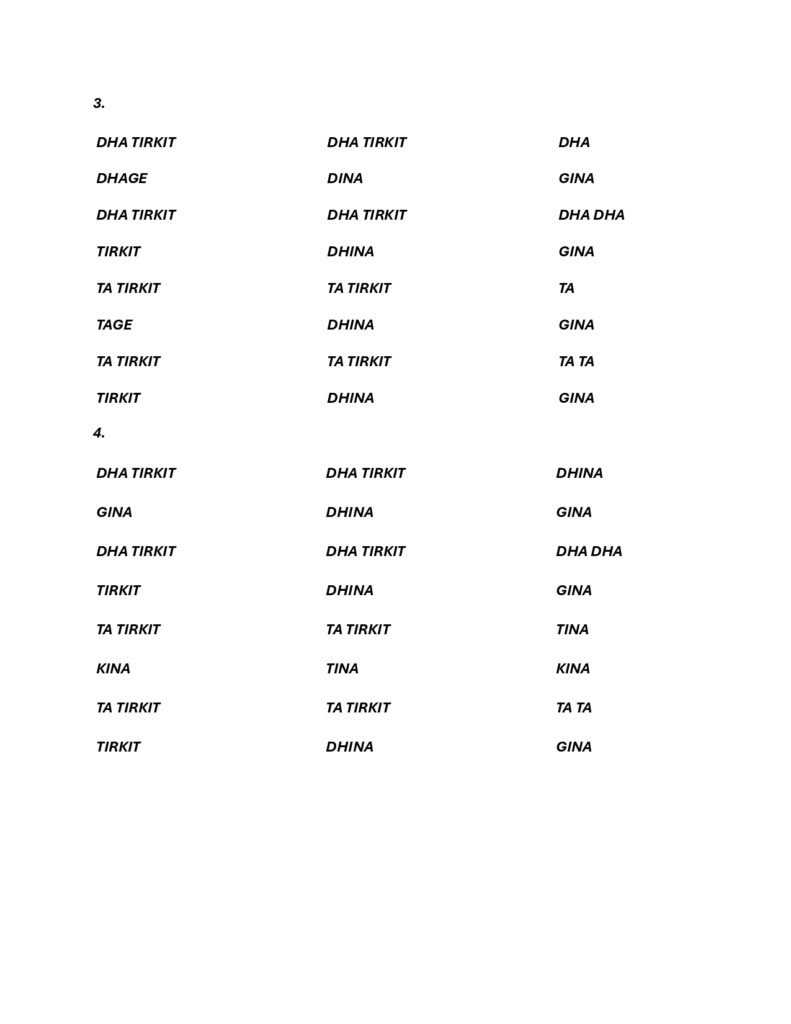
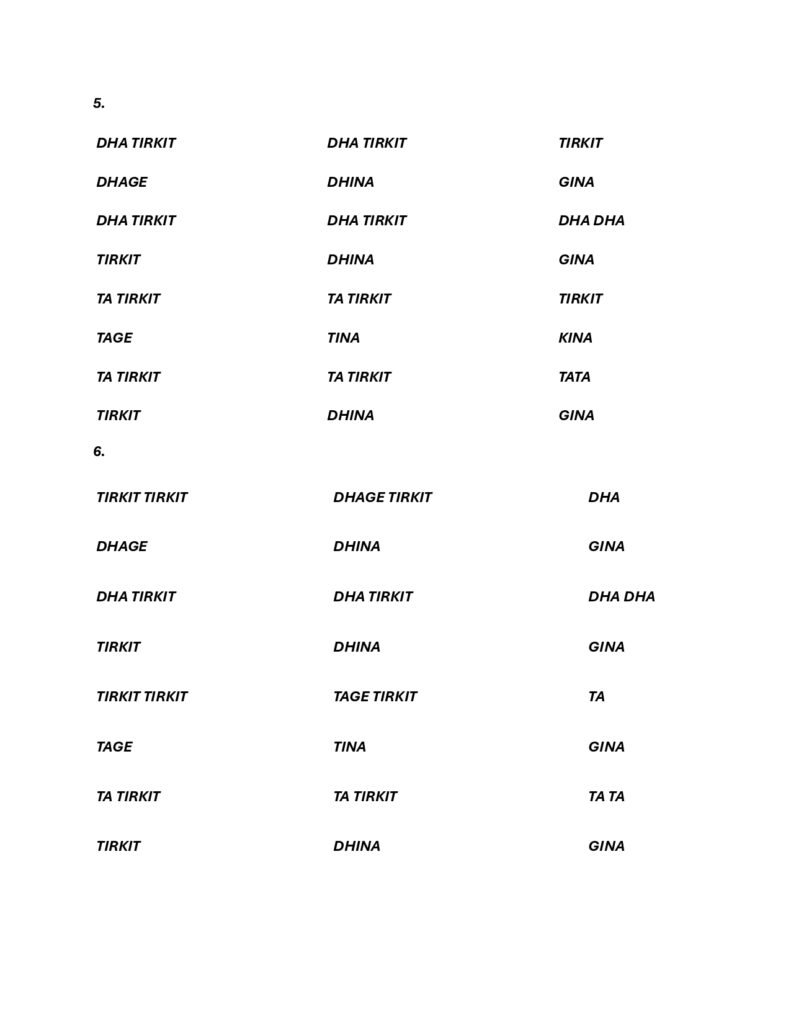
In this tutorial, we will explore The Master Rupak Taal Kayda 4: Dha Tirkit Dha Tirkit Dhina Gina. This kayda is an excellent composition for tabla learners who want to improve their finger technique, understand traditional kayda development, and strengthen their command over Rupak Taal.
Whether you are a beginner developing your tabla skills or an intermediate student exploring advanced rhythmic patterns, this lesson will help you understand the composition step by step.
1. Understanding Rupak Taal
Before learning the kayda, let’s understand its taal structure.
Rupak Taal consists of seven matras (beats), divided into three vibhags (sections).
Rupak Taal Structure:
- Total Matras: 7
- Vibhags: 3
- Division: 3 + 2 + 2
- First Vibhag: Khali (wave)
- Second Vibhag: Tali (clap)
- Third Vibhag: Tali (clap)
The traditional theka of Rupak Taal is:
Tin Tin Na | Dhin Na | Dhin Na
The counting pattern is:
0 2 3
This means the first beat begins with Khali, followed by claps on the fourth and sixth matras.
Understanding this structure is essential because every kayda must maintain the rhythmic framework of the taal.
2. Introducing Kayda Number 4
Our featured composition is:
<escape>Dha Tirkit Dha Tirkit Dhina Gina</escape>
This kayda combines powerful strokes with delicate, fast finger movements. The bols create an interesting rhythmic texture and provide an opportunity to develop both hand coordination and tonal clarity.
Let’s understand the individual bols:
- Dha: A combined stroke played using both hands.
- Tirkit: A combination of quick finger strokes that develops speed and precision.
- Dhina: A traditional combination of tabla strokes.
- Gina: A rhythmic phrase that helps develop finger control and fluency.
The most important aspect of this kayda is maintaining equal rhythmic spacing and keeping the bols clean.
3. How to Practise the Kayda
Start by reciting the bols verbally before playing them on the tabla.
Main Kayda:
Dha Tirkit Dha Tirkit Dhina Gina
First, practise slowly. Focus on producing a clear sound for every stroke. Avoid rushing through the Tirkit combinations.
Once you become comfortable, gradually increase the tempo.
Remember these three important principles:
- Clarity: Every bol should sound distinct.
- Rhythm: Maintain the seven-matra Rupak Taal cycle.
- Control: Keep your fingers relaxed and movements natural.
Use a metronome or lehra to maintain a consistent tempo.
4. Developing the Kayda
A kayda is not simply a fixed rhythmic composition. It is a structured form that can be developed through variations known as palta.
After learning the mukh (main theme), students should practise creating variations while maintaining the original bol vocabulary and rhythmic framework.
For this composition, explore different combinations of Dha, Tirkit, Dhina, and Gina.
Pay special attention to returning to the original mukh at the correct point in the taal cycle.
This practice develops rhythmic imagination and prepares students for more advanced tabla compositions.
5. Tips for Improving Your Tabla Performance
Here are some useful practice suggestions:
Practise with a slow lehra: Begin with a comfortable speed and concentrate on accuracy.
Use a tabla recording: Listen carefully to experienced players to understand the sound and balance of each stroke.
Practise both hands: Develop coordination between Dayan and Bayan.
Record your practice: Listening to your own performance can help identify timing and clarity issues.
Increase speed gradually: Never sacrifice the quality of bols for speed.
Consistency is more important than practising at a very high tempo.
6. Why Learn Rupak Taal Kayda 4?
This composition offers several learning benefits:
- Improves finger flexibility and coordination.
- Develops understanding of seven-beat rhythmic cycles.
- Strengthens the ability to perform Tirkit combinations.
- Builds confidence in kayda and palta presentation.
- Encourages creativity in traditional tabla playing.
Rupak Taal is also frequently explored in Hindustani classical music, making it a valuable taal for students interested in accompanying vocalists, instrumentalists, and dancers.
7. Your Tabla Practice Challenge
Ready to test your rhythmic understanding?
Try this simple challenge:
- Recite the Rupak Taal theka three times.
- Play the main kayda slowly.
- Repeat it while maintaining the correct seven-matra cycle.
- Practise without losing the original rhythmic structure.
Can you perform the composition clearly at three different tempos?
Remember, mastering a kayda takes patience, listening, and regular practice.
Conclusion: Master the Rhythm, Master the Art
The Master Rupak Taal Kayda 4: Dha Tirkit Dha Tirkit Dhina Gina is an exciting composition for tabla students looking to improve their rhythmic understanding and technical skills.
By practising the main kayda, exploring its variations, and maintaining the correct Rupak Taal structure, you can gradually develop greater confidence and musical expression.
The secret to becoming a good tabla player is not simply playing fast but playing with clarity, discipline, and a deep understanding of taal.
Keep practising, keep exploring, and let the rhythm guide your musical journey!
Share your experience: Have you learned this Rupak Taal Kayda? Leave a comment and share your favourite tabla practice technique with fellow students.
Happy Tabla Riyaz!
https://www.youtube.com/@BhagawanSingh