
Rudra Taal Tukda: Master the 11-Beat Rhythm
Indian classical music is celebrated for its rich rhythmic traditions, and the Rudra Taal is one of its most fascinating rhythmic cycles. With 11 beats (matras), Rudra Taal challenges musicians to think beyond common rhythmic patterns while opening the door to creative expression. For tabla players, learning a Rudra Taal Tukda is an exciting milestone that strengthens timing, coordination, and performance skills. Whether you’re a beginner eager to explore uncommon taals or an experienced tabla enthusiast looking to expand your repertoire, mastering a Rudra Taal Tukda will deepen your understanding of rhythm and enhance your musical confidence.
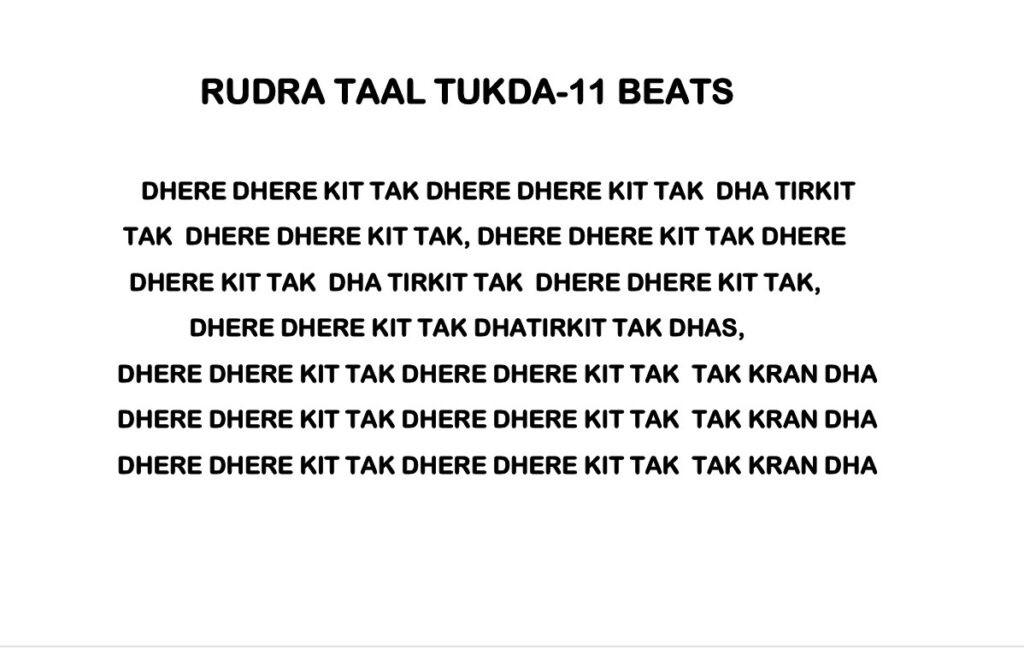
What Is Rudra Taal?
Rudra Taal is a traditional 11-beat (11-matra) rhythmic cycle found in Hindustani classical music. Unlike the more frequently performed Teentaal (16 beats) or Dadra (6 beats), Rudra Taal is considered a rare and advanced taal. Its asymmetrical structure creates unique rhythmic possibilities, making it especially appealing for solo tabla performances and rhythmic improvisation. The name “Rudra” is associated with Lord Shiva, symbolizing power, energy, and transformation. Just as Shiva’s cosmic dance represents rhythm in motion, Rudra Taal embodies a dynamic and expressive flow that inspires performers to push their rhythmic creativity.
Understanding the Structure
The beauty of Rudra Taal lies in its distinctive 11-beat cycle. Different musical traditions may present slight variations in the divisions (vibhags), but the most important aspect is maintaining a steady pulse and recognizing the Sam—the first and most significant beat of the cycle.
When practicing Rudra Taal:
- Count all 11 beats evenly.
- Identify the Sam clearly.
- Practice slowly before increasing speed.
- Use a metronome or tabla lehra for consistent timing.
Mastering the cycle first makes learning any Tukda much easier.
What Is a Tukda?
A Tukda is a short, energetic tabla composition that usually ends dramatically on the Sam. Tukdas are widely performed in tabla solo concerts and are appreciated for their speed, precision, and memorable rhythmic patterns. A Rudra Taal Tukda combines technical skill with mathematical accuracy. Since the taal has an unusual beat cycle, every phrase must be carefully designed so that the ending lands perfectly on the Sam. This balance between creativity and precision is what makes playing a Tukda so rewarding.
Practice Tips for Beginners
Learning Rudra Taal requires patience and regular practice. Here are a few effective strategies:
- Clap and count the 11-beat cycle before playing.
- Recite the bols aloud to develop rhythmic clarity.
- Begin at a slow tempo and gradually increase speed.
- Practice each phrase separately before combining them.
- Record your practice sessions to identify timing errors.
Consistency is more valuable than speed. Even 20–30 minutes of focused daily practice can produce significant improvement over time.
Why Learn Rudra Taal?
Exploring uncommon taals broadens your rhythmic vocabulary and prepares you for more advanced tabla compositions. Learning Rudra Taal helps you:
- Develop stronger rhythm control.
- Improve mathematical understanding of tala.
- Enhance improvisation skills.
- Build confidence for solo performances.
- Expand your knowledge of Hindustani classical music.
Many accomplished tabla maestros encourage students to study rare taals because they improve listening skills and deepen musical awareness.
Listening to the Masters
One of the best ways to understand Rudra Taal is by listening to experienced tabla artists. Legendary maestros such as Ustad Zakir Hussain, Pandit Anindo Chatterjee, Pandit Kumar Bose, Pandit Swapan Chaudhuri, and Pandit Suresh Talwalkar have inspired generations of percussionists through their remarkable command of rhythm.
Although performances specifically in Rudra Taal are less common than those in Teentaal or Jhaptaal, studying the rhythmic ideas of these artists can help you appreciate advanced phrasing, clarity of bols, and graceful improvisation.
Search for live tabla solo performances on YouTube or music platforms and observe how experienced performers maintain the cycle while creating exciting rhythmic variations.
The Joy of Mastering an 11-Beat Rhythm
Every uncommon taal teaches a new way of thinking about rhythm. Rudra Taal encourages patience, concentration, and creativity, making it an excellent choice for serious tabla students. As your confidence grows, you’ll discover that even an asymmetrical 11-beat cycle begins to feel natural and expressive.
The satisfaction of ending a beautifully played Tukda exactly on the Sam is unmatched. It reflects not only technical skill but also a deep connection with the rhythmic language of Indian classical music.
Final Thoughts
Mastering a Rudra Taal Tukda is a rewarding journey that challenges both the mind and the hands. Its unique 11-beat structure develops precision, creativity, and confidence while introducing musicians to one of the lesser-known treasures of Hindustani rhythm.
Whether you’re practicing for a performance, preparing for music examinations, or simply expanding your tabla knowledge, Rudra Taal offers endless opportunities for growth. Stay consistent, practice mindfully, listen to great maestros, and enjoy every step of your rhythmic journey.