
Paran in Ektaal 12 Beats: Powerful Tabla Rhythm for Mastery
The Paran in Ektaal (12 Beats) is one of the most powerful and exciting compositions in Indian tabla tradition. Known for its energetic bols, strong rhythmic character, and impressive presentation, a well-practiced Paran can significantly improve a tabla player’s control, confidence, clarity, and understanding of rhythm. For students and advanced learners alike, mastering Paran in Ektaal is an important step toward developing a deeper command of tabla.
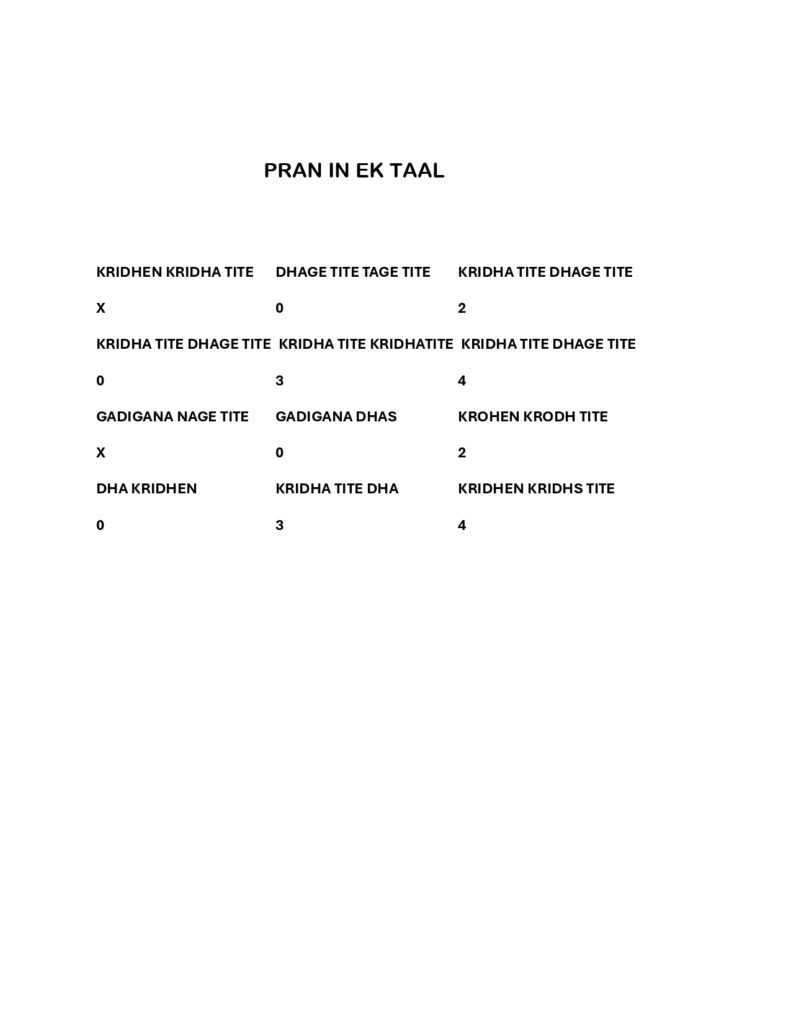
Understanding Ektaal
Ektaal is a classical tala consisting of 12 matras (beats). It is widely used in Hindustani classical music and is especially important for tabla players who want to develop advanced rhythmic skills.
The 12 beats of Ektaal are traditionally organized into six divisions of two beats each. Its structure gives musicians a distinctive rhythmic framework while allowing considerable creative freedom. Because of its balanced yet sophisticated pattern, Ektaal is an excellent tala for learning compositions such as Peshkar, Kayda, Rela, Tukda, and Paran.
What Is a Paran?
A Paran is a powerful rhythmic composition traditionally associated with the Pakhawaj tradition and later adapted into tabla performance. Unlike lighter compositions, Paran often uses bold and resonant bols that create a majestic and dramatic sound.
Parans can include bols such as Dha, Dhin, Ta, Kita, Ghe, Kat, Dhum, and Tak, depending on the composition and gharana tradition. Their strong character makes them particularly effective during performances, especially when presented with confidence and precise rhythmic control.
A Paran in Ektaal must fit accurately within the 12-beat cycle. This requires the player to understand not only the bols but also their exact placement within the tala.
Why Learn Paran in Ektaal?
Learning Paran in Ektaal offers several benefits. First, it develops rhythmic accuracy. A player must maintain the 12-matra cycle while performing a composition containing powerful and sometimes complex bol patterns.
Second, it improves stroke clarity and coordination. Paran bols often require controlled hand movements and precise articulation. Regular practice helps develop both hands and strengthens the connection between rhythm and physical technique.
Third, Paran improves performance confidence. Its powerful sound can make an excellent impact during a tabla recital. When performed with correct tempo, clear bols, and a strong sense of Sam, it demonstrates the maturity of the player.
The Importance of Sam
One of the most important aspects of performing a Paran is reaching the Sam correctly. Sam is the first and most important beat of the tala cycle. It provides the rhythmic point of resolution and gives the composition its sense of completion.
Students should practice counting the 12 beats while reciting the Paran. Once the bol pattern becomes familiar, they can gradually increase the tempo without losing the tala structure.
A useful approach is to practice slowly, paying special attention to where the composition begins and where it concludes. Accuracy should always come before speed.
Practice Method for Beginners and Advanced Students
A systematic practice routine can make Paran in Ektaal much easier to master.
Begin by reciting the bols clearly without playing them on the tabla. Next, count the 12 matras using hand gestures or a metronome. After understanding the placement, play the Paran slowly on tabla.
Practice each section separately before joining the complete composition. Focus on producing clean, resonant strokes rather than trying to play quickly.
Once the composition becomes comfortable, gradually increase the tempo. Finally, practice returning naturally to the Sam. This process develops both technical strength and rhythmic confidence.
Paran as a Performance Composition
A beautifully performed Paran can become a highlight of a tabla recital. Its strong rhythmic character creates excitement and demonstrates the artist’s command of tala.
However, power alone is not enough. A great performance requires clarity, balance, timing, dynamics, and discipline. The bols should be audible and well-defined, while the 12-beat Ektaal cycle should remain firmly established in the listener’s mind.
Advanced tabla players can also explore variations in tempo and presentation while maintaining the fundamental structure of the composition.
Conclusion
Paran in Ektaal 12 Beats is much more than a fast or powerful tabla composition. It is an excellent exercise for developing rhythmic precision, bol clarity, coordination, confidence, and performance skills. By practicing the composition slowly, understanding every matra, concentrating on the Sam, and gradually increasing speed, students can build a strong foundation for advanced tabla playing.
For anyone serious about mastering Indian classical percussion, learning Paran in Ektaal is a rewarding journey. With regular practice, patience, and guidance from an experienced tabla teacher, this powerful rhythmic composition can become an impressive part of a player’s repertoire and a true expression of tabla artistry.
https://www.facebook.com/sbsinghtablaguru