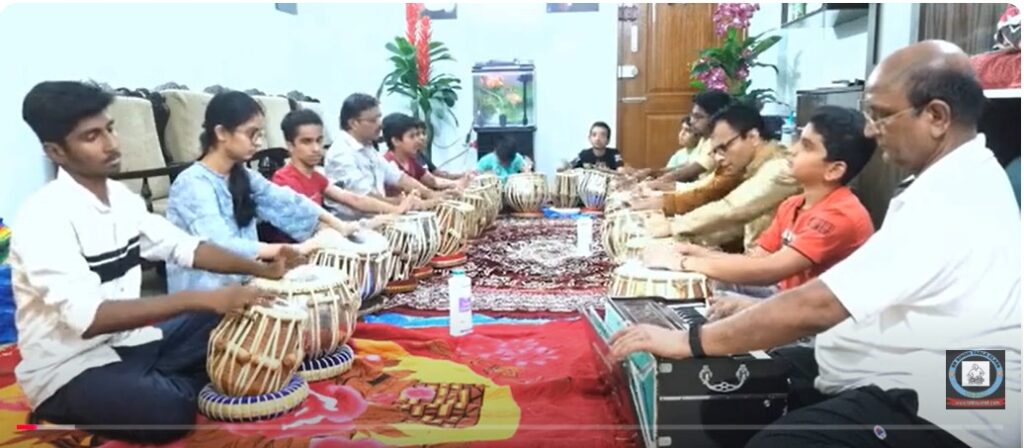
Pancham Sawari Taal (15 Beats) Masterclass | Complete Theka, Notation & Practice Loop (2026)
Introduction
Among the many rhythmic treasures of Hindustani classical music, Pancham Sawari Taal holds a unique and exciting position. With its 15-beat (matra) cycle, this taal breaks away from the comfort of even-numbered rhythms and invites musicians and dancers into a world of refined complexity. Often associated with advanced tabla repertoire and expressive Kathak performances, Pancham Sawari is a must-learn taal for students looking to elevate their rhythmic understanding in 2026 and beyond. A fascinating hook: taals like Pancham Sawari are frequently used by maestros to subtly test a performer’s command over laya (tempo) and mathematical precision—without the audience even realizing it.
Historical Background of Pancham Sawari
Pancham Sawari has its roots in the Sawari family of taals, which are known for their uneven yet flowing rhythmic structures. Historically, it evolved as musicians experimented with odd-numbered matras to move beyond popular taals such as Teentaal (16) and Jhaptaal (10). The word “Pancham” refers to the fifth subdivision emphasis, giving this taal its characteristic internal pulse. Over time, Pancham Sawari became popular among tabla players for solo performances and later found a strong place in Kathak due to its dramatic rhythmic potential.
Structure of Pancham Sawari Taal
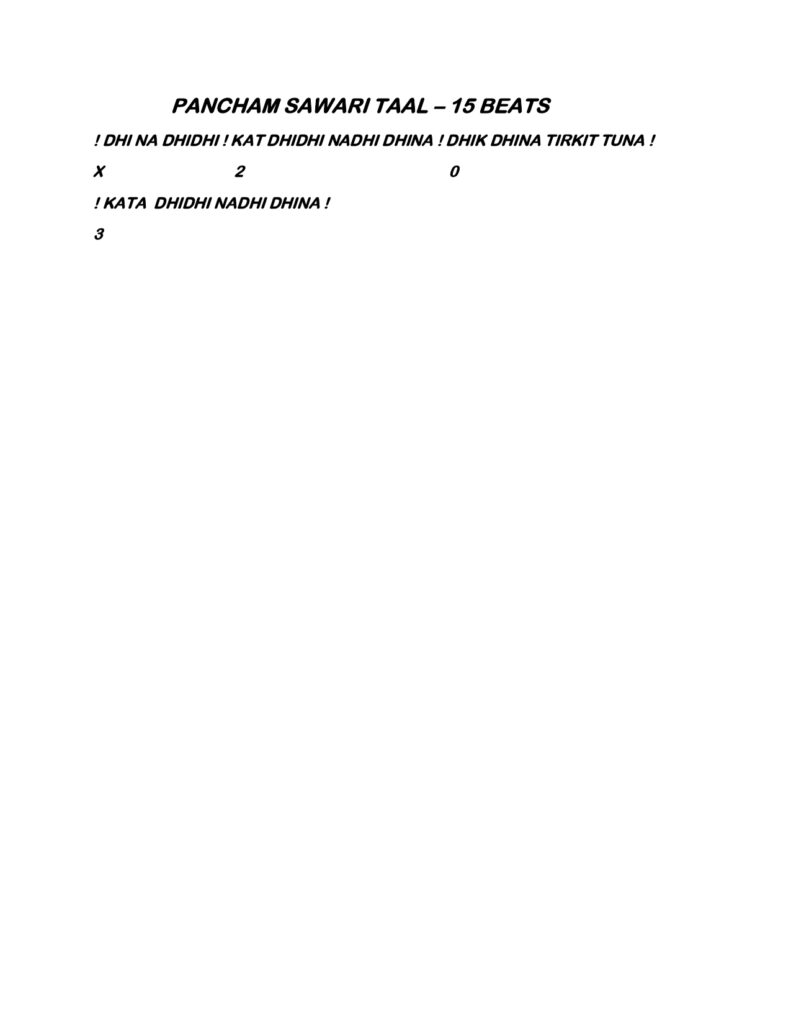
Pancham Sawari consists of 15 beats, traditionally divided into four vibhags:
4 + 3 + 4 + 4 = 15 matras
This structure makes it both logical and challenging. Unlike symmetrical taals, the shifting emphasis forces performers to stay mentally alert throughout the cycle.
Tali–Khali Pattern
A commonly followed tali–khali arrangement is:
- 1st Vibhag (4 beats) – Tali (Sam)
- 2nd Vibhag (3 beats) – Tali
- 3rd Vibhag (4 beats) – Khali
- 4th Vibhag (4 beats) – Tali
The sam is strong and commanding, while the khali section introduces lightness, creating contrast within the cycle.
Pancham Sawari Theka (Basic)
The theka is the backbone of any taal. A widely taught basic theka for Pancham Sawari is:
Dha Dhin Dhin Dha | Dha Tin Tin | Na Dhin Dhin Dha | Dha Tin Tin Ta
(15 beats total)
- The Dha on sam establishes authority
- The Na–Tin bols soften the khali vibhag
- The final vibhag brings clarity and prepares the return to sam
Students should first recite the bols before attempting to play them on tabla.
Notation for Practice
For learners who prefer written guidance, here is a simplified bol notation layout:
1 2 3 4 | 5 6 7 | 8 9 10 11 | 12 13 14 15
Dha Dhin Dhin Dha | Dha Tin Tin | Na Dhin Dhin Dha | Dha Tin Tin Ta
This visual mapping helps beginners clearly understand beat placement and phrasing.
Practice Loop Method (2026 Approach)
In 2026, digital practice tools have become essential for serious students. A practice loop allows you to repeat the theka continuously at a fixed tempo, helping you internalize the cycle.
How to practice effectively:
- Start at vilambit laya (slow tempo).
- Loop the theka for at least 5–10 minutes without stopping.
- Count matras mentally while playing.
- Gradually increase to madhya laya once confident.
- Introduce simple tihai patterns only after the cycle feels natural.
Using a lehra or digital metronome enhances rhythmic stability and confidence.
Importance in Tabla Performance
For tabla players, Pancham Sawari sharpens:
- Odd-beat control
- Layakari precision
- Compositional creativity
Many tabla solos feature Pancham Sawari to impress knowledgeable listeners, as maintaining clarity in a 15-beat cycle demands high concentration and technical maturity.
Role in Kathak
Kathak dancers value Pancham Sawari for its dynamic possibilities. The uneven structure allows:
- Striking tatkaar patterns
- Dramatic chakkars
- Innovative tihais and parans
Ending a complex tihai perfectly on sam in Pancham Sawari is considered a mark of advanced rhythmic command.
Why Learn Pancham Sawari Today?
As Hindustani classical music continues to evolve, audiences increasingly appreciate rare and sophisticated taals. Pancham Sawari offers freshness, depth, and a chance to stand out as a performer. Mastering it in 2026 positions students ahead of the curve, both technically and artistically.
As the saying goes, “Rhythm is not counted—it is felt.”
Conclusion
The Pancham Sawari Taal (15 beats) is a rewarding challenge that strengthens rhythm, focus, and creativity. With a clear understanding of its theka, notation, and modern practice loop methods, tabla players and Kathak dancers can confidently add this powerful taal to their repertoire.
https://www.youtube.com/@BhagawanSingh