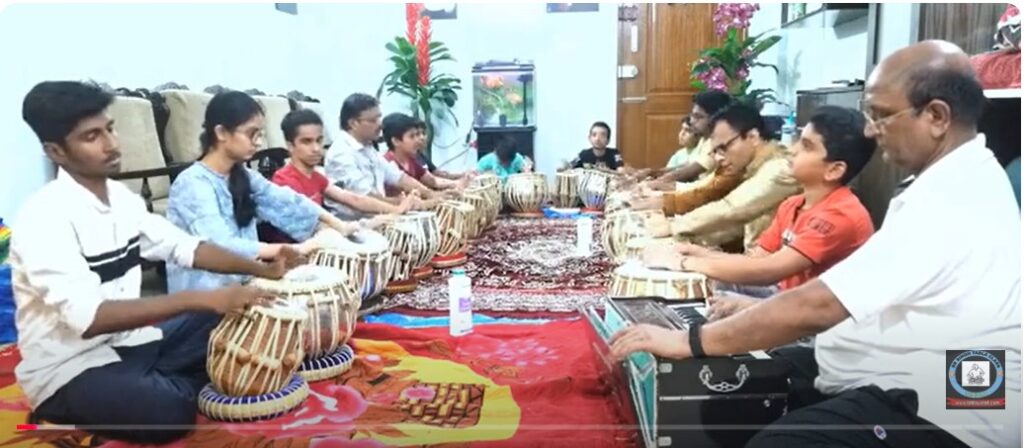
Jhaptaal (10 Beats): Mastering Damdar Tihai, Rela & Tukda
Introduction: The Power of 10 Beats
What makes Jhaptaal so captivating is its asymmetry. Unlike the more commonly heard Teentaal (16 beats), Jhaptaal’s 10-beat cycle (2+3+2+3) creates a dynamic rhythmic tension that feels both structured and unpredictable. This unique flow makes it a favorite among tabla players looking to showcase creativity, control, and power—especially through Damdar Tihai, Rela, and Tukda.If you’ve ever felt the thrill of a perfectly landed tihai or the speed of a flowing rela, Jhaptaal offers a playground full of rhythmic excitement.
Understanding Jhaptaal Structure
Jhaptaal consists of 10 matras (beats) divided as:
Dha Dhin | Na Dhin Dhin | Na Tin | Na Dhin Dhin
- Clap (Sam): Beat 1
- Clap: Beat 3
- Wave (Khali): Beat 6
- Clap: Beat 8
This uneven grouping gives Jhaptaal its signature groove, making compositions sound more expressive and less predictable.
Damdar Tihai: The Grand Finish
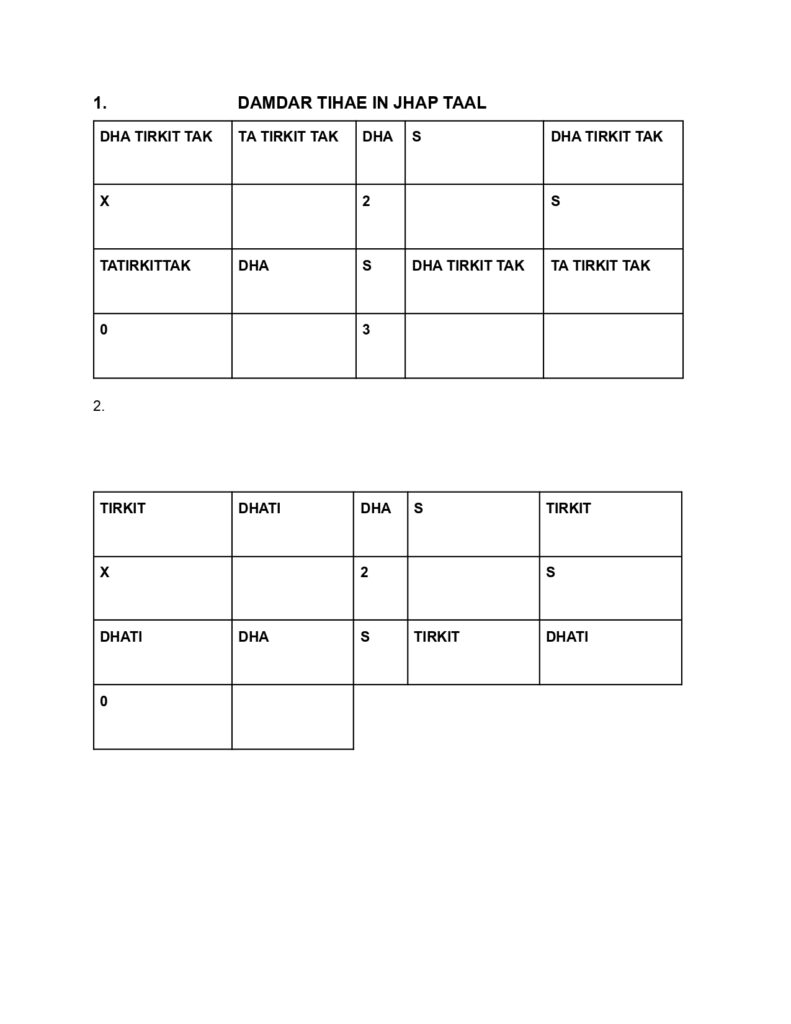
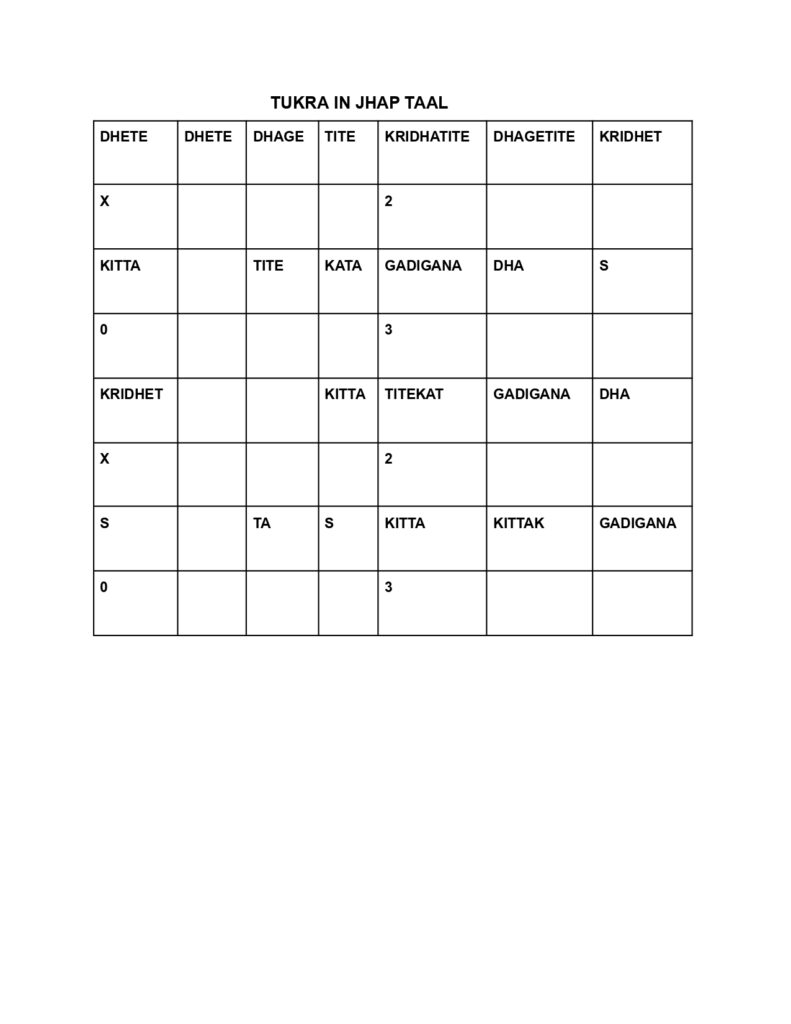
A tihai is a phrase repeated three times that lands perfectly on the sam (first beat). A Damdar Tihai includes pauses (rests), adding dramatic effect.
Example:
Dha Ge Na | Dha Ge Na | Dha Ge Na (Rest) ×3
In Jhaptaal, crafting a tihai requires careful calculation because of the 10-beat cycle. The beauty lies in building tension and releasing it exactly on sam.
Why It’s Powerful:
- Creates anticipation
- Demonstrates rhythmic mastery
- Leaves a strong impact on listeners
A well-played Damdar Tihai in Jhaptaal feels like a “mic drop” moment in percussion.
Rela: Speed Meets Flow
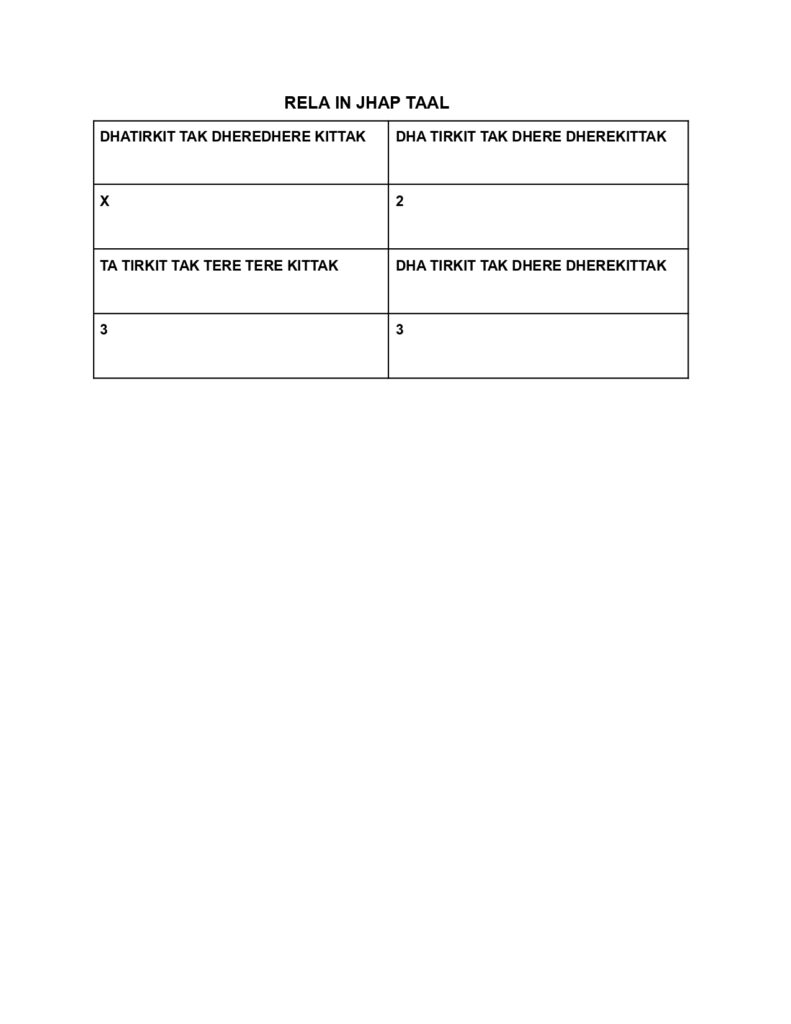
Rela is all about speed, clarity, and continuous flow. It typically uses bols like:
Dha Tira Kita Dha Tira Kita Dha Dha Tira Kita
In Jhaptaal, playing rela is challenging because you must maintain speed while respecting the uneven structure.
Tips for Rela in Jhaptaal:
- Start slow, then gradually increase tempo
- Maintain clarity of bols
- Keep track of the taal cycle mentally
Why Rela Stands Out:
- Showcases technical skill
- Adds energy and excitement
- Engages listeners with fast rhythmic patterns
A smooth rela in Jhaptaal feels like a rhythmic river—fast, flowing, and mesmerizing.
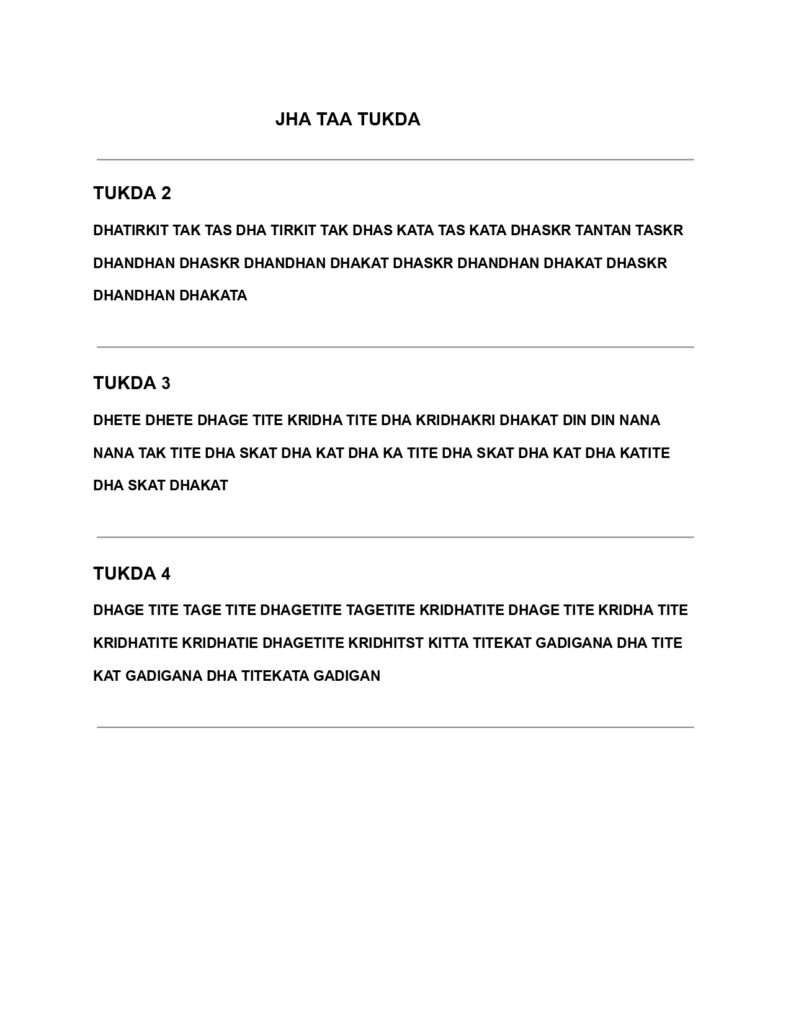
Tukda: Short, Striking Compositions
A Tukda is a short, pre-composed piece that often ends with a tihai. It’s commonly used in performances to impress audiences.
Example Tukda (Simple):
Dha Ge Na Dha | Tirakita Dha Ge Na | Dha Ge Na (Tihai ending)
In Jhaptaal, tukdas are crafted to fit perfectly within the 10-beat cycle, often ending dramatically on sam.
Why Tukdas Are Important:
- Easy to remember and perform
- Great for stage impact
- Combine creativity with structure
Combining Tihai, Rela & Tukda
The real magic happens when you combine all three elements:
- Start with a rela to build momentum
- Insert a tukda for structure
- End with a Damdar tihai for a powerful finish
This combination transforms a simple performance into a complete rhythmic journey.
Practice Routine for Mastery
To truly master Jhaptaal, consistency is key:
- Clap and recite the taal daily
- Practice slow-speed bols before increasing tempo
- Work on tihai calculations
- Record your practice to check timing
- Play along with a lehara (melodic loop)
Even 20 minutes of focused practice can significantly improve your control over Jhaptaal.
Why Jhaptaal Matters in Tabla
Jhaptaal is not just another taal—it’s a test of a tabla player’s rhythmic intelligence. Because of its uneven structure, it pushes you to think beyond patterns and truly understand timing.
Many great tabla maestros like Ustad Zakir Hussain and Tabla Nawaz Shree Bhagwan Singh have used Jhaptaal to showcase intricate compositions and breathtaking improvisations.
Conclusion: Step Into the Rhythm
Mastering Jhaptaal (10 beats) with Damdar Tihai, Rela, and Tukda opens the door to a deeper level of tabla playing. It sharpens your timing, boosts creativity, and enhances performance skills.
Whether you’re a beginner or an advancing player, Jhaptaal challenges and rewards you in equal measure.
https://www.youtube.com/@BhagawanSingh
https://www.facebook.com/sbsinghtablaguru