
Introducing the
Master Ektaal Vilambit Theka 48 Beats | Easy Tabla Guide
Introduction: Discover the Beauty of Vilambit Ektaal
Have you ever listened to a slow classical Indian melody and noticed how the tabla creates a gentle, flowing rhythm beneath the music? That beautiful rhythmic foundation often comes from Vilambit Ektaal, one of the most important taals in Hindustani classical music.
Ektaal is a rhythmic cycle of 12 matras (beats), traditionally divided into six sections of two beats each. When played in vilambit laya, or a slow tempo, it provides a spacious rhythmic framework for khayal singing and instrumental performances.
In this easy tabla guide, you will learn how to understand, recite, and practise the Vilambit Ektaal theka, building confidence one beat at a time.
1. What Is Ektaal in Tabla?
Ektaal is a fundamental taal in Hindustani classical music. Its balanced structure makes it suitable for both learning and advanced performance.
The word Ektaal refers to a rhythmic cycle containing 12 matras. These matras are organised into six vibhags, each containing two matras.
Here is the basic structure:
- Total matras: 12
- Number of vibhags: 6
- Matras per vibhag: 2
- Tali (clap) positions: 1, 5, 9, and 11
- Khali (wave) position: 3
Remember that Ektaal is traditionally counted over 12 beats, not 48. The phrase “48 beats” can refer to four complete Ektaal cycles: 12 × 4 = 48 matras. This is useful when practising longer rhythmic sequences.
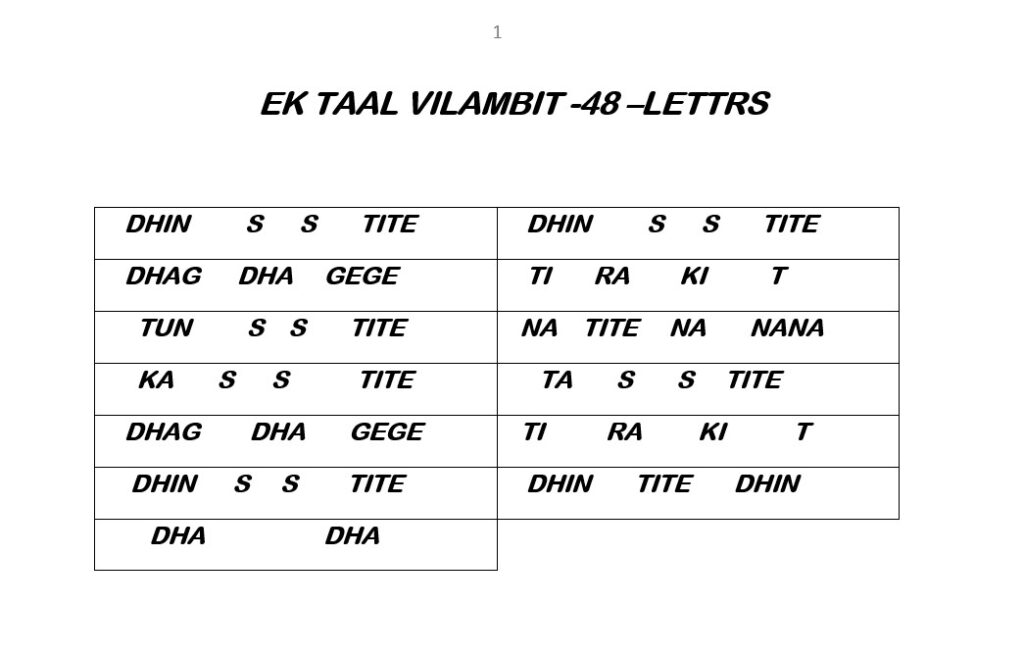
2. Master the Ektaal Vilambit Theka
The theka is the basic pattern of tabla bols that identifies a taal. In Vilambit Ektaal, the bols are played slowly, with careful attention to tone, timing, and the space between strokes.
A commonly taught Ektaal theka is:
Dhin Dhin | DhaGe Tirakita | Tu Na | Kat Ta | DhaGe Tirakita | Dhin Na
This pattern represents 12 matras, grouped into six sections of two matras each. Traditional gharanas and teaching styles may use different bol arrangements, especially in vilambit presentations.
For beginners, focus first on learning the bols clearly. Do not rush through the pattern. Slow practice helps develop control, tonal consistency, and an understanding of the taal’s rhythmic structure.
3. Understand the 48-Beat Practice Cycle
To practise a 48-beat sequence, repeat the 12-matra Ektaal cycle four times.
Cycle 1: Matras 1–12
Cycle 2: Matras 13–24
Cycle 3: Matras 25–36
Cycle 4: Matras 37–48
Keep the same tempo throughout all four cycles. Your goal is to complete the sequence without losing the sam, the first beat of the rhythmic cycle.
The sam is especially important because performers often use it as the point where a melodic phrase, improvisation, or tihai resolves.
Easy practice method
- Recite the bols aloud before playing.
- Clap the tali sections and wave at khali.
- Play each two-matra section slowly.
- Join all six sections into one complete cycle.
- Repeat the cycle four times to complete 48 matras.
Start at a comfortable tempo and increase the speed only when the bols sound clear and balanced.
4. Learn the Basic Tabla Bols
Understanding the bols is essential for developing good technique.
- Dhin: A resonant stroke commonly combining sounds from both drums.
- Dha: A fuller combined stroke produced on the dayan and bayan.
- Ge: A bass-oriented bayan stroke.
- Na: A clear, ringing stroke on the dayan.
- Tin: A bright, resonant dayan stroke.
- Ta: A crisp stroke whose execution depends on the bol and playing tradition.
- Tirakita: A group of rapid, articulated strokes requiring finger coordination.
Practise each bol separately before combining them into the theka. Relax your hands and avoid unnecessary tension.
5. Why Vilambit Ektaal Matters
Vilambit Ektaal is particularly valuable in slow khayal performances, where the vocalist or instrumentalist explores a raga through gradual melodic development.
The tabla player must listen carefully, maintain the rhythmic cycle, and support the music without overpowering it. Silence and spacing are just as important as the strokes themselves.
This taal also teaches patience. Rather than concentrating only on speed, students learn to appreciate tonal quality, rhythmic stability, and musical expression.
6. Try This Beginner Challenge
Test your understanding of Ektaal:
Question 1: How many matras are in one Ektaal cycle?
A. 8
B. 10
C. 12
D. 16
Question 2: How many complete Ektaal cycles make 48 matras?
A. 2
B. 3
C. 4
D. 6
Question 3: What is the first beat of a taal cycle called?
A. Khali
B. Sam
C. Tihai
D. Vibhag
Answers: 1—C, 2—C, 3—B.
For further learning, explore tabla demonstrations by established Hindustani classical musicians and look for lessons specifically covering Ektaal, vilambit theka, and tabla bols. Listening to experienced players will help you understand how the same rhythmic framework can be interpreted with different musical nuances.
Conclusion: Begin Your Ektaal Journey
Mastering Vilambit Ektaal is not simply about memorising a sequence of bols. It is about developing a strong sense of rhythm, listening deeply, and learning to maintain a steady musical conversation.
Remember the essentials: Ektaal has 12 matras, four repetitions create a 48-matra practice sequence, and the sam anchors each cycle.
Practise slowly, count consistently, and listen to classical performances regularly. With patience and daily practice, you can build a solid foundation in this beautiful taal.
Keep practising, keep listening, and let the rhythm guide your tabla journey!
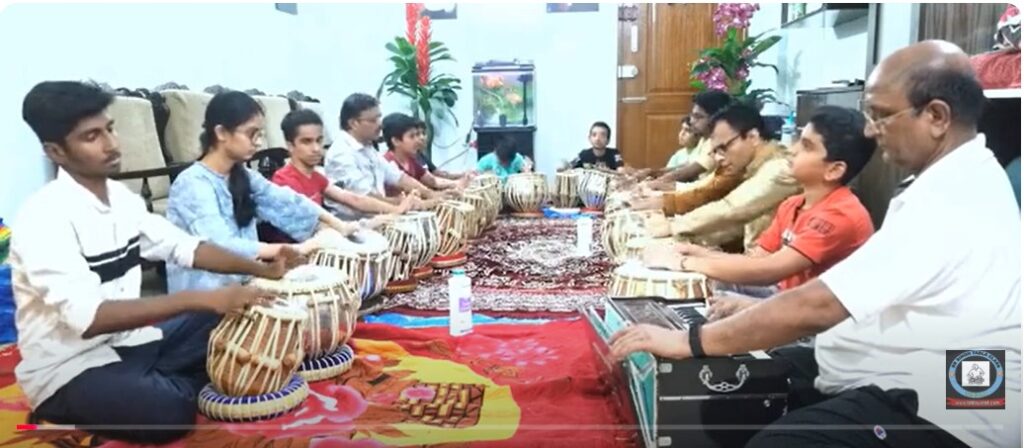
Ek Taal vilambit Bada Khyal tabla tutorial
https://www.facebook.com/sbsinghtablaguru

- Tempo: Vilambit (Slow Tempo)
- Composition Type: Bada Khayal
- Structure: 12 beats × 4 cycles = 48 beats
- Theka (Basic Pattern):
Dhin Dhin | Dha Ge Na | Tin Tin | Ta Ge Na | Dhin Dhin | Dha Ge Na - Genre: Hindustani Classical (Khayal)
- Gharana: Can be associated with various Gharanas (e.g., Gwalior, Agra, Kirana, Jaipur)
- Popular Ragas: Yaman, Bhairav, Bageshree, Darbari, Malkouns, etc.
- Usage: Khayal, Dhrupad, Instrumental Music
- Famous Artists: Pt. Bhimsen Joshi, Ustad Rashid Khan, Pt. Jasraj, Kishori Amonkar