
How to learn the EkTaal tukda
Ektaal Tukda 12 Beats: Master This Powerful Rhythm
Introduction
The tabla is one of the most expressive percussion instruments in Indian classical music, and among its many rhythmic treasures, the Ektaal Tukda stands out for its elegance and precision. Built on the 12-beat Ektaal cycle, a tukda is a short, energetic composition that often concludes with a powerful tihai (a phrase repeated three times to arrive perfectly on the first beat, or sam). Whether you are a beginner learning your first compositions or an experienced tabla player refining your repertoire, mastering an Ektaal Tukda will deepen your understanding of rhythm, timing, and performance.
What Is Ektaal?
Ektaal is a traditional 12-beat (12 matras) rhythmic cycle widely used in Hindustani classical music. It is commonly performed in medium and slow tempos for vocal, instrumental, and tabla solo performances.
The 12 beats are divided into six sections (vibhags) of two beats each, creating a balanced and symmetrical rhythmic framework.
A common representation of Ektaal is:
Dhin Dhin | DhaGe TiRaKiTa | Tu Na | Kat Ta | DhaGe TiRaKiTa | Dhin Na
This structure allows musicians to create intricate rhythmic patterns while maintaining a steady pulse.
What Is a Tukda?
A Tukda is a short tabla composition usually performed in faster tempos. It is characterized by clear, powerful bols (syllables) and often ends with a tihai, giving the performance a dramatic and satisfying conclusion.
Unlike longer compositions such as Paran or Rela, a tukda is concise, making it ideal for concerts, examinations, and daily practice sessions.
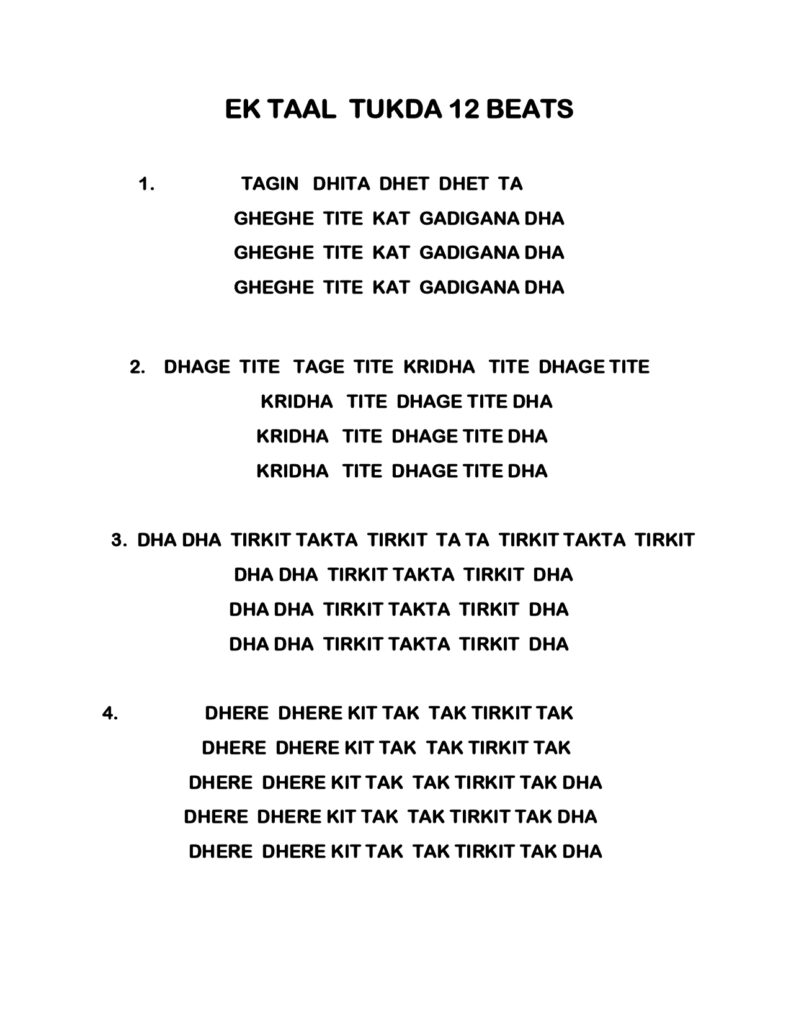
Example of an Ektaal Tukda
One simple example is:
Dha Ge Ti Te Kata Gadi Ghene Dha | Dha Ge Ti Te Kata Gadi Ghene Dha | Dha Ge Ti Te Kata Gadi Ghene Dha
Students should first recite the bols clearly before attempting to play them on the tabla. Proper pronunciation helps improve rhythm, accuracy, and confidence.
Note: Different gharanas (tabla traditions) may use different Tukdas in Ektaal, so your teacher’s version may vary.
How to Practice an Ektaal Tukda
Effective practice is more important than speed. Follow these steps:
- Begin by counting all 12 beats carefully.
- Speak the bols aloud before playing.
- Practice slowly with a metronome or lehra.
- Keep your strokes clean and balanced.
- Increase the tempo only after achieving consistency.
- Repeat the composition several times without stopping.
- Finish each repetition accurately on the sam.
Daily practice of 15–20 minutes can significantly improve your rhythmic control and hand coordination.
Common Mistakes to Avoid
Many students encounter similar challenges while learning an Ektaal Tukda:
- Playing too fast before mastering the bols.
- Losing track of the 12-beat cycle.
- Weak bayan (bass drum) strokes.
- Uneven timing between phrases.
- Rushing or delaying the final tihai.
Recording your practice sessions and listening back can help identify areas for improvement.
Why Learn Ektaal Tukda?
Learning an Ektaal Tukda offers several benefits:
- Improves rhythmic accuracy.
- Develops confidence in tabla solo performances.
- Strengthens understanding of Hindustani classical taal.
- Builds speed and clarity in finger technique.
- Prepares students for music examinations and stage performances.
- Enhances improvisation skills within the Ektaal framework.
Because Ektaal is a foundational rhythmic cycle, proficiency in its compositions supports progress in many other areas of tabla playing.
Performance Tips
When presenting an Ektaal Tukda on stage:
- Maintain a steady tempo throughout.
- Emphasize important bols with confidence.
- Keep your posture relaxed.
- Listen carefully to accompanying musicians.
- Aim to land precisely on the sam, as this creates the strongest musical impact.
Great tabla maestros are admired not only for speed but also for clarity, balance, and impeccable timing.
Learning Resources
To strengthen your understanding of Ektaal:
- Practice regularly with a lehra in Ektaal.
- Listen to performances by renowned tabla maestros such as Ustad Zakir Hussain, Tabla Nawaz Shree Bhagwan Singh and Pandit Kumar Bose.
- Study different gharana styles to appreciate the variety of Tukda compositions.
- Learn from a qualified tabla teacher who can refine your technique and rhythm.
Consistent listening and practice together are the fastest path to improvement.
Conclusion
The Ektaal Tukda is an essential composition for every tabla student. Its balanced 12-beat cycle, expressive bols, and exciting rhythmic finish make it both enjoyable to learn and rewarding to perform. By practicing slowly, maintaining precise timing, and developing a strong understanding of the taal, you can confidently perform this classic composition in lessons, examinations, and concerts.
Keep practicing regularly, listen to great tabla masters, and enjoy the journey of mastering the timeless beauty of Ektaal Tukda.