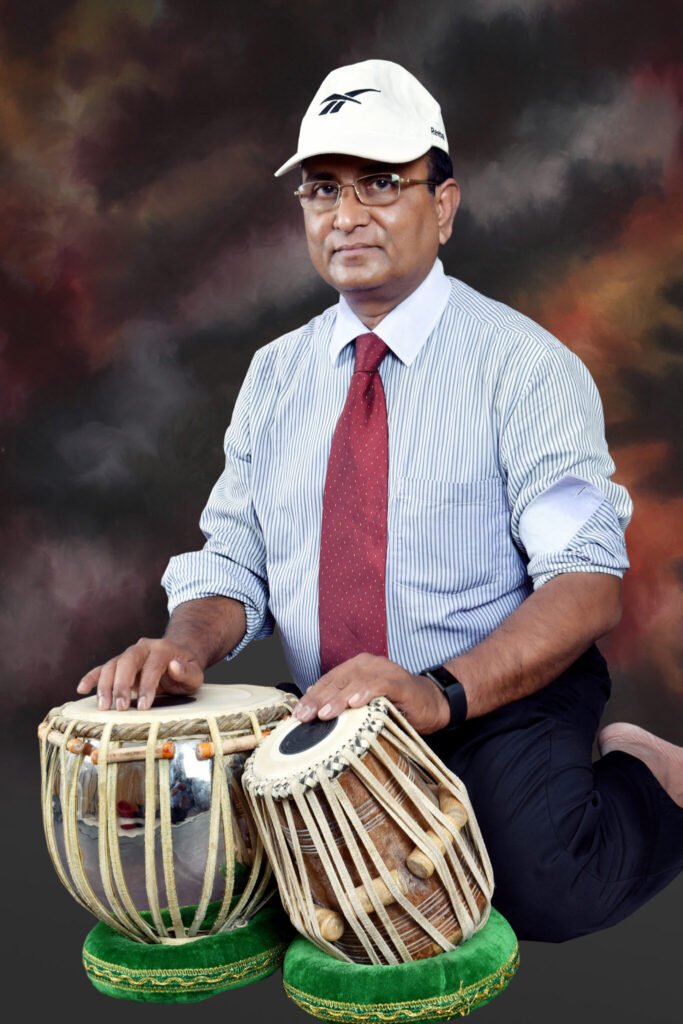
Ektaal 12-Beat Farmaishi Tihai: A Journey into Tabla Rhythm
The tabla is not simply an instrument of beats; it is an instrument of language, mathematics, expression, and emotion. Among the many rhythmic forms performed by tabla players, the Farmaishi Tihai in Ektaal is an excellent example of how rhythm can be carefully designed to create a powerful and satisfying musical conclusion. It combines the 12-beat cycle of Ektaal with a repeated rhythmic phrase that arrives at sam, the first and most important beat of the taal.
Understanding Ektaal
Ektaal is one of the important taals of Hindustani classical music. It contains 12 matras (beats) and is traditionally divided into six vibhags, with two matras in each section:
2 + 2 + 2 + 2 + 2 + 2 = 12
A commonly taught form of Ektaal theka is:
Dhin Dhin | DhaGe TirKit | Tu Na | Kat Ta | Dhin Dhin | DhaGe TirKit
Different gharanas and traditions may use variations in the bols, but the basic 12-beat framework remains the same.
The most important point in Ektaal, as in other Hindustani rhythmic cycles, is sam. Sam is the first beat of the cycle and provides the point of rhythmic resolution. A skilled tabla player creates tension through rhythmic phrases and then brings the composition back to sam with precision.
What Is a Tihai?
The word Tihai refers to a rhythmic phrase that is performed three times, generally with carefully calculated spacing so that the final repetition lands on sam.
For example, if a phrase is:
A – gap – A – gap – A
the player calculates the phrase and gaps so that the third and final statement finishes exactly on sam.
A tihai therefore involves both musical creativity and mathematical calculation. The listener may simply hear an exciting rhythmic ending, while the performer is simultaneously counting the beats and subdivisions internally.
What Makes a Farmaishi Tihai Special?
A Farmaishi Tihai is a particularly attractive form of tihai because its structure creates a strong sense of anticipation and resolution. It is often used as a requested or specially presented rhythmic composition in tabla performance.
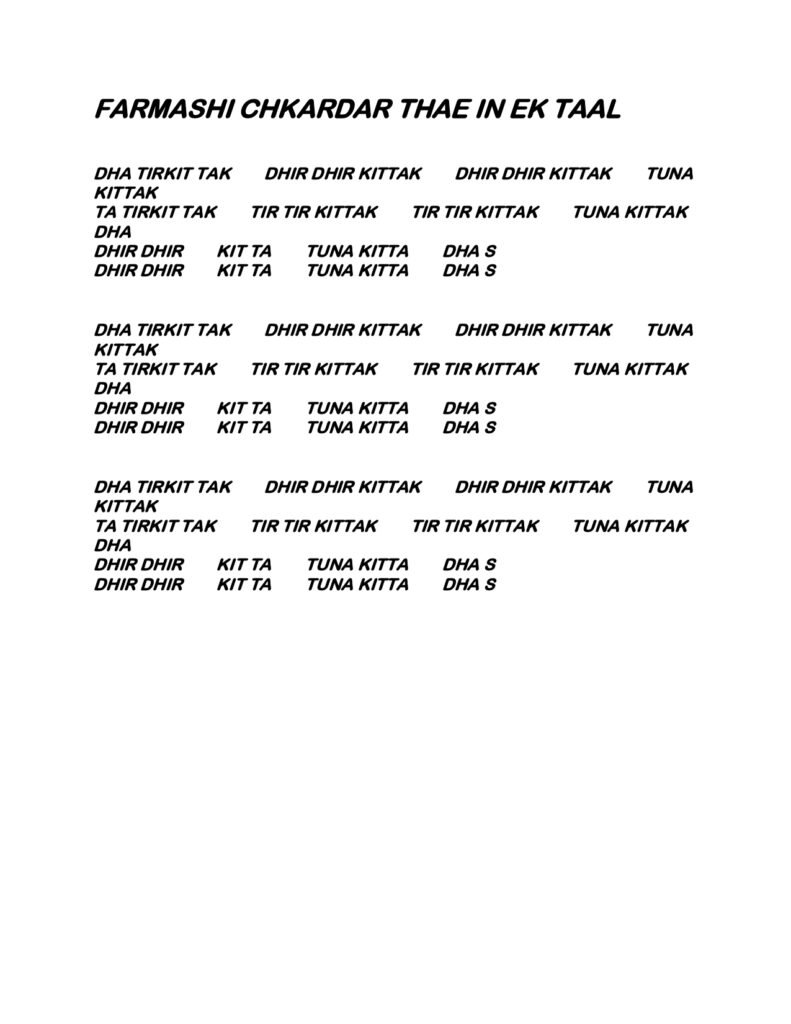
The composition shown in the accompanying notation is a Farmaishi Chakradar Tihai in Ektaal. It uses bols such as:
DHA, TIRKIT, TAK, TA, DHIR, KITTAK, TIR, TUNA, KITTA and DHA
These bols are not random syllables. Each represents a particular stroke or combination of strokes on the tabla. When spoken clearly, the bols themselves reveal the rhythmic architecture of the composition.
Reading the Composition
The opening section begins with:
DHA TIRKIT TAK | TA TIRKIT TAK
This is followed by combinations such as:
DHIR DHIR KITTAK | DHIR DHIR KITTAK
and:
TUNA KITTAK
The composition then moves toward:
TUNA KITTA DHA | S
Here, S represents sam, the point of resolution.
One of the fascinating features of this composition is its repeated architecture. The complete rhythmic idea is presented in a way that builds expectation. As the same or closely related material returns, the listener begins to anticipate the final arrival. This is one reason why a Chakradar or Farmaishi Tihai can sound so impressive in performance.
Chakradar and Tihai
A Chakradar Tihai takes the concept of repetition even further. The principal phrase is arranged in a threefold structure, creating a circular rhythmic effect. The performer must maintain an accurate sense of the taal while moving through complicated combinations of bols.
In Ektaal, this challenge becomes especially interesting because the cycle contains only 12 beats. There is relatively little room for error. A small mistake in counting can cause the ending to fall away from sam.
For students, this makes the composition an excellent exercise in laya (tempo), counting, articulation, memory, and concentration.
How to Practice the Farmaishi Tihai
The best way to learn this composition is to begin slowly. First, speak the bols aloud:
DHA TIRKIT TAK
TA TIRKIT TAK
DHIR DHIR KITTAK
TUNA KITTAK DHA
Do not immediately try to play it at a fast speed. Practice each phrase separately and make sure every syllable is clearly pronounced.
Next, clap or recite Ektaal’s 12-beat cycle while speaking the composition. Once the bols are comfortable, play them on the tabla at a slow tempo. Gradually increase the speed while keeping the clarity of every stroke.
Most importantly, always know where sam is.
The Beauty of the Composition
The Farmaishi Tihai demonstrates why tabla is often described as a rhythmic language. The bols create words, the taal provides grammar, and sam provides the final punctuation mark.
A successful performance is not only about playing fast. It is about maintaining clarity, balance, precision and musical expression. The excitement comes from hearing a complicated rhythmic journey finally resolve exactly where the listener expects it—or sometimes even more dramatically than expected.
Conclusion
The 12-beat Ektaal Farmaishi Tihai is a wonderful composition for developing both the technical and artistic sides of tabla playing. Its combination of repetition, calculation, powerful bols and final resolution makes it an engaging piece for students and experienced performers alike.
For a tabla student, learning this composition is more than memorizing bols. It is an opportunity to understand Ektaal, laya, tihai construction, rhythmic mathematics and sam.
So take your tabla, recite the bols slowly, keep the 12-beat cycle firmly in your mind, and gradually build speed. When the final DHA lands perfectly on sam, the satisfaction is unmistakable—that is the magic of the Farmaishi Tihai.
https://www.facebook.com/profile.php?id=61563286136360
https://www.youtube.com/@BhagawanSingh