
Introducing the Dhamar Taal (14 Beat) Explained: Master the Mukhda, Tukra & Mohra Like a Tabla Pro!
Dhamar Taal (14 Beat) Explained: Master the Mukhda, Tukra & Mohra Like a Tabla Pro!
The tabla, India’s most expressive percussion instrument, has long been the rhythmic heart of Indian classical music. Among the many intricate rhythms played on the tabla, Dhamar Taal stands out as a deeply spiritual and powerful 14-beat cycle. It’s not just a taal; it’s a journey through divine rhythm — one that challenges, inspires, and uplifts both player and listener. In this post, we’ll dive into what makes Dhamar Taal so special, and how to master its Mukhda, Tukra, and Mohra like a pro.
🎵 What Is Dhamar Taal?
Dhamar Taal is a 14-beat rhythmic cycle (Taal) often used in Dhrupad, the oldest surviving form of North Indian classical music. It carries a sense of majesty and devotion, traditionally performed in temples or royal courts. The structure of Dhamar Taal makes it both complex and captivating.
Here’s its basic theka (rhythmic pattern):
Dha Dha | Dhin Ta | Kita Dha | Ta – | TiTa Kata | GaDhi | Gena
It is divided into 4 vibhags (sections):
- 1st Vibhag: 5 beats
- 2nd Vibhag: 2 beats
- 3rd Vibhag: 3 beats
- 4th Vibhag: 4 beats
This uneven division gives Dhamar Taal its distinctive, almost meditative pulse — unlike more symmetrical taals like Teentaal (16 beats) or Ektaal (12 beats).
🪘 Historical and Cultural Significance
The word “Dhamar” originates from the Sanskrit root “Dhama,” meaning to vibrate or resound — perfectly describing its spiritual and resonant nature. Traditionally, Dhamar compositions are sung during Holi, the festival of colors, in praise of Lord Krishna and his divine play (Leela).
Great tabla maestros such as Pandit Kishan Maharaj, Pandit Samta Prasad, and Ustad Zakir Hussain have explored Dhamar Taal to express a range of emotions — from devotion to playful mischief. Its rhythmic richness makes it a favorite for both classical recitals and fusion performances today.
🧱 Structure of Dhamar Taal
| Component | Beats | Pattern |
|---|---|---|
| Vibhag 1 | 5 | Dha Dha Dhin Ta Kita |
| Vibhag 2 | 2 | Dha Ta |
| Vibhag 3 | 3 | TiTa Kata GaDhi |
| Vibhag 4 | 4 | Gena |
The sam (first beat) is strong and resonant — usually emphasized with a Dha, while the khali (empty beat) occurs on the 8th beat, giving the rhythm space to breathe.
🎶 Understanding Mukhda, Tukra & Mohra
These three elements are like the rhythmic ornaments that give life to Dhamar Taal.
🔹 Mukhda – The Rhythmic Face
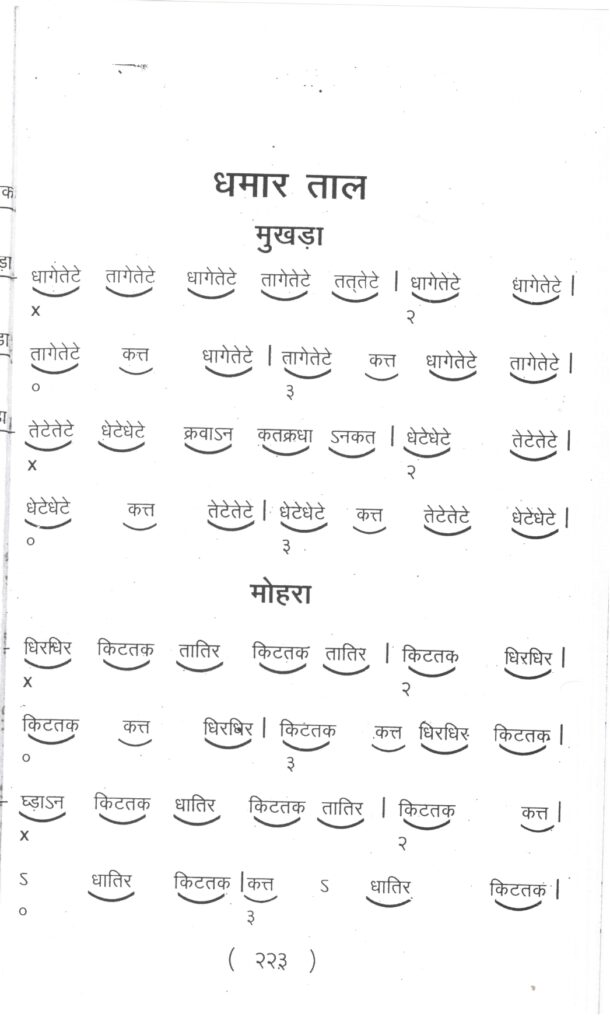
Mukhda literally means “face.” It’s a short, catchy phrase that leads back to the sam. In Dhamar Taal, the Mukhda acts as a rhythmic signature — something memorable and easily recognizable.
Example Mukhda:
Dha TiTa Kata GaDhi Gena – Dha Dha Dhin Ta Kita Dha Ta (Sam)
When played skillfully, a good Mukhda creates anticipation before landing powerfully on the sam, much like a punchline in music.
🔹 Tukra – The Rhythmic Composition
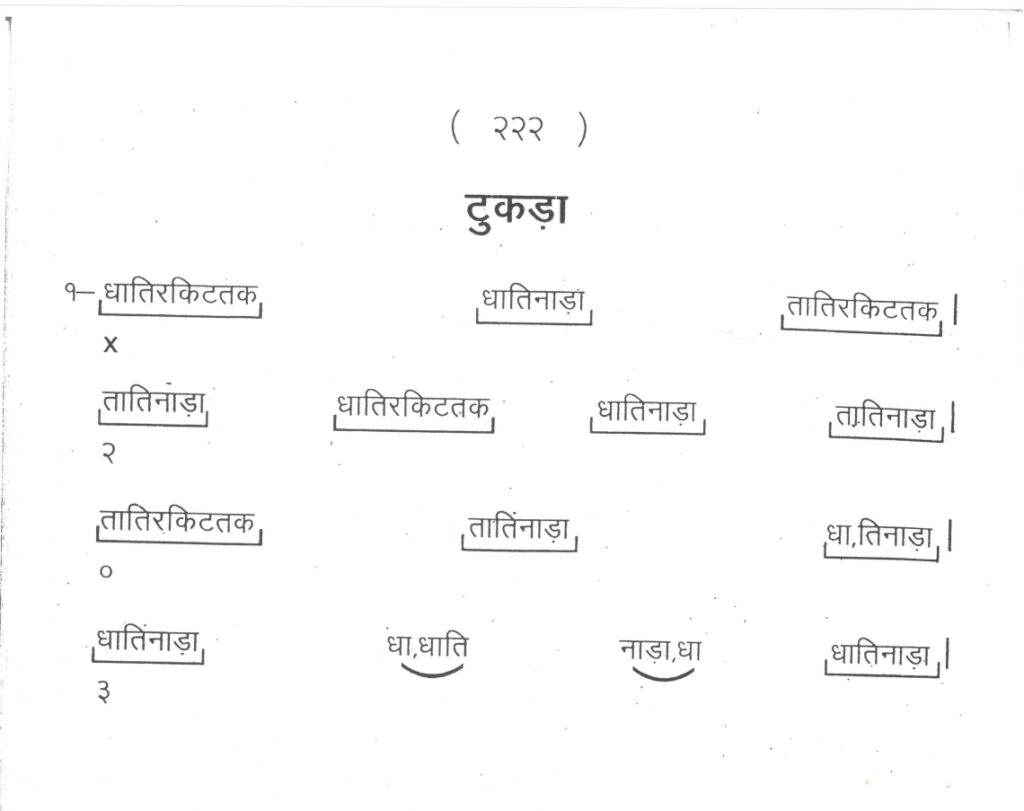
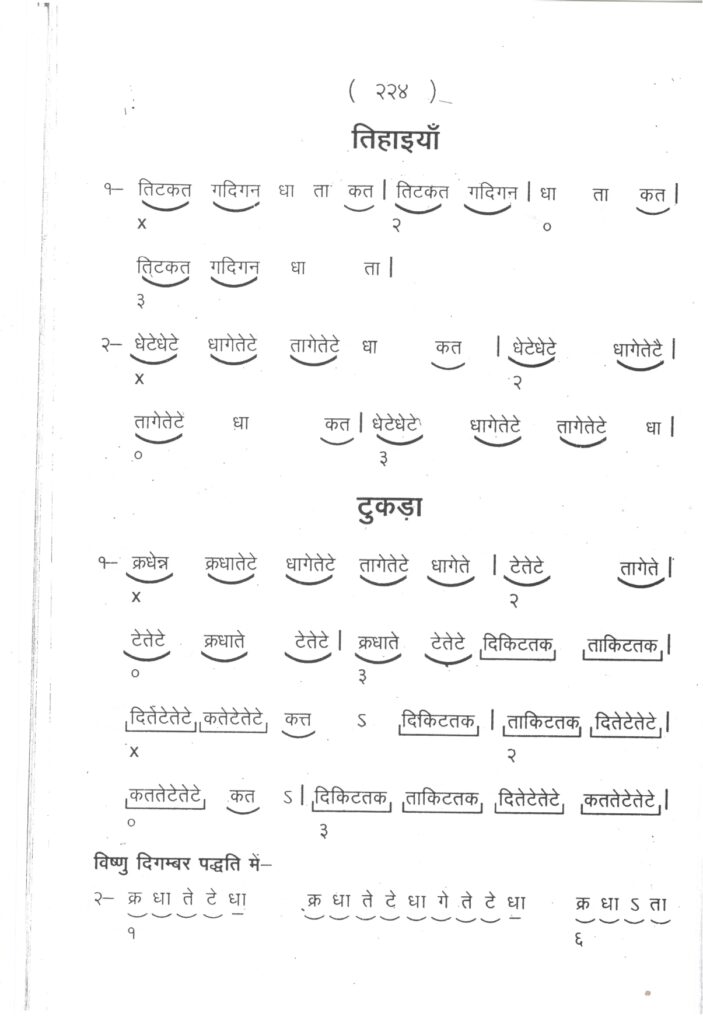
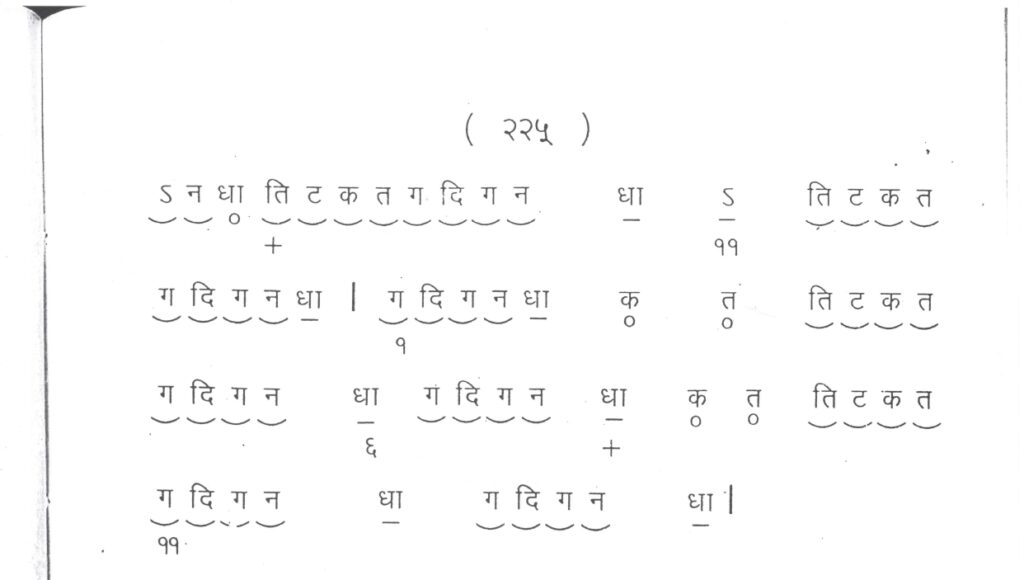
A Tukra is a complete rhythmic composition that ends with a Tihai (a phrase repeated three times to conclude on the sam). In Dhamar, Tukras are slower and more spacious, often emphasizing the 14-beat structure.
Example Tukra:
Dha TiTa Kata GaDhi Gena | Dha Dha Dhin Ta Kita Dha Ta | Dha TiTa Kata GaDhi Gena (3x)
This creates a mesmerizing rhythmic loop that blends mathematical precision with aesthetic beauty.
🔹 Mohra – The Bridge Between Compositions
The Mohra acts as a connector or transition between two rhythmic compositions, often played before a Tukra or Chakradar. It helps the performer shift gears smoothly, maintaining the flow of the taal.
Example Mohra:
Dha TaKa DhiNa Dha | TiTa Kata GaDhi Gena – Dha (Sam)
It’s a graceful way to “reset” the rhythm and prepare for the next segment.
🌍 Dhamar Taal in Modern Music
While rooted in classical tradition, Dhamar Taal has made its way into contemporary fusion, film scores, and world music. Artists like Talvin Singh, Karsh Kale, and Trilok Gurtu have used its 14-beat pattern to create innovative soundscapes blending tabla with electronic and global beats.
You’ll even hear shades of Dhamar-inspired rhythms in songs like:
- 🎧 “Taal Se Taal Mila” (A.R. Rahman) – subtle 14-beat cycles in background rhythm layers.
- 🎧 “Krishna Nee Begane Baro” (Fusion versions) – inspired by Dhrupad rhythmic cycles.
🎯 Tips to Master Dhamar Taal
- Start Slowly: Count all 14 beats clearly before increasing tempo.
- Clap and Recite: Practice with Khand Jati claps and Bols recitation to internalize the cycle.
- Listen to Dhrupad Performances: Absorb the taal’s feel from vocalists like the Gundecha Brothers.
- Experiment: Try composing your own Mukhda or Tukra once you feel confident.
💬 Interactive Corner
Mini Quiz:
Which beat is Khali in Dhamar Taal?
A) 1st B) 8th C) 10th D) 14th
(Answer: B – The 8th beat is Khali.)
Poll:
👉 What’s your favorite Dhamar Taal performance?
- Pandit Kishan Maharaj
- Ustad Zakir Hussain
- Gundecha Brothers
- Others
🌟 Conclusion
Dhamar Taal (14 Beat) is more than just a rhythmic cycle — it’s a living tradition that connects you to centuries of Indian musical heritage. Its Mukhda, Tukra, and Mohra teach balance, creativity, and rhythmic discipline. Whether you’re a beginner or a tabla enthusiast, exploring Dhamar Taal will deepen your sense of timing and expression.
So, grab your tabla, tune your bayan, and let the 14-beat pulse of Dhamar awaken your inner rhythm!
https://www.facebook.com/sbsinghtablaguru
https://www.linkedin.com/in/shree-singh-bb483059