
Introducing the-Master the Deepchandi Taal (14 Beats): Mukhda, Mohra, Tihai & Tukda Explained for Tabla Lovers!“Deepchandi Taal Demystified: Learn 14-Beat Rhythm with Mukhda, Mohra, Tihai & Tukda Examples,Unlock the Magic of Deepchandi Taal – 14 Beats of Pure Tabla Power!, From Mukhda to Tihai: The Complete Guide to Deepchandi Taal (14 Beat Cycle) Deepchandi Taal Tutorial: Master the 14-Beat Groove with Real Tabla Compositions, Why Deepchandi Taal Rules the Tabla World: Learn Its Mukhda, Mohra, Tukda & Tihai Patterns, Learn Deepchandi Taal Step-by-Step: 14-Beat Rhythm That Every Tabla Player Must Know!The Soul of Thumri: Deepchandi Taal’s 14 Beats of Grace, Beauty & Rhythm, Play Like a Pro: Deepchandi Taal (14 Beats) with Real Mukhda, Mohra & Tihai Examples,“Deepchandi Taal for Beginners & Experts: Explore.
🎶 Master the Deepchandi Taal (14 Beats): Mukhda, Mohra, Tihai & Tukda Explained for Tabla Lovers!
Few rhythms in Indian classical music carry the graceful charm and emotional depth of Deepchandi Taal. Known for its 14-beat cycle, this taal has long been a favorite in Thumri, Dadra, and semi-classical compositions. Its slow, lilting gait and intricate phrasing offer tabla players endless room for creativity and expression. Whether you’re a budding tabla enthusiast or a seasoned performer looking to polish your rhythmic vocabulary, mastering Deepchandi Taal is a rewarding journey into the heart of Hindustani rhythm.
🥁 What Is Deepchandi Taal?
Deepchandi (sometimes spelled Dipchandi) is a 14-beat rhythmic cycle traditionally played in Vilambit or Madhya laya (slow or medium tempo). It has a romantic and graceful character, making it ideal for light classical genres like Thumri, Kajri, Chaiti, and Ghazal.
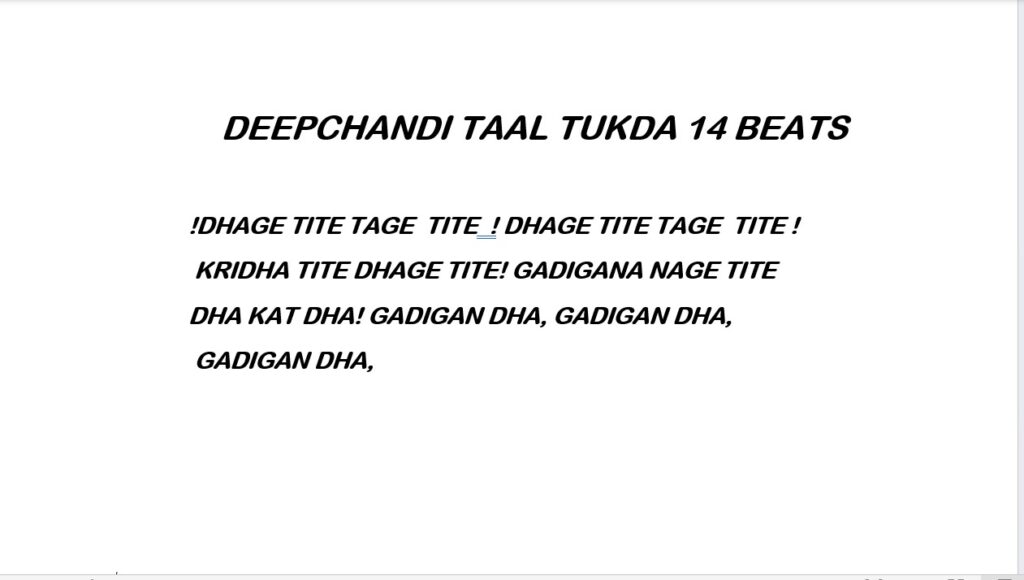
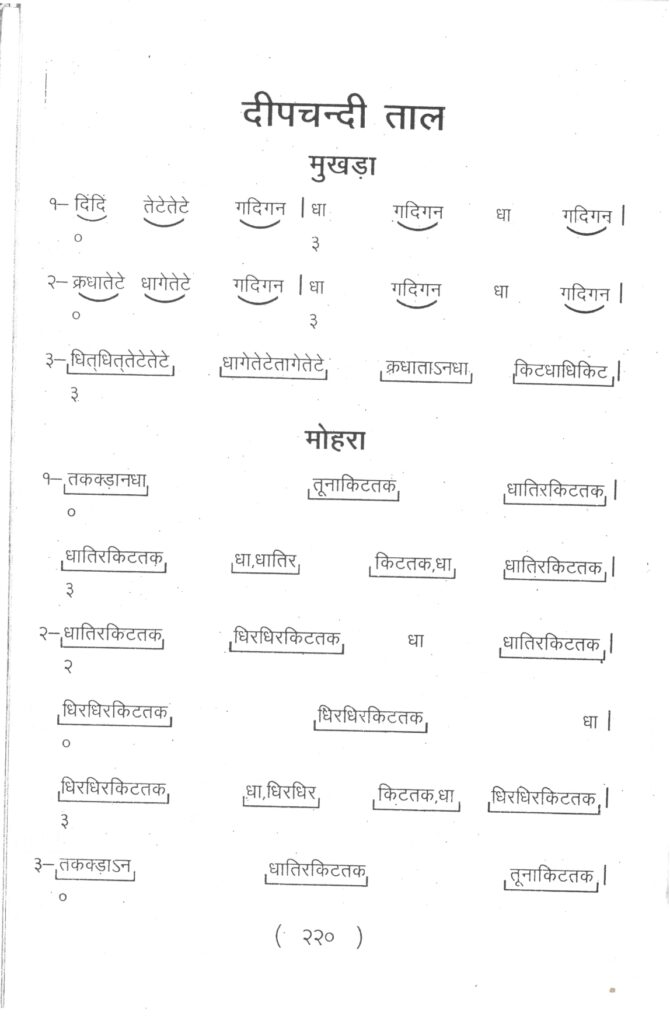
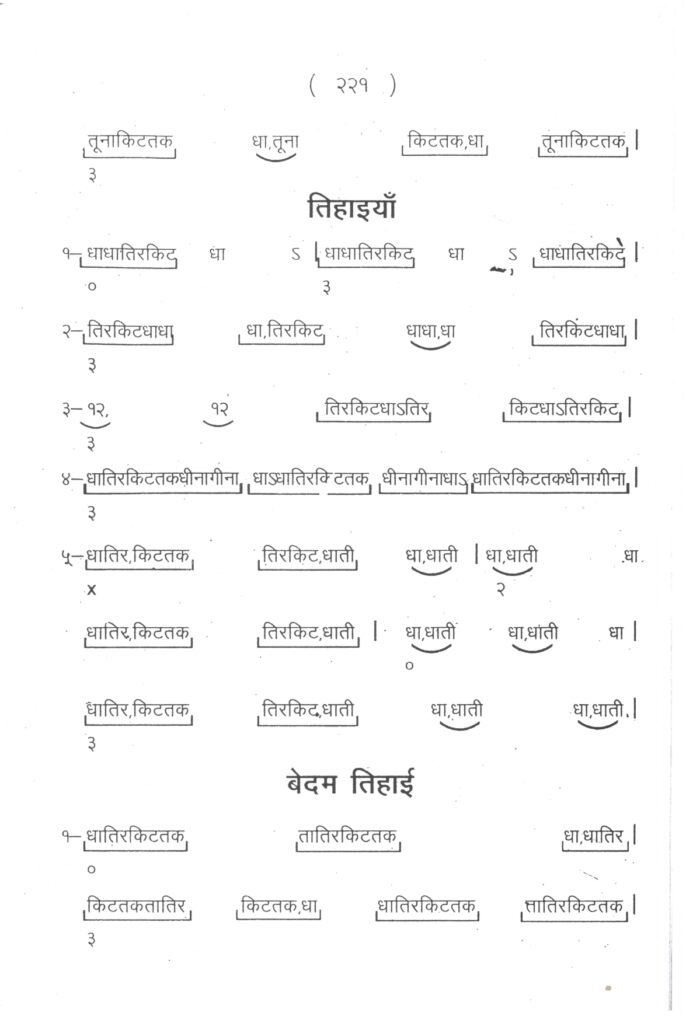
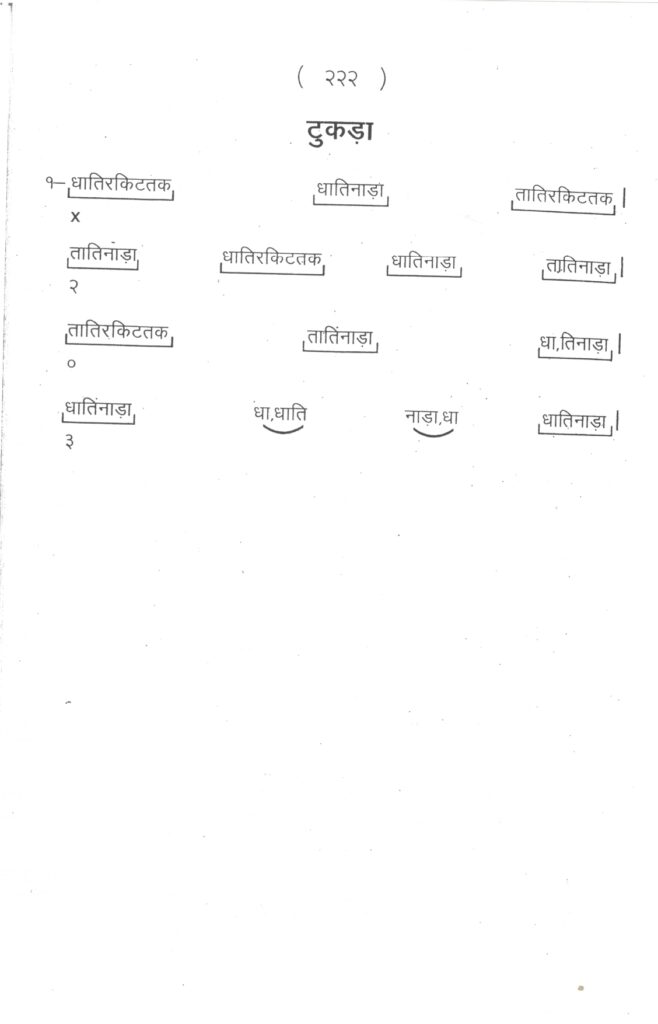
Here’s the basic structure (theka) of Deepchandi:
Dha Dhin Dhin Dha | Dha Tin Tin Ta | Ta Dhin Dhin Dha
Beats: 1  2   3  4 | 5  6   7  8  | 9 10  11  12 13 14
Vibhag (Divisions): 3 sections – 4 + 4 + 6
Tali (clap) on beats: 1, 5, 13
Khali (wave) on beat: 9
When played on the tabla, Deepchandi creates a gentle swing that feels both meditative and romantic — a rhythm that “breathes” between beats.
🎧 Listen to a Deepchandi Taal Theka demonstration:
(You can embed a sample from YouTube such as Zakir Hussain or Anindo Chatterjee playing Deepchandi Taal.)
🪘 Anatomy of the Deepchandi Cycle: Understanding Its Beauty
Unlike more commonly used taals like Teentaal (16 beats) or Ektaal (12 beats), Deepchandi’s 14-beat structure gives it a distinctive asymmetry. The theka flows in three sections, each with a subtle emotional flavor — making it a favorite for expressive musical forms.
- Vibhag 1 (4 beats): Sets the mood and introduces the theme.
- Vibhag 2 (4 beats): Adds rhythmic depth and space for melodic improvisation.
- Vibhag 3 (6 beats): Creates tension and release, leading beautifully back to the sam (first beat).
🎵 Key Compositional Elements: Mukhda, Mohra, Tukda & Tihai
In tabla, compositions are more than just patterns — they are rhythmic poems. Let’s break down the most important components used within Deepchandi.
1. Mukhda (मुखड़ा) – The Face of the Composition
The Mukhda is the introductory phrase that leads to the sam. It’s often short and catchy, acting as a rhythmic signature.
Example (in Deepchandi):Dha Ge Ti Na | Dha Ti Na | Dha
This pattern beautifully circles back to the first beat, giving a clear rhythmic “face” to your playing.
2. Mohra (मोहरा) – Bridging the Gaps
A Mohra is slightly longer and more elaborate than a Mukhda. It’s typically used to transition between compositions or to conclude a section of improvisation.
Example:Dha Dha Tita Kata Gadi Gena | Dha Tirakita Dha Ge Na
This creates a flowing movement that bridges the performer’s ideas with elegance.
3. Tukda (टुकड़ा) – The Rhythmic Gem
A Tukda is a short, complete composition ending neatly on the sam. It shows precision and control.
Example:Dha Ge Tita Kata Gadi Gena | Dha Tirakita Dha Ge Na | Dha
Used effectively, a Tukda can add sparkle to your solo and highlight your command over timing.
4. Tihai (तिहाई) – The Grand Finale
Perhaps the most iconic feature of tabla performance, a Tihai is a phrase repeated thrice, resolving perfectly on the sam. It’s the rhythmic equivalent of a perfect cadence in Western music.
Example (Deepchandi Tihai):Dha Tirakita Dha Ge Na | Dha Tirakita Dha Ge Na | Dha Tirakita Dha Ge Na
This repeated phrase builds excitement and brings the cycle full circle, delighting both the performer and the listener.
🌟 Famous Performances in Deepchandi
Many maestros have used Deepchandi to showcase their artistry.
- Pandit Kishan Maharaj and Ustad Zakir Hussain have performed breathtaking Thumri and Lehra variations in this taal.
- In film music, Deepchandi-inspired rhythms appear in songs like “Baju Band Khul Khul Jaye” (from Hum Dil De Chuke Sanam) and “Aaj Jaane Ki Zid Na Karo” — where the tabla’s gentle lilt mirrors the song’s emotional pull.
🎧 Watch: Zakir Hussain – Deepchandi Taal Solo
💬 Why Tabla Lovers Should Learn Deepchandi
Learning Deepchandi refines your sense of balance, timing, and expression. It also improves your ability to accompany singers and dancers, since it demands sensitivity and awareness. Once you grasp its 14-beat cycle, you’ll find yourself naturally adapting to other complex taals.
🧩 Quick Rhythm Quiz
Can you spot the correct vibhag structure of Deepchandi?
- 4 + 4 + 6 ✅
- 3 + 4 + 7
- 5 + 5 + 4
(Answer: 1 – 4 + 4 + 6!)
🎯 Conclusion
Deepchandi Taal is more than a rhythmic pattern — it’s a living, breathing expression of Indian artistry. Its 14-beat flow embodies grace, poise, and rhythmic storytelling. Whether you’re playing a Thumri, composing your own Tukda, or simply practicing the theka, Deepchandi offers endless inspiration.
So, tabla lovers — grab your Dayan and Bayan, set your lehra in Deepchandi, and let your hands dance to the rhythm of fourteen!
https://www.youtube.com/@BhagawanSingh
https://www.facebook.com/sbsinghtablaguru