Tabla & Music Therapy for Anxiety Relief: A Doctor-Backed Guide
Can the sound of a tabla do more than entertain us? The answer may be yes. Playing music can involve concentration, coordinated movement, creativity, and emotional expression, all of which may contribute to mental well-being. The tabla, one of India’s most distinctive percussion instruments, offers a particularly engaging way to experience rhythm and mindful musical practice. While tabla playing should not be described as a cure for anxiety or mental illness, music-making and music therapy are increasingly recognized as complementary approaches that may support emotional health.
What Is Tabla?
The tabla is a pair of hand-played Indian drums traditionally known as the dayan and bayan. The smaller dayan generally produces higher-pitched sounds, while the larger bayan creates deeper tones.
Together, they can produce a remarkable range of tones and rhythmic patterns. Tabla is central to Hindustani classical music and is also heard in devotional music, Bollywood recordings, fusion, folk music, and contemporary world music.
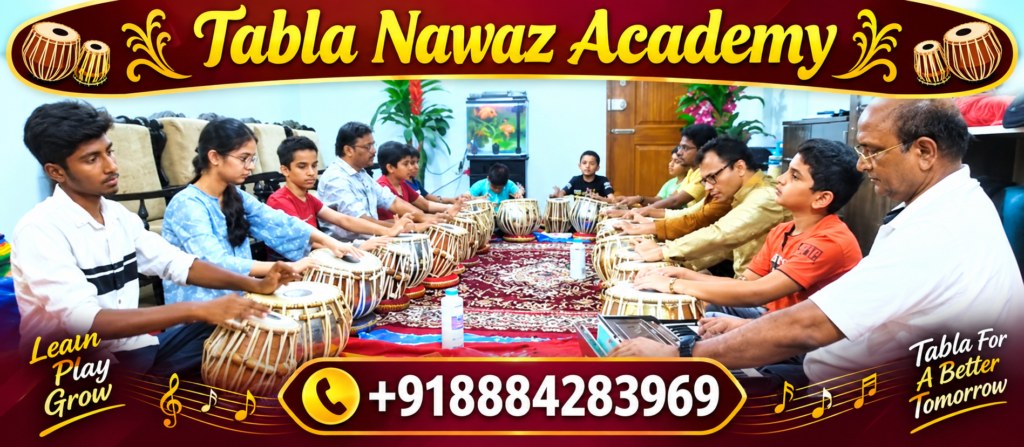
Learning tabla requires attention to rhythm, hand coordination, listening, and repetition. These qualities make practice an engaging activity rather than passive listening.
How Can Tabla Playing Support Mental Well-Being?
Research into music-based interventions suggests that making and listening to music can have beneficial effects on mood, stress, and emotional well-being. Tabla practice may offer some of these general benefits.
1. Focus and Mindfulness
Following a rhythmic cycle requires concentration. A student practicing a taal such as Teentaal must listen carefully and maintain a steady rhythmic structure.
This focused attention can provide a temporary mental break from everyday worries and encourage a more present-focused state of mind.
2. Stress Reduction
Rhythmic musical activities can be relaxing for many people. Repetitive practice, controlled breathing, attentive listening, and gradual improvement may create a calming routine.
However, individual responses differ. What relaxes one person may not have the same effect on another.
3. Emotional Expression
Music provides a non-verbal way to explore and express emotions. Tabla allows players to communicate through rhythm, dynamics, tempo, and improvisation.
For some people, creative expression can become a meaningful part of maintaining emotional well-being.
4. Social Connection
Tabla is often learned with a teacher, performed with other musicians, or practiced as part of an ensemble. These social connections can be valuable because supportive relationships are an important part of mental health.
What Does Music Therapy Mean?
Music therapy is different from simply listening to music or learning an instrument. It is a professional therapeutic practice in which qualified practitioners use music-based techniques as part of individualized care.
A music therapist may use activities such as singing, instrumental playing, songwriting, movement, or guided listening depending on a person’s needs and therapeutic goals.
Tabla can be incorporated into music-making activities, but there is not enough evidence to claim that tabla itself is a medically proven treatment or that doctors universally rank it as the “number one” therapy for mental health.
Can Tabla Cure Anxiety or Suicidal Thoughts?
No musical instrument should be promoted as a guaranteed cure for anxiety, depression, or suicidal thoughts.
Music and tabla practice may be useful complementary activities, but people experiencing significant anxiety or other mental-health difficulties should seek guidance from qualified healthcare professionals.
If someone is experiencing thoughts of suicide or feels unable to stay safe, this is an urgent mental-health situation. They should tell a trusted adult, contact a qualified mental-health professional, or use local emergency/crisis services rather than relying on music alone.
Try a Simple Tabla Mindfulness Exercise
You don’t need to be an expert tabla player to experiment with focused rhythm practice.
- Sit comfortably with your tabla.
- Take a few slow, comfortable breaths.
- Choose a simple rhythm you already know.
- Play slowly and concentrate on each sound.
- When your attention wanders, gently return it to the rhythm.
- Finish by sitting quietly for a moment and noticing how you feel.
The goal isn’t perfection. It is simply to become more attentive to sound, movement, and the present moment.
The Future of Tabla and Wellness
Tabla represents much more than a traditional Indian percussion instrument. Its intricate rhythms connect musical heritage with creativity, concentration, and social participation.
As researchers continue studying music-based approaches to well-being, tabla may have an interesting role in community music, education, relaxation activities, and complementary therapeutic programs. More research is needed to establish exactly how tabla-specific practice affects anxiety and other mental-health outcomes.
Final Thoughts
Tabla cannot replace professional treatment for anxiety or serious mental-health conditions, but learning and playing music can be a rewarding part of a healthy lifestyle. The discipline of rhythm, the joy of creating sound, and the connection between musicians can make tabla practice a meaningful experience.
https://www.youtube.com/@BhagawanSingh
https://www.facebook.com/sbsinghtablaguru