
Master Jhaptal Kayda 5: Dha Tirkit Dha Gena — Tabla Notation, Practice & Performance Guide
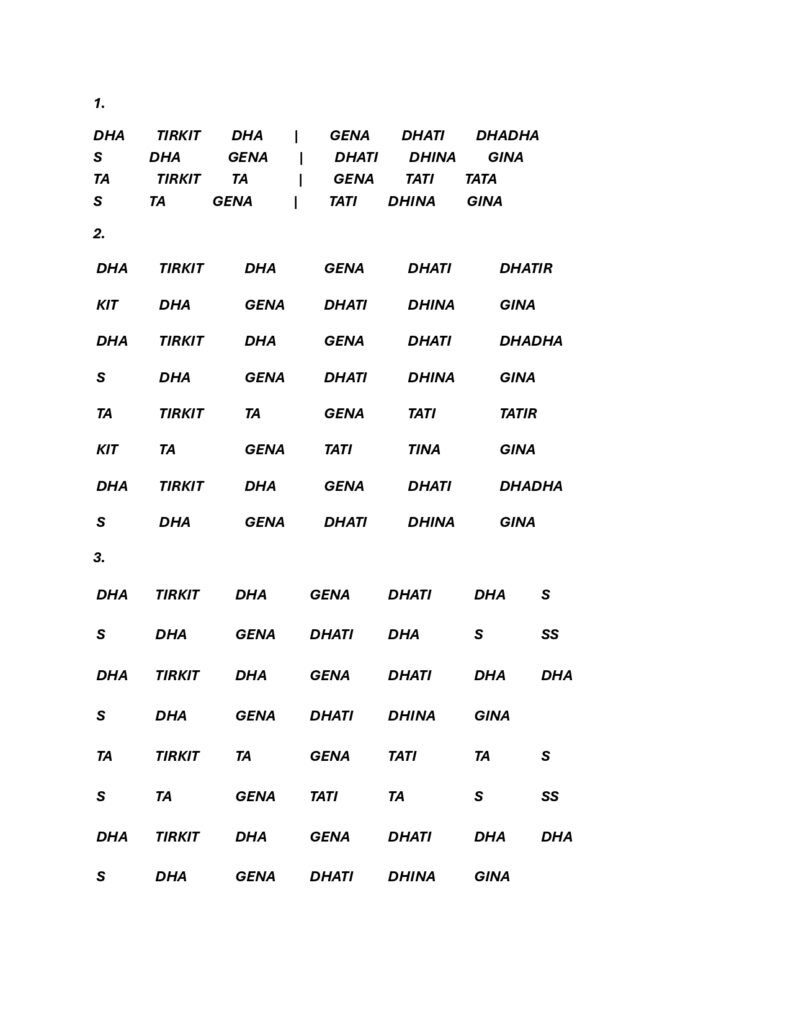
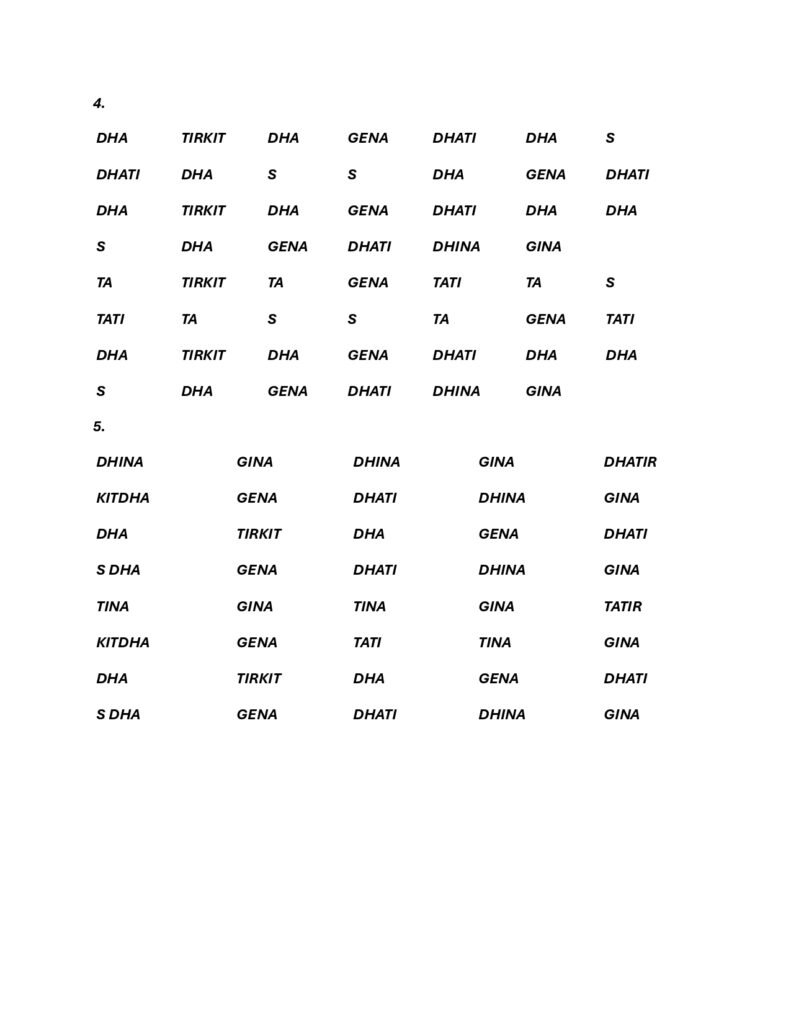
Jhaptal is one of the most fascinating taals in Hindustani tabla music. With its 10 matras (beats) divided into 2+3+2+3, it offers a beautiful balance between symmetry and rhythmic surprise. For tabla students, learning a well-structured Jhaptal kayda is an excellent way to develop clarity, speed, layakari, and command over bols. In this lesson, we explore Jhaptal Kayda 5: “Dha Tirkit Dha Gena”, with notation, theka, practice techniques, and tips for presenting the kayda confidently.
Understanding Jhaptal
Jhaptal contains 10 matras arranged into four vibhags:
2 + 3 + 2 + 3 = 10
Its theka is commonly written as:
Dhi Na | Dhi Dhi Na | Tin Na | Dhi Dhi Na
The tali-khali structure is:
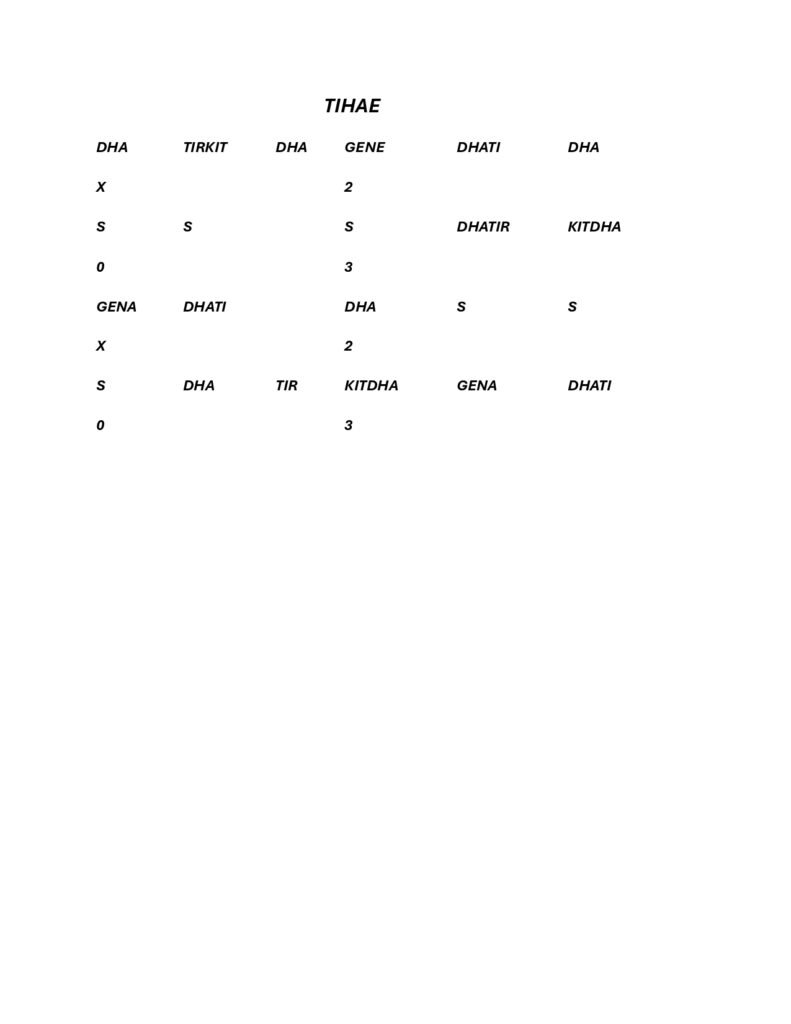
X | 2 | 0 | 3
This gives Jhaptal a distinctive rhythmic character. The khali on the third vibhag creates a change in tonal and rhythmic emphasis that players must learn to feel rather than simply count.
Jhaptal Kayda 5: Dha Tirkit Dha Gena
A kayda is a composed rhythmic theme based on a particular set of bols. The theme is developed through variations, known as palta, before returning to the original kayda.
The central phrase for this lesson is:
Dha Tirkit Dha Gena
The bols should be practiced slowly at first, with every syllable sounding clean and evenly placed.
A useful way to approach the phrase is to separate the bols mentally:
Dha | Tirkit | Dha | Gena
The phrase combines open and closed sounds, creating a lively contrast that works particularly well in Jhaptal.
Basic Notation
A simple 10-matra framework can be represented as:
1 2 | 3 4 5 | 6 7 | 8 9 10
Dha Tirkit | Dha Gena Dha | Tirkit Dha | Gena Dha —
The exact distribution of the kayda and its subsequent paltas can vary according to gharana, composition, teacher, and notation tradition. Therefore, students should use their guru’s version as the authoritative source when learning a specific repertoire item.
When writing your own notation, clearly mark the sam, vibhag divisions, and khali. This makes the composition much easier to understand and perform.
How to Practice “Dha Tirkit Dha Gena”
The first goal should not be speed. Clarity comes before velocity.
Start by reciting:
Dha Tirkit Dha Gena
several times without playing. Then play each bol slowly while maintaining a steady Jhaptal cycle.
Step 1: Practice the bols
Work individually on:
- Dha
- Tirkit
- Gena
Make sure that each sound has its own character.
Step 2: Maintain the taal
Recite Jhaptal’s counting:
1 2 | 3 4 5 | 6 7 | 8 9 10
Clap the tali sections and indicate the khali while reciting the bols.
Step 3: Use a metronome or tabla lehra
Begin at a comfortable tempo. Once the phrase remains completely even, gradually increase the speed.
Step 4: Develop the kayda
A traditional kayda is not simply a phrase repeated continuously. Its paltas rearrange and develop the original material while preserving the rhythmic framework. After exploring the variations, the player returns to the mukh, or original theme.
Why This Kayda Is Useful
“Dha Tirkit Dha Gena” is valuable because it encourages students to coordinate fingers, strokes, pronunciation, and rhythmic awareness simultaneously.
It also introduces an important principle of tabla playing: a composition should remain recognizable even when its material is developed creatively.
For intermediate players, practicing this kayda in vilambit, madhya, and drut laya can be particularly useful. However, each tempo should be introduced only after the strokes are controlled at the previous speed.
Performance Tips
When performing Jhaptal Kayda 5, keep the sam clearly in mind. The listener should be able to sense where the rhythmic cycle resolves.
Avoid rushing the Tirkit portion. Fast bols can easily become blurred if the hand moves faster than the player’s rhythmic control.
Try recording yourself while practicing. Listen specifically for:
- Evenness of tempo
- Clear pronunciation of bols
- Strong sam
- Consistent tonal quality
- Clean transitions between bols
Explore Jhaptal Further
Once you are comfortable with “Dha Tirkit Dha Gena,” experiment with creating simple paltas from the same bol vocabulary. This is where the real educational value of a kayda appears: you begin moving from memorizing a composition toward understanding its rhythmic structure.
Jhaptal is also an excellent taal for listening practice. Study recordings by established tabla artists and observe how they maintain the 10-matra cycle while introducing variations, tihai, rela, and other rhythmic ideas.
Conclusion
Jhaptal Kayda 5: Dha Tirkit Dha Gena provides a practical doorway into the deeper world of tabla composition. Its combination of rhythmic structure, expressive bols, and scope for variation makes it useful for developing both technique and musical understanding.
https://www.youtube.com/@BhagawanSingh