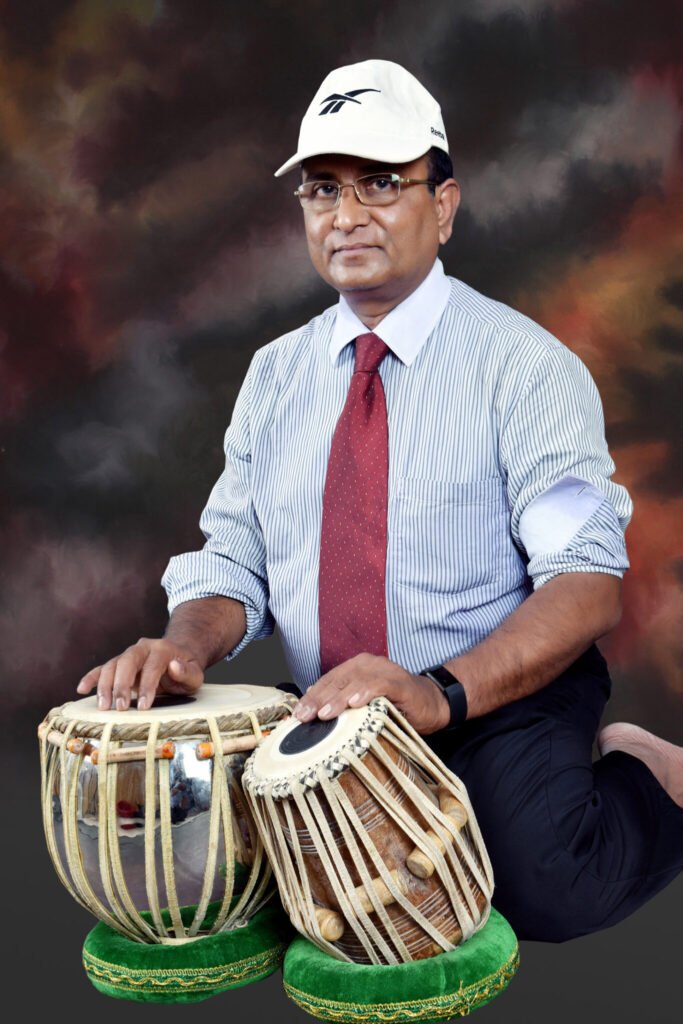
Ektaal 12-Beat Chakradar Tihai Masterclass: Unlocking the Power of Cycles, Precision, and Mathematical Beauty
In tabla, few rhythmic concepts are as satisfying—and as challenging—as a well-executed Chakradar Tihai. When this intricate phrase lands perfectly on sam, the first beat of the cycle, the listener experiences a sense of inevitability: three repetitions, perfectly calculated, circling back to where the rhythm began.
Welcome to the Ektaal 12 Beat Chakradar Tihai Masterclass, a focused exploration of one of Hindustani classical music’s most exciting rhythmic structures. Whether you are an intermediate tabla student, a performing artist, or simply fascinated by Indian rhythm, this masterclass brings together theory, calculation, technique, and musical expression.
Understanding Ektaal
Ektaal is a 12-matra (12-beat) taal widely used in Hindustani classical music, particularly in the instrumental and vocal traditions. Its 12 beats are divided into six sections of two beats each, creating a symmetrical framework that provides enormous possibilities for rhythmic development.
A common Ektaal theka is:
Dhin Dhin | DhaGe Tirakita | Tu Na | Kat Ta | Dhin Dhin | DhaGe Tirakita | Tu Na | Kat Ta
Different gharanas and performance contexts may use variations in bols, but the fundamental 12-beat cycle remains the rhythmic foundation.
The most important point for a student is to internalize the 12-matra cycle rather than simply memorizing a sequence of bols. Once the cycle is deeply established, complex compositions become much easier to understand and perform.
What Makes a Chakradar Tihai Special?
A Tihai is a rhythmic phrase performed three times, traditionally designed to conclude on sam. The word itself comes from the idea of repetition in three parts.
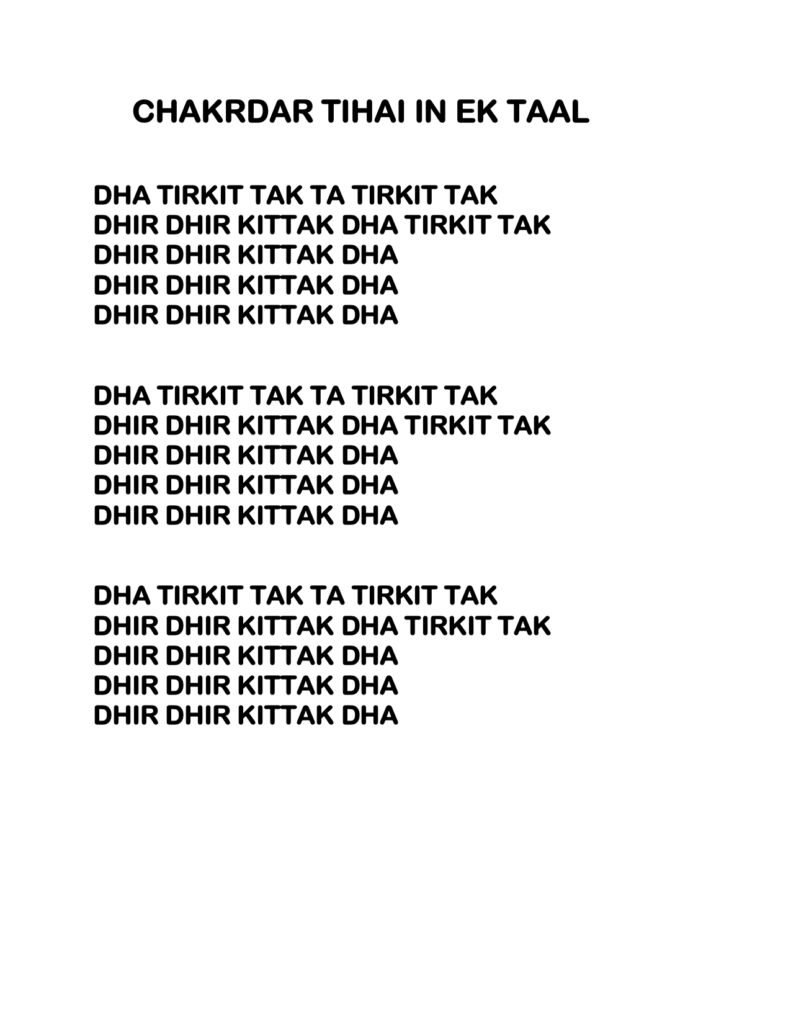
A Chakradar takes this idea further. The complete phrase—or a larger rhythmic unit—is repeated three times, producing a striking circular effect. Because the entire structure must ultimately resolve to sam, the performer has to calculate its placement with extraordinary precision.
This is where mathematics meets music.
For an Ektaal composition, the tabla player must know exactly where the phrase begins, how many matras and subdivisions it occupies, and how the three repetitions align with the 12-beat cycle. Even a tiny timing error can cause the final dha to miss sam.
The Masterclass Approach
The Ektaal 12 Beat Chakradar Tihai Masterclass is designed to make this complex subject approachable through a step-by-step learning process.
Step 1: Feel the Taal
Before attempting the Chakradar, clap, count, and recite Ektaal until the 12-beat cycle becomes instinctive. Practice speaking the theka while maintaining a steady laya.
Step 2: Master the Bols
Clear pronunciation is essential. Whether the composition uses dha, dhin, ta, tin, tirakita, or other combinations, every bol should have a defined sound and position.
Step 3: Understand the Mathematics
Instead of treating the Chakradar as a mysterious memorized formula, break it into measurable sections. Count the phrase, identify its internal repetitions, and calculate its relationship to sam.
A useful practice method is to recite the composition slowly while counting matras aloud. Then gradually increase the speed without allowing the underlying 12-beat cycle to disappear.
Step 4: Add Layakari
Once the basic phrase is secure, experiment with rhythmic subdivisions and controlled variations in laya. This develops the student’s ability to maintain Ektaal while navigating increasingly sophisticated rhythmic structures.
Step 5: Resolve with Confidence
The final repetition should arrive at sam naturally and decisively. A successful Chakradar is not merely mathematically correct; it should sound musical, confident, and inevitable.
Why Learn Chakradar Tihai?
Studying Chakradar Tihai develops skills that extend far beyond one composition. It strengthens laya awareness, rhythmic calculation, memory, bol clarity, improvisational confidence, and ensemble communication.
For performers, these skills are invaluable during tabla solos, accompaniment, and jugalbandi. For students, learning such a composition can also provide a deeper understanding of how Hindustani rhythm is constructed.
Most importantly, it teaches an important lesson: Indian classical rhythm is both intellectually sophisticated and deeply expressive.
From Calculation to Musicality
One of the biggest mistakes students make is focusing exclusively on mathematics. Calculation tells you where the phrase should land; musicality determines how it gets there.
A Chakradar should breathe. The bols need appropriate weight, the strokes should remain clean, and the phrase should build toward its resolution. Practicing with a metronome, lehra, or tanpura-based practice environment can help develop consistency, but ultimately the goal is to internalize the rhythm so thoroughly that the mathematics becomes part of musical instinct.
Take the Challenge
If you are ready to move beyond basic theka and explore the deeper architecture of Hindustani rhythm, the Ektaal 12 Beat Chakradar Tihai Masterclass is an ideal challenge.
Start slowly. Speak every bol. Count every matra. Feel every cycle. Then gradually increase the speed until the composition flows effortlessly.
And when those three repetitions finally circle back to sam, you will experience what makes Chakradar Tihai so captivating: a perfect meeting point of mathematics, memory, technique, and musical expression.
The cycle comes around. The phrase resolves. And the rhythm speaks for itself.
https://www.youtube.com/@BhagawanSingh
https://www.facebook.com/sbsinghtablaguru