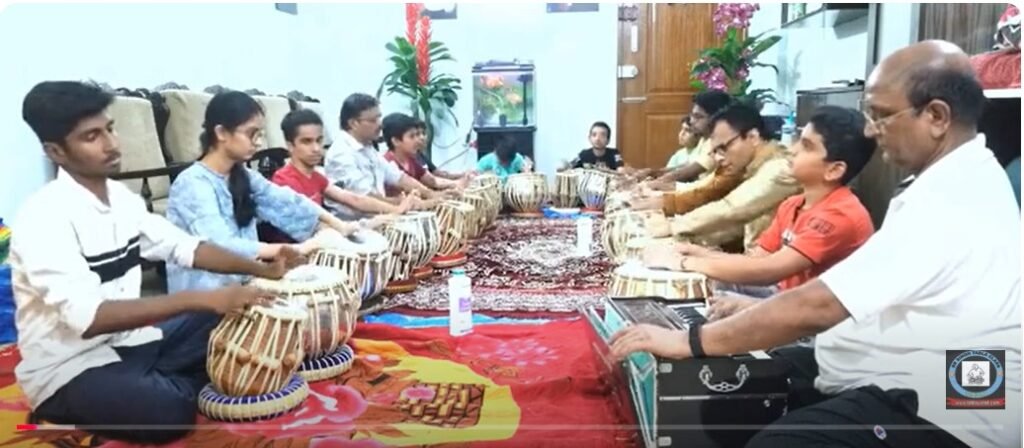
Ektaal Gat: Understanding the 12-Beat Cycle in Tabla
Ektaal is one of the most important rhythmic cycles in Hindustani classical music. With 12 beats (matras) arranged into six equal divisions, Ektaal offers tabla players a perfect balance between mathematical precision, expressive variation, and musical creativity. For students learning tabla, mastering an Ektaal gat is an excellent way to develop control over rhythm, clarity of bols, and an understanding of how a composition fits inside a taal cycle.
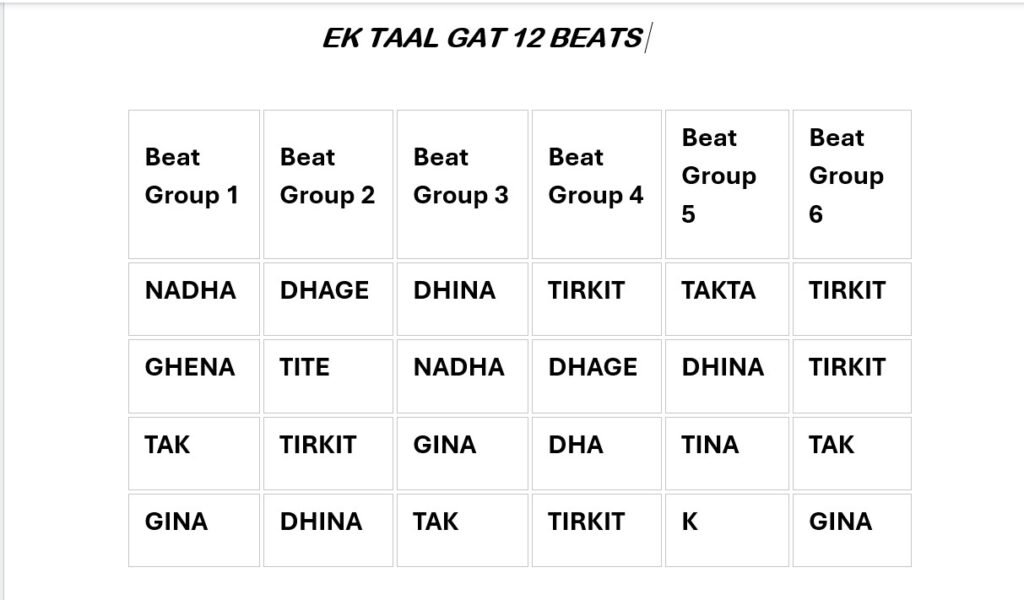
What Is Ektaal?
The word Ektaal literally means “one taal,” and it consists of 12 matras. Unlike Teentaal, which has 16 beats, Ektaal is divided into six sections, or vibhags, of two beats each.
Its traditional clapping and waving pattern is:
X 2 0 3 0 4
The symbols indicate the important rhythmic markers known as taali (clap) and khali (wave). The cycle is therefore not simply a count from 1 to 12; its internal divisions give Ektaal its distinctive character.
A commonly taught basic theka is:
Dhin Dhin | DhaGe Tirakita | Tu Na | Kat Ta | DhaGe Tirakita | Dhin Na
Different gharanas, musicians, and contexts may use variations of these bols. This flexibility is one of the fascinating features of tabla tradition.
What Is an Ektaal Gat?
A gat is a composed tabla piece. Rather than simply repeating the basic theka, a gat presents a carefully structured combination of bols designed to create a particular rhythmic and musical character.
An Ektaal gat uses the 12-matra framework as its foundation. The composition may contain phrases such as Dha, Dhin, Tin, Na, Tirakita, Ghe, and Kat, arranged in patterns that resolve naturally back to the beginning of the cycle.
One of the most satisfying moments in performing a gat is reaching the sam, the first beat of the taal. A well-designed phrase creates rhythmic tension and then resolves precisely on sam.
Why Is Ektaal Challenging?
Although Ektaal has only 12 beats, its structure can be surprisingly demanding. The six two-beat divisions require the player to maintain a strong internal sense of time.
Beginners sometimes concentrate so heavily on individual bols that they lose track of the larger cycle. The solution is to practice the taal slowly while continuously counting:
1–2 | 3–4 | 5–6 | 7–8 | 9–10 | 11–12
Once this becomes comfortable, the student can gradually replace counting with the traditional taal gestures and eventually internalize the cycle.
Practicing an Ektaal Gat
Start by learning the composition one phrase at a time. Do not immediately attempt to play the entire gat at a fast tempo.
First, recite the bols clearly:
Dha – Dhin – Tirakita – Dha – Ghe – Na
Then identify where each phrase falls within the 12-matra cycle. Clap or count the taal while reciting. Only after the rhythmic placement becomes secure should you bring the bols onto the tabla.
A metronome or tabla lehra can also be useful. Begin at a slow vilambit or madhya laya, depending on the composition, and gradually increase the tempo without sacrificing clarity.
The Importance of Sam and Tihai
The sam is central to Hindustani rhythm. In an Ektaal gat, phrases are often designed to lead naturally toward this point.
A tihai is another important rhythmic device. It consists of a phrase repeated three times, usually arranged so that the final repetition lands on sam. Constructing and performing a tihai within a 12-beat cycle is an excellent exercise in rhythmic calculation.
For example, a player may develop a short phrase, determine its total duration, calculate the necessary spaces between repetitions, and then resolve the complete structure on sam. This combination of mathematics and musical expression is one of tabla’s great attractions.
Ektaal in Classical Music
Ektaal has a particularly important place in Hindustani vocal and instrumental music. It is frequently encountered in serious classical repertoire and is especially associated with compositions performed at slower or moderate tempos.
Tabla maestros use Ektaal not merely to keep time but to interact creatively with the soloist. The tabla can emphasize particular points of the cycle, introduce variations of the theka, and respond to melodic phrases while always maintaining the underlying 12-matra structure.
Final Thoughts
Learning an Ektaal gat in 12 beats is much more than memorizing a sequence of tabla bols. It teaches a student how rhythm is organized, how phrases move through a cycle, and how tension can be created and resolved on sam.
The key is patience: recite, count, clap, play slowly, and gradually develop speed. Once the 12-beat structure becomes natural, Ektaal opens the door to more sophisticated kaidas, gats, relas, tihais, and rhythmic improvisation.
For every tabla student, Ektaal is a valuable journey into the precision and beauty of Hindustani rhythm.
https://www.facebook.com/profile.php?id=61563286136360
https://www.youtube.com/@BhagawanSingh