
Teen Taal 16 Beats Barahi Tukra Masterclass
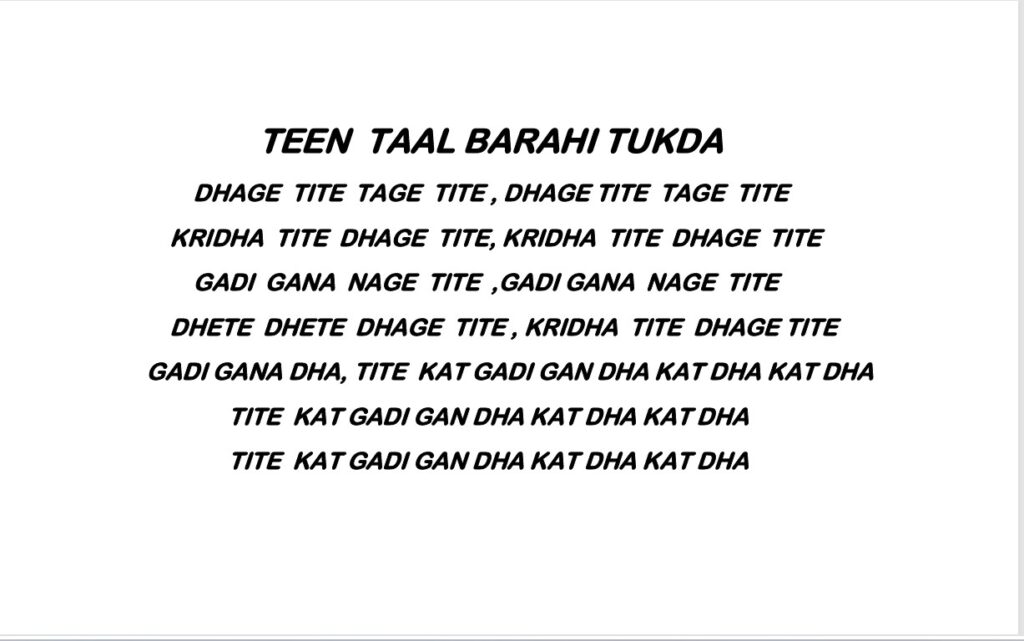
The Teen Taal (Tintal) is the most widely performed rhythmic cycle in Hindustani classical music. Consisting of 16 beats (matras) divided into four equal sections (vibhags) of four beats each, Teen Taal serves as the foundation for countless tabla compositions. Among its many advanced forms, the Barahi Tukra stands out as an exciting and powerful composition that showcases precision, speed, and creativity.Whether you are a beginner eager to expand your repertoire or an intermediate tabla student looking to improve your performance skills, mastering the Teen Taal 16 Beats Barahi Tukra is a valuable milestone in your musical journey.
Understanding Teen Taal
Teen Taal follows a balanced structure of 16 beats, grouped into four vibhags:
Beat Structure: 4 + 4 + 4 + 4
Tali (Claps): 1, 5, 13
Khali (Wave): 9
The basic theka is:
Dha Dhin Dhin Dha | Dha Dhin Dhin Dha | Dha Tin Tin Ta | Ta Dhin Dhin Dha
This theka is one of the first rhythmic patterns every tabla student learns. It forms the rhythmic framework for numerous compositions, including kaidas, relas, gats, paran, chakradars, and tukras.
What Is a Barahi Tukra?
A Tukra is a short, energetic tabla composition that usually ends with a strong Tihai, creating an impressive conclusion. The word Barahi means twelve, indicating that this composition is built around a rhythmic phrase associated with the number twelve in its design or development, depending on the tradition and gharana in which it is taught.
Barahi Tukras are admired for their balanced phrasing, powerful bols, and exciting rhythmic flow. They are frequently performed during solo tabla recitals and are also used to conclude a performance with style and confidence.
Why Learn Barahi Tukra?
Learning the Teen Taal Barahi Tukra offers several musical benefits:
- Develops strong rhythmic accuracy.
- Improves hand coordination and speed.
- Enhances understanding of composition structure.
- Strengthens Tihai execution.
- Builds confidence during live performances.
- Expands your classical tabla repertoire.
Practicing this composition also trains your ears to recognize rhythmic symmetry, an essential skill for advanced tabla players.
Practice Tips for Mastery
Consistency is the key to mastering any tabla composition. Follow these practice strategies:
Begin by reciting the bols aloud before playing them on the tabla. Vocal recitation develops rhythmic clarity and helps you internalize the composition.
Practice with a metronome or lehra at a slow tempo. Accuracy is far more important than speed. Once every stroke sounds clean and balanced, gradually increase the tempo.
Pay close attention to finger placement, especially when playing bols such as Na, Tin, Ta, Dha, Dhin, and Ge. Proper technique produces a clear tone and prevents unnecessary strain.
Finally, focus on landing the concluding Sam with confidence. A powerful arrival on the first beat gives the Barahi Tukra its dramatic impact.
Common Mistakes to Avoid
Many students rush through the composition before they have mastered its structure. Speed without clarity often leads to uneven rhythm and incorrect bols.
Another common mistake is ignoring the Tihai. Since the ending creates the final impression, every repetition should be evenly spaced and perfectly aligned with the Sam.
Students should also avoid practicing without counting the 16 beats. Keeping track of the tala ensures that the composition remains rhythmically accurate.
Performance Tips
When presenting the Barahi Tukra in a recital, maintain a steady tempo and clear articulation. Every bol should be audible and well-defined. Avoid unnecessary tension in your hands and allow the composition to flow naturally.
Experienced performers often begin with a moderate tempo before gradually increasing the intensity. This creates excitement while maintaining rhythmic precision.
Benefits Beyond Performance
Mastering the Teen Taal 16 Beats Barahi Tukra strengthens your overall musicianship. It improves concentration, listening skills, memory, and rhythmic confidence. The techniques learned while practicing this composition also make it easier to perform more advanced kaidas, relas, and chakradars.
Final Thoughts
The Teen Taal 16 Beats Barahi Tukra is much more than a technical exercise—it is an artistic expression of rhythm, discipline, and creativity. By practicing regularly, reciting the bols, and focusing on precision before speed, you can develop a performance-ready composition that reflects both skill and musical maturity.
Whether you are preparing for examinations, stage performances, or simply deepening your appreciation of Hindustani classical music, this masterclass composition is an essential addition to your tabla repertoire. Stay consistent, practice with dedication, and enjoy the rewarding journey of mastering the timeless rhythms of Teen Taal.
https://www.youtube.com/@BhagawanSingh