
Ek Taal Rela 12 Beats | Fast Tabla Composition
The Ek Taal Rela is one of the most exciting and dynamic compositions in the world of tabla. Played in the 12-beat cycle (Ektaal), a Rela is known for its rapid flow, balanced rhythm, and continuous movement. Whether you are a beginner learning traditional compositions or an advanced tabla player refining speed and clarity, practicing an Ek Taal Rela is an excellent way to improve your technique, timing, and endurance. In this article, we’ll explore what an Ek Taal Rela is, why it is important, and how you can practice it effectively.
What Is Ek Taal?
Ektaal is a classical North Indian rhythmic cycle consisting of 12 beats (matras). It is widely used in Khayal, Dhrupad, instrumental music, and tabla solo performances. The taal is divided into six vibhags, each containing two beats, creating a balanced and symmetrical rhythmic structure.
The traditional theka of Ektaal is:
Dhin Dhin | DhaGe Tirakita | Tu Na | Kat Ta | DhaGe Tirakita | Dhin Na
Its versatility allows musicians to perform both slow and fast compositions while maintaining rhythmic precision.
What Is a Rela?
The word Rela literally means “flow” or “stream.” In tabla, it refers to a composition played with a smooth, uninterrupted flow of bols. Unlike a Kaida, which focuses on developing variations from a theme, a Rela emphasizes speed, consistency, and clean articulation.
A Rela often contains bols such as:
- Tirkit
- Tita
- Dhage
- Ghena
- Kat
- Tak
- Dhere Dhere
These bols create a continuous rhythmic texture that sounds energetic and engaging.
Why Practice an Ek Taal Rela?
Practicing Rela in Ektaal offers several benefits for tabla students.
- Improves finger speed and dexterity.
- Develops rhythmic accuracy.
- Builds stamina for long performances.
- Enhances clarity while playing at faster tempos.
- Strengthens understanding of Ektaal’s 12-beat structure.
Regular practice also helps players transition smoothly between medium and fast tempos without losing balance.
Example of an Ek Taal Rela
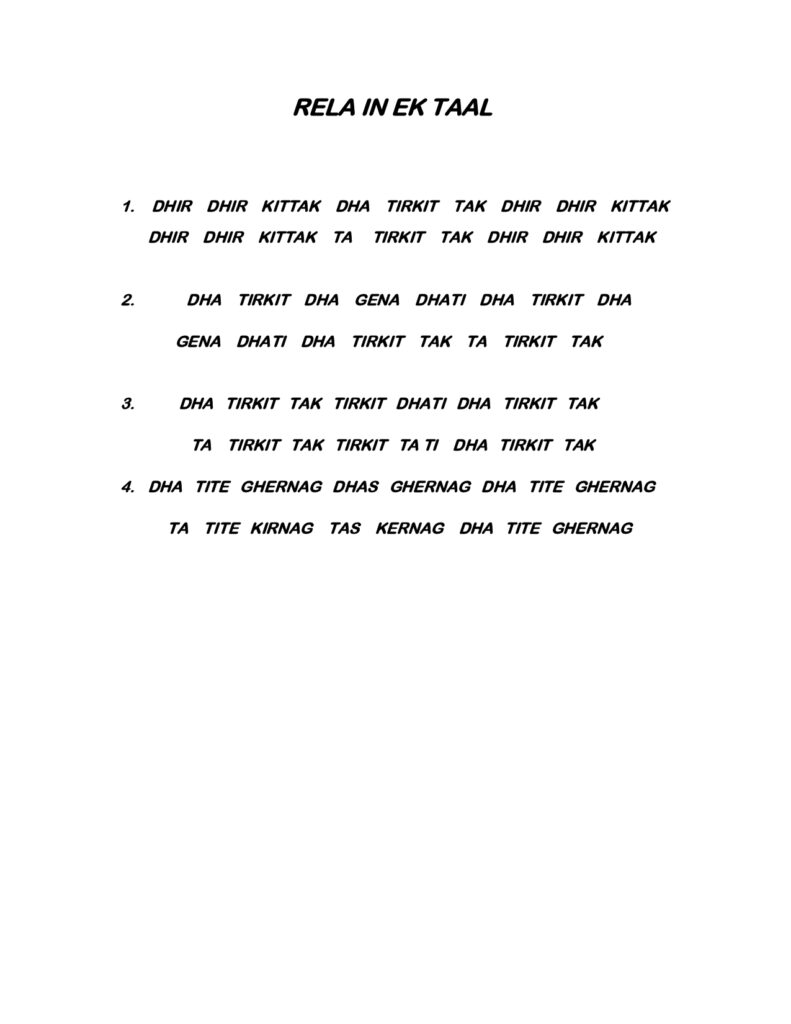
Here is a simple Rela pattern:
Dha Tirkit Tak Tirkit Dhati Dha Tirkit Tak
Ta Tirkit Tak Tirkit Tati Dha Tirkit Tak
This composition demonstrates flowing Tirkit phrases combined with Dha and Ta bols, making it ideal for developing speed and precision.
Tips for Practicing Fast Tabla Compositions
Learning a fast Rela requires patience and disciplined practice. Begin by playing the composition slowly while counting all 12 beats carefully. Every bol should sound clear and even.
Increase the tempo gradually using a metronome or lehra machine. Avoid rushing into high speeds before mastering clarity.
Pay close attention to:
- Equal spacing between bols.
- Relaxed wrist movement.
- Consistent hand position.
- Accurate placement of sam.
- Balanced volume between Dayan and Bayan.
Remember that speed is the result of consistent practice rather than force.
Common Mistakes to Avoid
Many tabla students encounter similar challenges when learning Relas.
One common mistake is sacrificing clarity for speed. Every bol should remain distinct even at faster tempos.
Another mistake is losing track of the Ektaal cycle. Counting the matras while practicing helps maintain rhythmic accuracy.
Students should also avoid excessive tension in the hands. Relaxed movements produce better tone and greater endurance.
Practice Routine
A structured practice routine helps achieve faster progress.
- Practice the theka of Ektaal for 10 minutes.
- Recite the Rela bols aloud for 5 minutes.
- Play the composition slowly for 10 minutes.
- Increase speed gradually over 15 minutes.
- Finish by performing the Rela three times continuously while maintaining perfect rhythm.
Practicing daily for 30–40 minutes will noticeably improve control and confidence.
Importance in Tabla Solo Performance
Rela compositions are an essential part of traditional tabla solo concerts. After presenting Peshkar, Kaida, and other compositions, tabla artists often introduce Rela to increase the energy and excitement of the performance.
Great maestros such as Ustad Zakir Hussain, Pandit Anindo Chatterjee, Pandit Kumar Bose, and Pandit Suresh Talwalkar have demonstrated breathtaking Relas that showcase remarkable speed, clarity, and creativity while remaining firmly rooted in classical tradition.
Final Thoughts
The Ek Taal Rela (12 Beats) is much more than a fast tabla composition. It is a powerful exercise that develops rhythm, speed, coordination, and musical expression. With consistent practice, careful attention to clarity, and gradual tempo increases, students can master this beautiful composition and confidently include it in both practice sessions and live performances.
Whether you are preparing for tabla examinations, stage performances, or simply expanding your classical repertoire, adding an Ek Taal Rela to your daily routine will strengthen your technique and deepen your understanding of one of Hindustani music’s most respected rhythmic cycles. Keep practicing with patience, stay focused on clean bols, and let the rhythm flow naturally.