
Ek Tihai – Master Ektaal Tihai: 12 Beats Tabla Lesson
Understanding the Power of Tihai in Ektaal
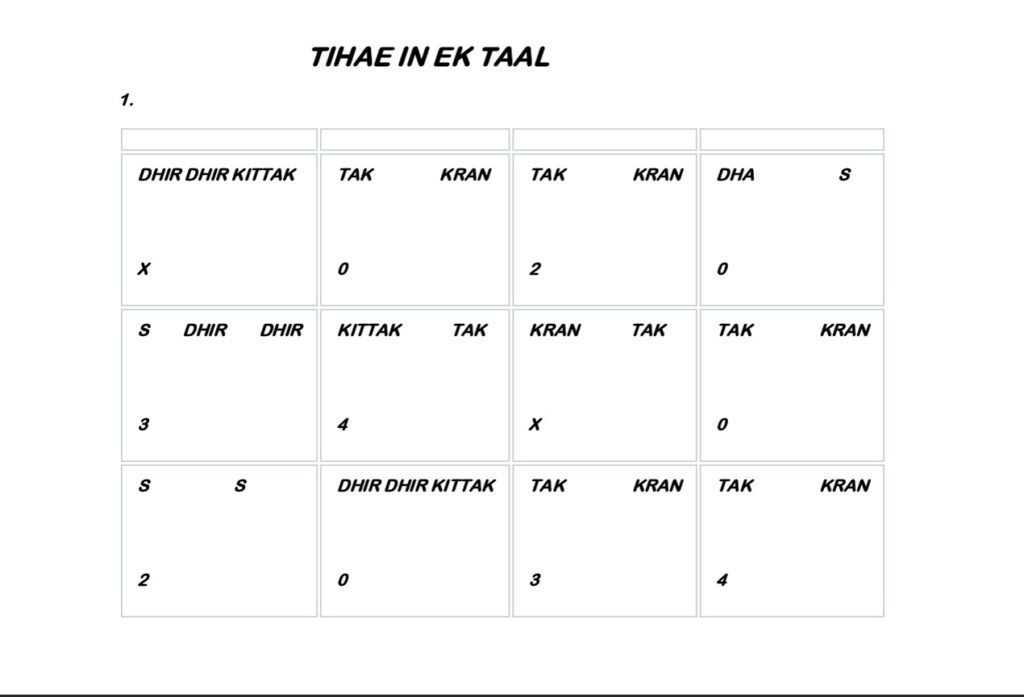
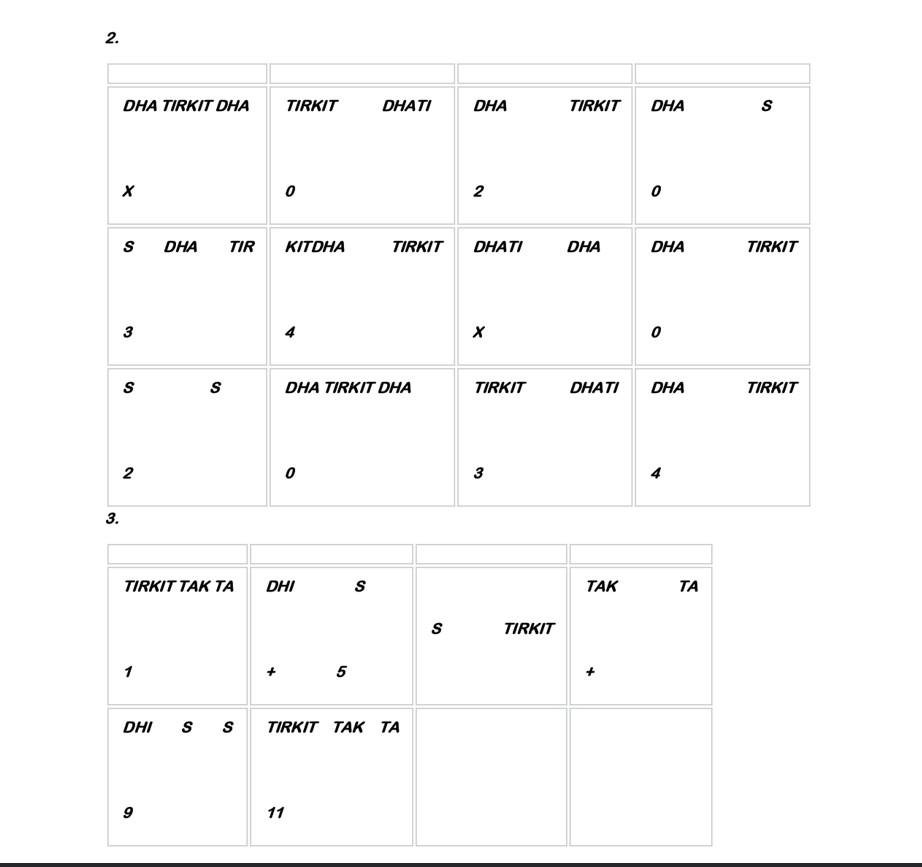
One of the most exciting moments in a tabla performance is the tihai—a rhythmic phrase repeated three times that concludes precisely on the sam (the first beat of the cycle). For tabla students, learning tihais is an essential step toward developing confidence, creativity, and a deeper understanding of rhythm. In this lesson, we will focus on an Ek Tihai in Ektaal, a 12-beat rhythmic cycle widely used in Hindustani classical music. Mastering this tihai will improve your timing, counting skills, and ability to perform smooth rhythmic resolutions.
What Is Ektaal?
Ektaal is a traditional 12-beat taal divided into six sections (vibhags) of two beats each. It is commonly used in both vocal and instrumental classical performances.
Structure of Ektaal
| Beats | Division |
|---|---|
| 1–2 | Clap |
| 3–4 | Wave |
| 5–6 | Clap |
| 7–8 | Wave |
| 9–10 | Clap |
| 11–12 | Wave |
Basic Theka of Ektaal
Dhin Dhin | DhaGe Tirakita | Tu Na | Kat Ta | DhaGe Tirakita | Dhin Na
Students should become comfortable reciting and playing the theka before attempting any tihai.
What Is a Tihai?
A tihai is a rhythmic composition in which a phrase is repeated three times, often separated by equal gaps or played continuously, and lands exactly on the sam.
The word tihai comes from the Hindi word “teen” (three), reflecting the three repetitions that define the composition.
Tihais serve several purposes:
- Marking the end of a solo passage
- Transitioning between sections
- Creating excitement and anticipation
- Demonstrating rhythmic mastery
The Ek Tihai Composition
A simple Ektaal tihai for beginners can be structured as:
Dha Ge Na | Dha Ge Na | Dha Ge Na
This phrase is repeated three times and calculated so that the final stroke lands on the sam.
Example
Dha Ge Na Dha Ge Na Dha Ge Na
Dha Ge Na Dha Ge Na Dha Ge Na
Dha Ge Na Dha Ge Na Dha Ge Na
When counted correctly within the 12-beat framework, the final “Na” resolves beautifully onto the first beat of the next cycle.
Counting the Tihai
Counting is the secret to successful tihai execution.
Step 1: Count the Ektaal Cycle
1 2 | 3 4 | 5 6 | 7 8 | 9 10 | 11 12
Repeat this cycle several times while clapping the divisions.
Step 2: Recite the Bols
Speak the bols slowly:
Dha Ge Na
Maintain a steady pulse and clear pronunciation.
Step 3: Repeat Three Times
Once comfortable, recite:
Dha Ge Na Dha Ge Na Dha Ge Na
Then repeat the entire phrase three times while keeping track of the beat cycle.
Practice Tips
1. Use a Metronome or Lehra
Practice with a steady tempo source. A lehra or tabla app helps maintain consistency and improves timing accuracy.
2. Recite Before Playing
Tabla masters often emphasize “bol padhna” (reciting bols) before playing them. If you can speak the composition correctly, you are more likely to play it accurately.
3. Start Slowly
Begin at a slow tempo where every stroke is clear. Gradually increase speed while maintaining precision.
4. Focus on the Sam
The true beauty of a tihai lies in its landing. Listen carefully and ensure the final stroke arrives exactly on the sam.
5. Record Yourself
Recording practice sessions helps identify timing issues and track improvement over time.
Common Mistakes
Many beginners struggle with tihais because they:
- Rush through repetitions
- Lose count of the taal cycle
- Ignore the spacing between phrases
- Focus on speed rather than accuracy
Remember that a perfectly timed slow tihai is more impressive than a fast but inaccurate one.
Why Learn Ektaal Tihais?
Learning tihais develops several essential tabla skills:
- Stronger rhythmic awareness
- Better understanding of tala structure
- Improved solo performance techniques
- Enhanced improvisation abilities
- Greater confidence during accompaniment
Even simple tihais teach students how mathematical precision and artistic expression work together in Indian classical rhythm.
Bringing Musicality to Your Tihai
A tihai is more than a mathematical exercise. It should create tension, anticipation, and a satisfying resolution. As you practice, focus on the flow of the phrase, the quality of each stroke, and the feeling of arrival on the sam.
Listen to recordings of legendary tabla maestros such as Ustad Zakir Hussain, Pandit Kishan Maharaj, and Pandit Anindo Chatterjee to hear how they use tihais creatively within performances.
Conclusion
Mastering an Ek Tihai in Ektaal is an important milestone in every tabla student’s journey. By understanding the 12-beat structure of Ektaal, learning to count accurately, and practicing consistent repetitions, you can develop a strong foundation in rhythmic composition.
Take your time, practice daily, and focus on landing confidently on the sam. With patience and dedication, this simple Ektaal tihai will open the door to more advanced rhythmic concepts and enrich your overall tabla playing experience. Happy practicing! 🥁
https://www.youtube.com/@BhagawanSingh