
Master Jhaptaal Dheere Dheere Kayda (10 Beats) – Step-by-Step Tabla Lesson for Beginners,
Master Jhaptaal Dheere Dheere Kayda (10 Beats) – Step-by-Step Tabla Lesson for Beginners
Have you ever noticed how some tabla players make even the most complex rhythms sound calm, powerful, and effortless? The secret often lies in slow practice — dheere dheere. Today, we’ll explore one of the most beautiful foundational compositions in Jhaptaal (10 beats): the Dheere Dheere Kayda.If you’re a beginner stepping into the world of 10-beat cycles, this guide will help you understand, play, and master this kayda step by step.
🎵 Understanding Jhaptaal (10 Beats)
Before jumping into the kayda, let’s understand the taal.
Jhaptaal is a 10-beat cycle divided into:
2 + 3 + 2 + 3
The clapping pattern (taali/khali structure) is:
- 1 (Clap)
- 3 (Clap)
- 6 (Wave/Khali)
- 8 (Clap)
The theka of Jhaptaal is:
Dhi Na | Dhi Dhi Na | Tin Na | Dhi Dhi Na
Count it slowly:
1 2 | 3 4 5 | 6 7 | 8 9 10
Take time to recite and clap this structure before attempting the kayda.
🥁 What is a Kayda?
A Kayda is a structured tabla composition that follows a fixed theme (mukh) and develops through variations (paltas) while maintaining the original bols.
The word kayda means “rule” — meaning the variations must stay within the bols of the original phrase.
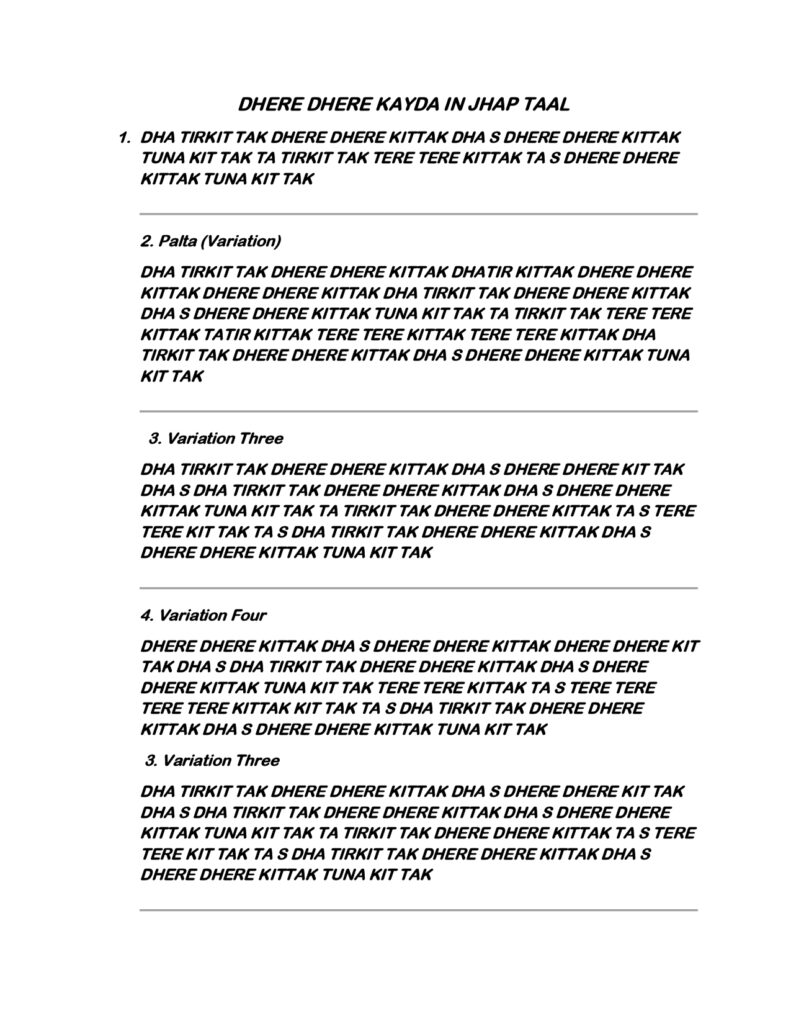
🎶 Dheere Dheere Kayda in Jhaptaal
Now let’s explore a traditional beginner-friendly Dheere Dheere Kayda.
🔹 Basic Mukh (Theme)
Dha Ge Na Ti Na Ka Dhi Na | Dha Ge Na Ti Na Ka Tin Na
(10 beats structured properly in Jhaptaal format)
Broken into vibhaags:
Dha Ge | Na Ti Na | Ka Dhi | Na Dha Ge | Na Ti Na | Ka Tin Na
Play it very slowly.
The key phrase here is “Dha Ge Na Ti Na Ka”, which creates flow and balance across the cycle.
🪘 Step-by-Step Playing Guide
1️⃣ Start with Recitation (Padhant)
Before playing, recite clearly:
“Dha Ge Na Ti Na Ka Dhi Na | Dha Ge Na Ti Na Ka Tin Na”
Clarity in recitation builds clarity in playing.
2️⃣ Focus on Hand Technique
- Dha – Both hands together
- Ge – Bayan (bass, closed stroke)
- Na / Tin – Dayan (right hand clear stroke)
- Ti – Light right-hand stroke
- Ka – Muted left-hand support
Keep strokes clean and relaxed. Do not rush.
3️⃣ Maintain Laya (Tempo)
Since this is a Dheere Dheere (slow tempo) kayda:
- Use a metronome or lehra app at 40–60 BPM.
- Focus on even spacing between bols.
- Avoid speeding up unconsciously.
Slow practice builds strength and precision.
🔁 Simple Palta (Variation Example)
Now let’s create a basic palta using the same bols.
Dha Ge Na Ti Na Ka | Na Ti Na Ka Dha Ge | Dhi Na Dha Ge | Na Ti Na Ka Tin Na
Notice:
- We did not introduce new bols.
- We rearranged them rhythmically.
- The structure still fits Jhaptaal.
Practice this palta 5–10 times slowly before increasing tempo.
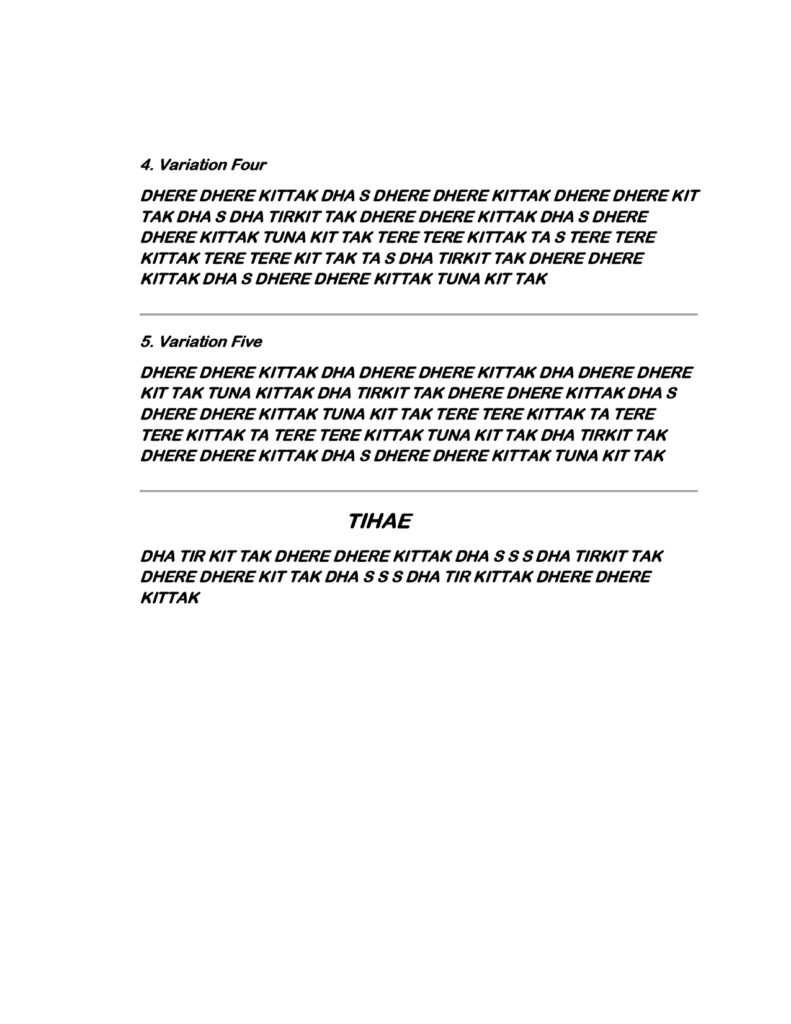
🔚 Adding a Simple Tihai
A tihai is a phrase repeated three times, landing on Sam (beat 1).
Example simple tihai:
Dha Ge Na Ti Na Ka Dhi Na
(repeat 3 times, calculated properly to land on Sam)
Count carefully and practice slowly.
🎯 Common Beginner Mistakes
- ❌ Playing too fast
- ❌ Uneven “Ge” on bayan
- ❌ Losing track of khali (beat 6)
- ❌ Forgetting vibhaag divisions
Always count internally:
1 2 | 3 4 5 | 6 7 | 8 9 10
🧠 Why Practice Dheere Dheere?
Slow kayda practice helps:
- Improve clarity of bols
- Strengthen finger control
- Develop tonal balance
- Build stamina
- Increase rhythmic awareness
Many great maestros like Ustad Zakir Hussain and Pt. Anindo Chatterjee emphasize slow practice as the foundation of speed and brilliance.
As the saying goes:
“If you can’t play it slow, you can’t play it fast.”
🏆 Practice Routine (Daily Plan)
Here’s a 20-minute routine:
- 5 minutes – Jhaptaal theka recitation + clapping
- 5 minutes – Mukh in slow tempo
- 5 minutes – Add one palta
- 5 minutes – Practice tihai and return to Sam
Consistency is more important than speed.
🌍 Why Jhaptaal is Important
Jhaptaal is widely used in:
- Classical khayal performances
- Instrumental solos
- Kathak dance
- Semi-classical compositions
Mastering a kayda in Jhaptaal builds confidence for performing in medium and fast tempos later.
https://www.youtube.com/@BhagawanSingh