Introducing the-Jhaptaal Kayda No.3 | Dha Tirkit Dha Ge Na | Powerful Tabla Solo Performance
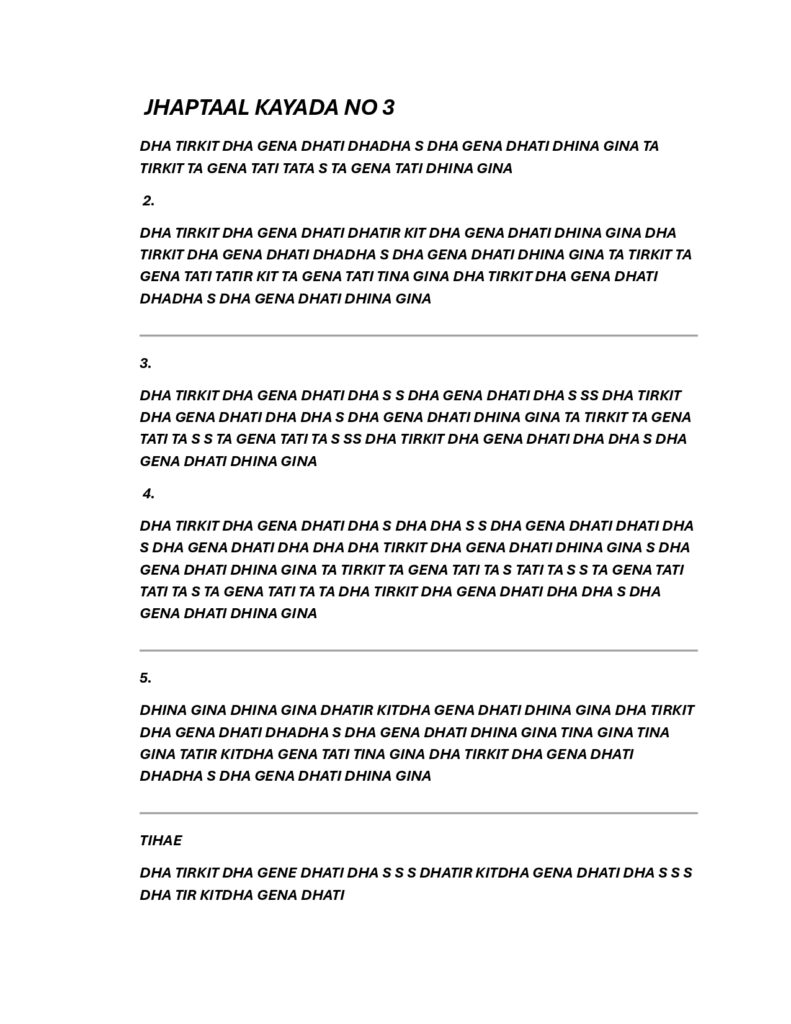
Jhaptaal Kayda No. 3
Dha Tirkit Dha Ge Na” – A Powerful Tabla Solo Exploration
When played with precision and power, a single “Dha” can command an entire concert hall. That’s the magic of tabla — and in Jhaptaal Kayda No. 3, built around the bold phrase “Dha Tirkit Dha Ge Na,” we experience rhythm as both structure and storytelling.This kayda is a favorite among intermediate and advanced tabla players because it combines clarity, speed potential, and dramatic expansion. Let’s explore its beauty in depth.
Understanding the Framework: Jhaptaal (10 Beats)
Before diving into the kayda, we must understand Jhaptaal, a 10-beat rhythmic cycle divided as:
2 + 3 + 2 + 3
Theka of Jhaptaal:
Dhi Na | Dhi Dhi Na | Tin Na | Dhi Dhi Na
Clap pattern:
- Sam (1) – Clap
- 3rd beat – Clap
- 6th beat – Wave
- 8th beat – Clap
Jhaptaal has a slightly asymmetrical feel compared to Teentaal. This makes compositions in Jhaptaal sound dynamic and rhythmically engaging.
The Kayda Structure
Kayda literally means “rule.” In tabla, it refers to a structured composition where a basic theme (mukh) is developed through variations while following strict rules.
Jhaptaal Kayda No. 3 – Mukh (Theme)
Dha Tirkit Dha Ge Na | Dha Tirkit Dha Ge Na |
Dha Ge Na Tirkit Dha | Dha Ge Na
This kayda is powerful because:
- The “Dha Tirkit” combination creates sharp momentum.
- The “Ge Na” balances the composition with resonance.
- It allows symmetrical and cross-rhythmic expansions.
The phrase alternates between open and closed strokes, giving contrast between bayan depth and dayan articulation.
Technical Breakdown
Let’s analyze the key bols:
1. Dha
- Combination of Na (dayan) + Ge (bayan)
- Full-bodied and resonant
- Anchors the composition
2. Tirkit
- Rapid sequence (Te Re Ke Te or Ti Ri Ki Ta depending on gharana)
- Played mainly on the dayan
- Adds speed and sparkle
3. Ge Na
- Ge (bass stroke on bayan)
- Na (clear right-hand stroke)
- Creates tonal contrast
This kayda requires:
- Strong finger control for Tirkit
- Even tonal balance between hands
- Clean articulation at higher speeds
Development: Vistar (Expansion)
A kayda truly shines in its variations. Here are example development ideas:
Variation 1
Dha Tirkit Dha Ge Na Dha Ge Na |
Tirkit Dha Tirkit Dha Ge Na
Variation 2 (Double Tirkit Emphasis)
Dha Tirkit Tirkit Dha Ge Na |
Dha Ge Na Tirkit Tirkit Dha
Rela-style Development (Faster Flow)
Dha Tirkit Dha Tirkit Dha Ge Na |
Dha Tirkit Dha Ge Na Dha Ge Na
Each variation must:
- Stay within original bol vocabulary
- Maintain Jhaptaal structure
- Resolve properly on Sam
Landing powerfully on Sam with Dha gives dramatic impact in solo performance.
Performance Impact
In a live tabla solo, this kayda creates:
- Gradual build-up from slow (vilambit) to medium (madhya) to fast (drut)
- Intense tension before sam resolution
- Space for dynamic modulation
When performed with strong bayan control, the “Ge” strokes add emotional gravity. In faster tempo, the Tirkit passages electrify the audience.
Many tabla maestros use similar Jhaptaal kaydas in solo recitals because 10-beat cycles surprise listeners accustomed to Teentaal.
Common Challenges
Students often struggle with:
- Rushing the Tirkit
- Losing clarity in Ge strokes
- Miscounting the 2+3+2+3 division
- Weak sam landing
Practice Tip:
First recite (padhant) clearly:
“Dha Tirkit Dha Ge Na | Dha Tirkit Dha Ge Na…”
Then practice at slow tempo with metronome or lehra.
Interactive Rhythm Exercise
Try clapping Jhaptaal while reciting the mukh:
Clap (1) – 2
Clap (3) – 4 – 5
Wave (6) – 7
Clap (8) – 9 – 10
Now say the bols while maintaining hand gestures.
Did you land correctly on Sam?
Mini Quiz 🎶
1. How many beats are there in Jhaptaal?
a) 12
b) 16
c) 10
d) 14
2. What is the division structure of Jhaptaal?
3. Which bol in this kayda creates speed momentum?
(Answers: 1–c, 2–2+3+2+3, 3–Tirkit)
Artistic Expression
What makes this kayda powerful is not just speed — it’s control.
A mature artist:
- Expands gradually
- Uses dynamics (soft–loud contrast)
- Plays with silence before sam
- Builds tihai to conclude
Example simple tihai idea:
Dha Tirkit Dha Ge Na Dha Ge Na |
Dha Tirkit Dha Ge Na Dha Ge Na |
Dha Tirkit Dha Ge Na Dha Ge Na
Resolving on Sam creates a satisfying rhythmic climax.
Why This Kayda Matters
Jhaptaal Kayda No. 3 strengthens:
- Finger dexterity
- Layakari (rhythmic intelligence)
- Sam awareness
- Compositional discipline
For serious tabla students, mastering this kayda builds confidence for solo performance.
Final Thoughts
“Dha Tirkit Dha Ge Na” is more than a phrase — it is a rhythmic engine. In Jhaptaal’s 10-beat cycle, it becomes a powerful vehicle for expression, speed, and artistry.
If you’re learning tabla:
- Practice slowly
- Recite clearly
- Focus on tonal clarity
- Respect the structure of kayda
And most importantly — feel the sam.
Because when that final Dha lands perfectly in Jhaptaal, the entire rhythm universe feels aligned.
https://www.youtube.com/@BhagawanSingh
https://www.facebook.com/sbsinghtablaguru