
Master Deepchandi Taal | 14 Beats, 10 Powerful Rela for Tabla Practice, Master Deepchandi Taal | 14 Beats, 10 Powerful Rela for Tabla Practice
In the world of Indian classical and semi-classical music, rhythm is not only counted—it is felt. Among the many beautiful taals played on the tabla, Deepchandi Taal holds a special place for its elegance, flow, and expressive depth. With 14 beats, this taal offers vast scope for creativity, especially through rela compositions that build speed, control, and confidence. If you want to strengthen your tabla technique and musical understanding, mastering Deepchandi Taal with rela practice is an essential step.
What Is Deepchandi Taal?
Deepchandi Taal is a 14-beat rhythmic cycle commonly used in thumri, ghazal, bhajan, dadra-ang compositions, and Kathak dance accompaniment. It is also known as Chanchar Taal in some traditions.
Vibhag Structure
3 + 4 + 3 + 4
- Sam (X): Beat 1
- Khali (0): Usually on the third vibhag
Basic Theka of Deepchandi Taal
Dha Dhi Na | Dha Tin Tin Na | Ta Dhi Na | Dha Tin Tin Na
This theka is light, lyrical, and flexible, making it perfect for embellishment through relas and variations.
Why Practice Rela in Deepchandi Taal?
A rela is a fast, flowing composition built on repetitive bols, designed to improve speed and smoothness. Practicing relas in Deepchandi Taal helps tabla players:
- Develop evenness and fluency
- Improve finger speed and stamina
- Strengthen laya control
- Gain confidence in drut tempo
- Prepare for solo and accompaniment performance
Because Deepchandi has an uneven beat count, it is especially useful for training rhythmic awareness and precision.
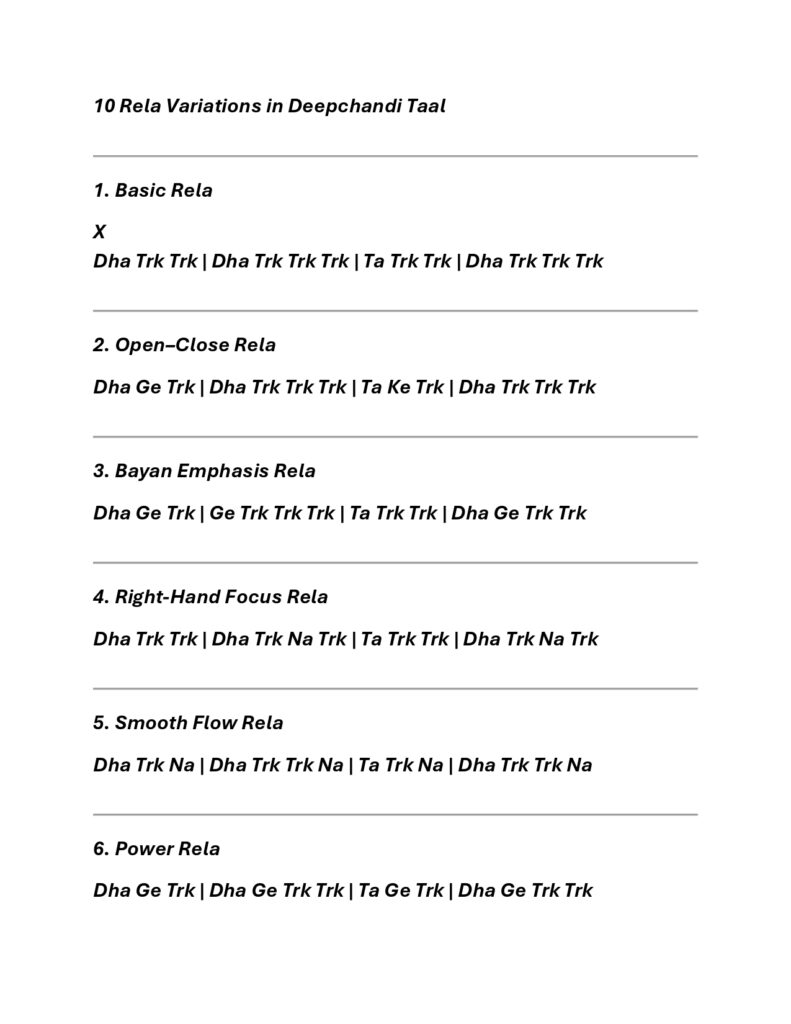
10 Powerful Rela for Deepchandi Taal (14 Beats)
Below are practice-friendly rela patterns that fit naturally into the taal structure. Each rela should be practiced slowly at first and gradually increased in speed.
1. Basic Flow Rela
Built around Trk bols for smooth motion and balance.
2. Open–Close Rela
Alternates between open bayan strokes and crisp dayan bols to create contrast.
3. Bayan Emphasis Rela
Uses Ge to add weight and depth, strengthening left-hand control.
4. Right-Hand Focus Rela
Concentrates on dayan articulation for finger clarity and endurance.
5. Smooth Linking Rela
Designed to help connect vibhags seamlessly without breaking flow.
6. Power Rela
Combines bayan and dayan strokes for a strong, commanding sound.
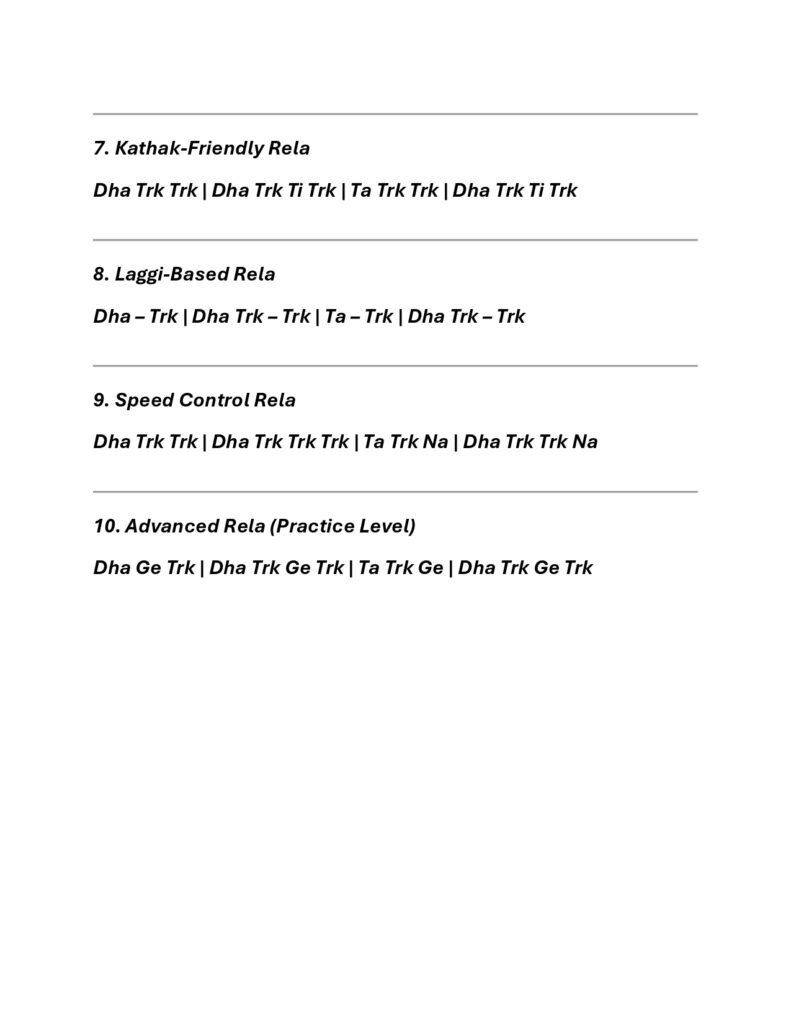
7. Kathak-Friendly Rela
Perfect for dance accompaniment with clear accents and forward momentum.
8. Laggi-Based Rela
Light, airy, and repetitive, ideal for maintaining groove under vocals or dance.
9. Speed Control Rela
Helps tabla players stay relaxed while playing fast tempos accurately.
10. Advanced Practice Rela
A more complex rela for experienced students aiming to refine control and confidence.
How to Practice Deepchandi Rela Effectively
To truly master these relas, follow a structured practice approach:
- Begin in vilambit or madhya laya, focusing on clean bols.
- Count the 14 beats clearly to avoid losing the sam.
- Use a lehra or metronome for tempo stability.
- Practice each rela for 5–10 cycles before moving on.
- Gradually increase speed while maintaining clarity and relaxation.
- End your practice by returning to the basic theka.
Consistency is far more important than speed. Even a short daily practice session will bring noticeable improvement over time.
Deepchandi Taal in Performance
In performance settings, Deepchandi Taal is valued for its gentle swing and expressive potential. Relas are often introduced during faster sections to lift energy without overpowering the main artist. A well-executed rela in Deepchandi Taal enhances the overall musical atmosphere, whether accompanying a vocalist, instrumentalist, or Kathak dancer.
Conclusion
Mastering Deepchandi Taal is a rewarding journey for any tabla player. Its 14-beat cycle challenges the mind while nurturing musical sensitivity. By practicing these 10 powerful relas, you develop speed, control, and rhythmic confidence that translates across many other taals as well. Stay patient, listen deeply, and let the flow of Deepchandi Taal guide your tabla practice toward greater musical expression.
https://www.facebook.com/sbsinghtablaguru