
Dadra Taal 6 Beats: 10 Amazing Theka Variations or Palta for Tabla Practice,Dadra Taal (6 Beats): 10 Amazing Theka Variations for Tabla Practice
If you listen closely to Indian light classical music—thumri, ghazal, bhajan, or even many Bollywood melodies—you’ll often hear a gentle yet deeply expressive rhythm flowing underneath. That rhythm is Dadra Taal, one of the most graceful and widely used taals in Indian music. With just 6 beats, Dadra Taal proves that simplicity can be incredibly powerful, making it an essential rhythm for every tabla student to master.
What Is Dadra Taal?
Dadra Taal is a 6-beat rhythmic cycle, traditionally divided into two vibhags of 3 beats each (3 + 3).
- Sam (X): Beat 1
- Khali (0): Beat 4
The light and flowing nature of Dadra makes it ideal for expressive compositions rather than heavy percussion displays. It is commonly used in semi-classical and devotional forms, where the tabla supports the mood rather than dominating it.
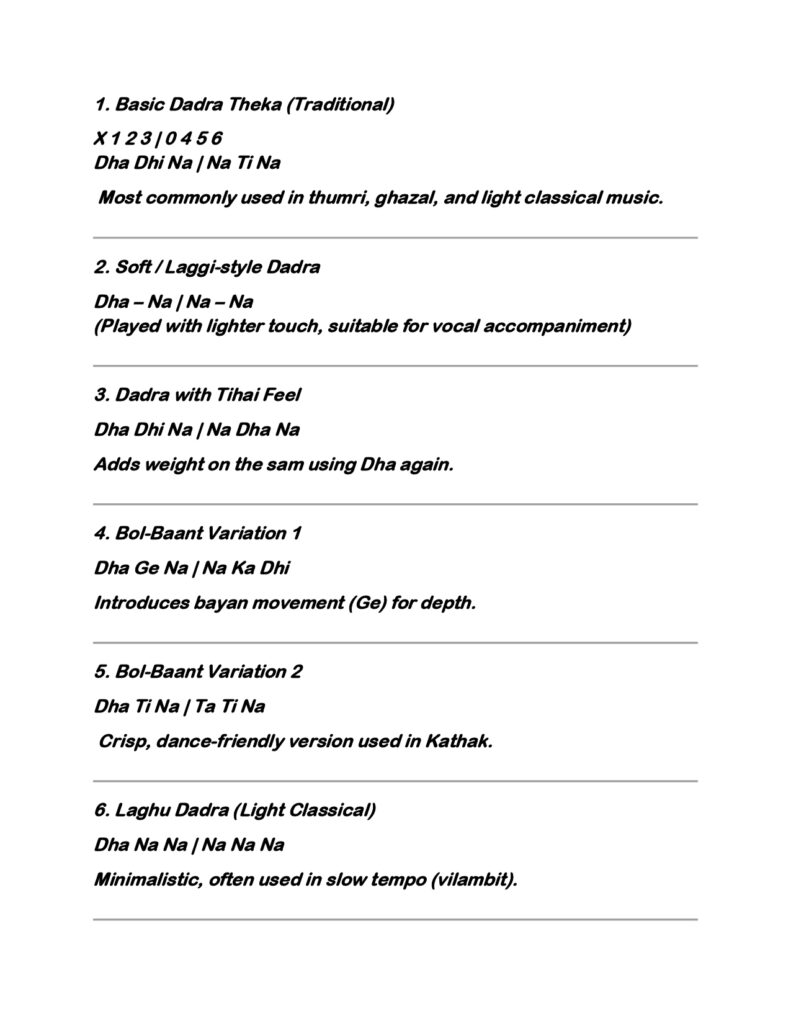
Basic Dadra Theka
Before exploring variations, it’s important to understand the basic structure:
Dha Dhi Na | Na Ti Na
This theka forms the foundation for all improvisation, laggi, and palta development in Dadra Taal. A strong understanding of this pattern helps maintain clarity of sam and khali, even while experimenting creatively.
Why Practice Dadra Theka Variations?
Practicing variations and paltas in Dadra Taal helps tabla players:
- Improve layakari (rhythmic control)
- Develop bol clarity
- Gain confidence in accompaniment
- Learn how to adapt to different musical moods
- Prepare for light classical, folk, and film music
Let’s explore 10 amazing Dadra Theka variations that will enrich your practice sessions.
10 Dadra Taal Theka Variations (6 Beats)
1. Traditional Dadra Theka
Dha Dhi Na | Na Ti Na
The pure and most widely used form, perfect for beginners.
2. Soft Laggi Style
Dha – Na | Na – Na
A gentle version often played under vocals.
3. Bol-Baant Variation
Dha Ge Na | Na Ka Dhi
Adds depth using the bayan and creates a fuller sound.
4. Kathak-Friendly Variation
Dha Ti Na | Ta Ti Na
Crisp and rhythmic, ideal for dance accompaniment.
5. Minimal Light Classical Style
Dha Na Na | Na Na Na
Simple and meditative, suitable for slow tempo.
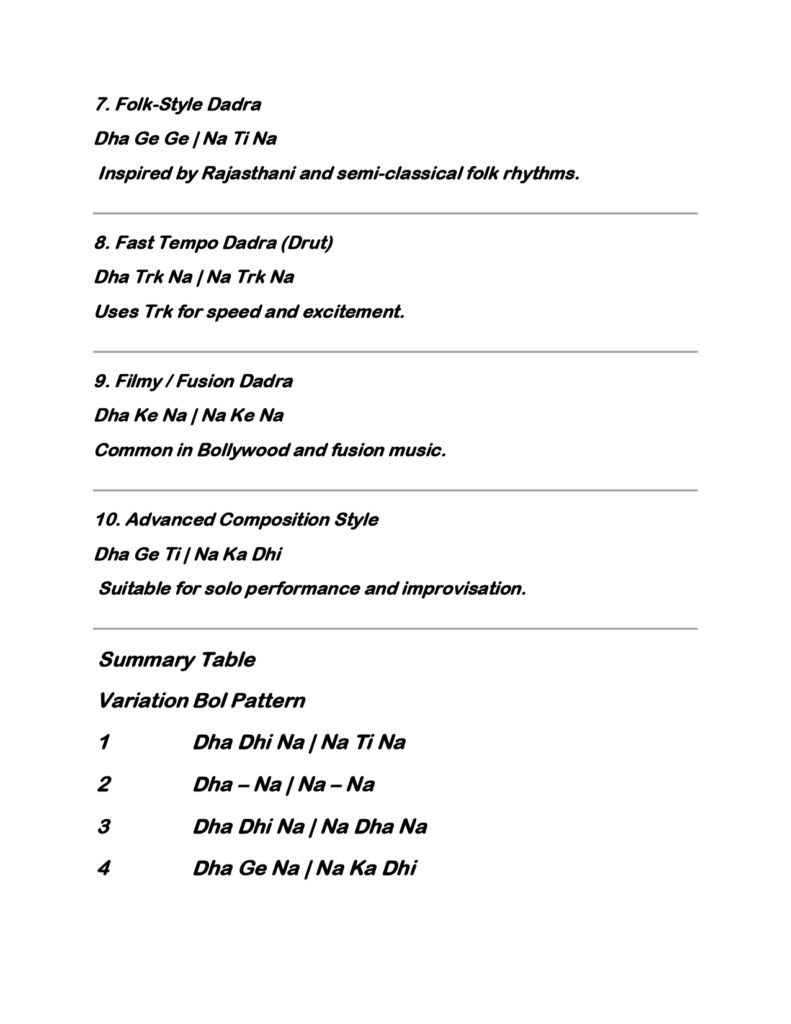
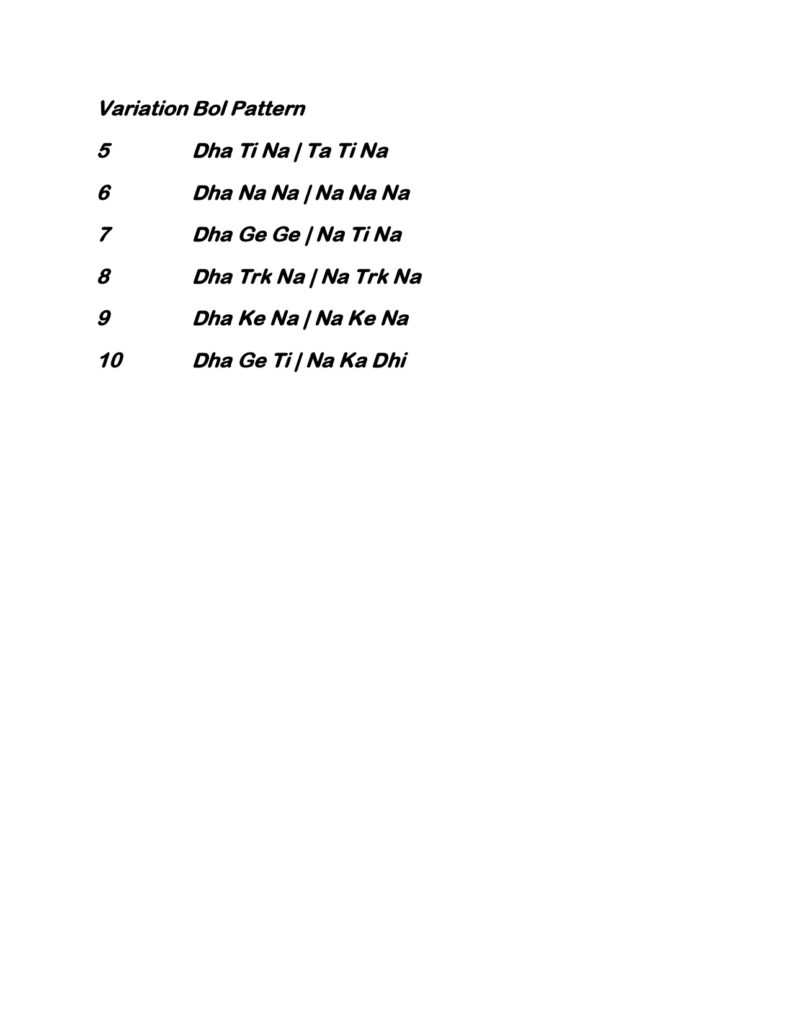
6. Folk-Inspired Dadra
Dha Ge Ge | Na Ti Na
Reflects regional folk flavors and earthy texture.
7. Fast Tempo (Drut) Variation
Dha Trk Na | Na Trk Na
Excellent for improving speed and finger control.
8. Film & Fusion Style
Dha Ke Na | Na Ke Na
Commonly heard in modern compositions.
9. Expressive Accent Variation
Dha Dhi Na | Na Dha Na
Re-emphasizes the sam for stronger impact.
10. Advanced Practice Variation
Dha Ge Ti | Na Ka Dhi
Great for solo practice and rhythmic expansion.
Practice Tips for Dadra Taal
- Start practicing each variation in slow laya, focusing on clean bols.
- Clearly mark sam (X) and khali (0) while counting.
- Use a metronome or lehra to maintain tempo.
- Practice transitioning smoothly from the basic theka to variations.
- Try playing each variation for 2–4 cycles before switching.
Dadra Taal in Performance
Dadra Taal is not about showing off speed or complexity—it’s about feel, balance, and musical sensitivity. A well-played Dadra can elevate a performance by perfectly supporting the singer or instrumentalist. Mastering these variations allows a tabla player to respond naturally to mood changes, tempo shifts, and improvisations on stage.
Conclusion
Dadra Taal may have only six beats, but its expressive possibilities are endless. By practicing these 10 amazing theka variations, tabla students can strengthen their rhythmic foundation while developing musical maturity. Whether you are accompanying a ghazal, performing a thumri, or practicing at home, Dadra Taal remains a timeless and essential rhythm in the world of tabla.
https://www.facebook.com/sbsinghtablaguru