Introducing the-Keherwa Taal 8 Beats Explained: Popular Tabla Theka Variations & Paltas,
Keherwa Taal (8 Beats): Definition, Structure, and Importance in Indian MusicIndian classical and semi-classical music is deeply rooted in rhythm, and one of the most popular and widely used rhythmic cycles is Keherwa Taal. Known for its simplicity, versatility, and universal appeal, Keherwa Taal plays a vital role in tabla, folk, bhajan, ghazal, and Bollywood music. Whether you are a beginner learning tabla or a listener enjoying Indian melodies, understanding the Keherwa Taal 8 beats definition helps you connect more deeply with the music.
What Is Keherwa Taal?
Keherwa Taal is a rhythmic cycle (taal) consisting of 8 beats (matras). It is classified as a Chhand Taal, meaning it has a simple and symmetrical structure. Due to its easy framework and steady flow, Keherwa Taal is one of the first taals taught to tabla students and is also among the most frequently used taals in light classical and popular music. The natural swing and balanced rhythm of Keherwa Taal make it suitable for compositions that require emotional expression, such as devotional songs, romantic melodies, and folk tunes.
Structure of Keherwa Taal (8 Beats)
Keherwa Taal is divided into two equal vibhags (sections) of four beats each:
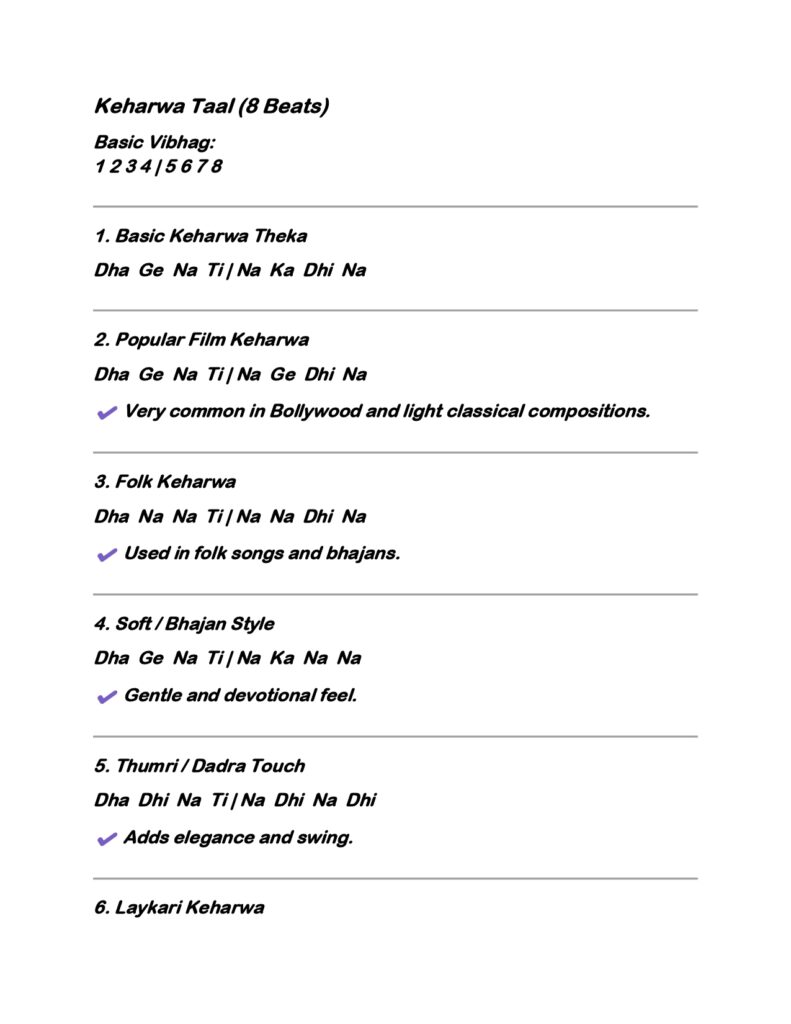
1 2 3 4 | 5 6 7 8
- Sam (first beat): Beat 1
- Khali (empty beat): Beat 5
The presence of sam and khali creates a clear rhythmic contrast, making Keherwa Taal easy to recognize and enjoyable to follow.
Basic Theka of Keherwa Taal
The theka is the foundational rhythmic pattern that defines a taal. The most commonly played Keherwa Taal theka is:
Dha Ge Na Ti | Na Ka Dhi Na
Each bol (syllable) represents a specific stroke on the tabla, combining the dayan (right-hand drum) and bayan (left-hand drum). This theka provides a solid rhythmic base while allowing the tabla player to add variations and improvisations.
Why Keherwa Taal Is So Popular
One of the biggest strengths of Keherwa Taal is its flexibility. It can be played at slow (vilambit), medium (madhya), or fast (drut) tempos without losing its identity. This makes it suitable for a wide range of musical forms, including:
- Bhajans and devotional music
- Folk and regional songs
- Ghazals and thumri
- Bollywood and contemporary fusion music
Because of its steady pulse, singers and instrumentalists often prefer Keherwa Taal as it supports melody without overpowering it.
Keherwa Taal in Tabla Learning
For tabla students, Keherwa Taal serves as a foundation for rhythm training. It helps learners understand:
- Beat counting and timing
- Coordination between bayan and dayan
- Development of layakari (rhythmic variation)
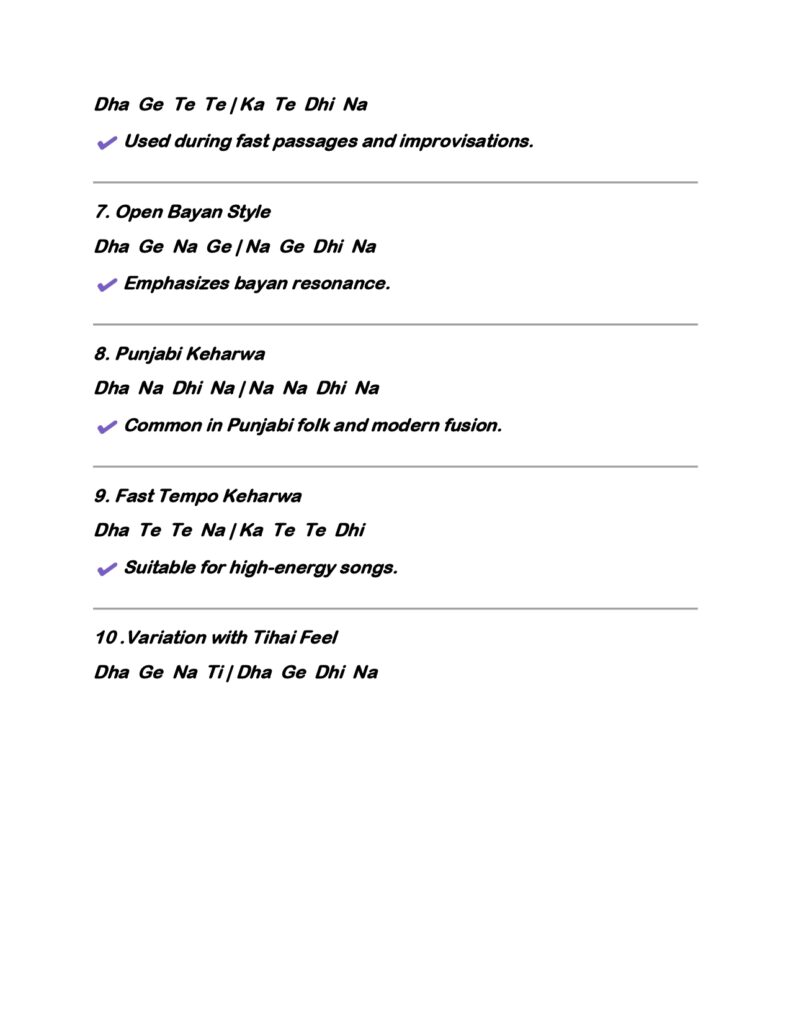
Once the basic theka is mastered, students explore paltas, tukdas, tihais, and variations, all of which strengthen rhythmic control and creativity.
Use of Keherwa Taal in Modern Music
Keherwa Taal has successfully crossed the boundaries of classical music and entered modern genres. Many popular Hindi film songs and independent music tracks use Keherwa Taal because of its catchy and listener-friendly rhythm. Even global fusion artists incorporate Keherwa patterns into jazz, world music, and acoustic arrangements, showcasing its universal appeal.
Cultural Significance of Keherwa Taal
Beyond technical aspects, Keherwa Taal holds deep cultural value. It reflects the simplicity and rhythmic richness of Indian folk traditions while maintaining a classical foundation. Its widespread usage has made it one of the most recognizable rhythmic cycles in Indian music, connecting musicians and audiences across generations.
Conclusion
The Keherwa Taal 8 beats definition represents more than just a rhythmic cycle—it symbolizes balance, accessibility, and musical expression. With its simple structure, clear theka, and endless scope for creativity, Keherwa Taal remains an essential part of Indian music. Whether you are learning tabla, performing on stage, or enjoying your favorite songs, understanding Keherwa Taal deepens your appreciation of rhythm and reinforces the timeless beauty of Indian musical traditions.
https://www.facebook.com/sbsinghtablaguru