
Indication of the -“Unlock the Power of Rupak Taal: Stunning 7-Beat Tihais, Mukhda & Mohra You Must Learn!
Unlock the Power of Rupak Taal: Stunning 7-Beat Tihais, Mukhda & Mohra You Must Learn!
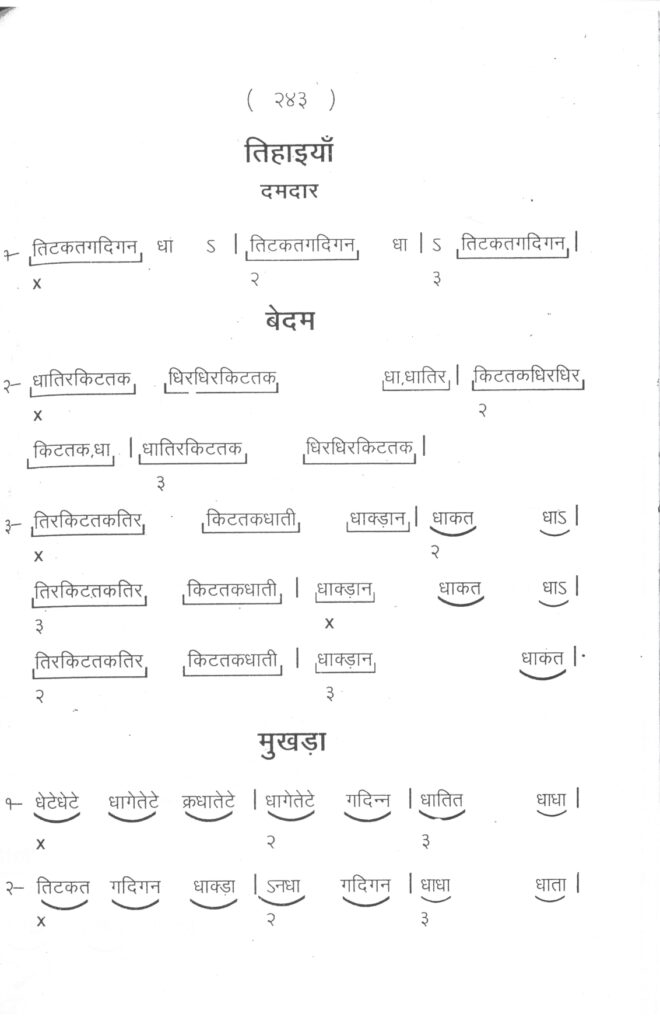
The tabla world is full of mesmerizing rhythms, but few are as captivating—or as creatively flexible—as Rupak Taal, a unique 7-beat cycle that stands out for its elegance, surprise, and infinite musical possibilities. Whether you’re a beginner discovering the beauty of Indian rhythm or an advanced player diving deeper into compositions, Rupak Taal can transform your playing with its striking Damdaar Tihais, Bedam Tihais, Mukhda, and Mohra variations.
In this blog, we unlock how Rupak Taal works, why it’s so widely used in light and classical music, and how you can start mastering its signature patterns.
🌟 What Makes Rupak Taal So Special?
Most taals in Indian classical music begin with a sam (1st beat) combined with a tali (clap), like Teentaal’s 16 beats.
But Rupak Taal breaks the rules—its sam is a khali (empty hand)!
Structure of Rupak (7 Beats):
3 | 2 | 2
Bol Example: Tin Tin Na | Dhin Na | Dhin Na
This asymmetry makes Rupak Taal feel smooth, circular, and surprisingly lyrical. It’s a favorite in:
- Light classical music
- Thumri
- Ghazal accompaniment
- Kathak dance
- Modern fusion Tabla solos
The open, airy feel of 7 beats lets tabla players create unexpected phrases and beautifully crafted tihais.
🥁 Damdaar Tihai in Rupak — The Showstopper
A Damdaar Tihai ends powerfully exactly on sam, creating the classic triple-phrase impact tabla fans love.
Example (Simple):
Dha Ge Ti Ta | Dha Ge Ti Ta | Dha Ge Ti Ta
To land this on Rupak’s sam, the tabla player must calculate how many beats the tihai occupies and adjust the starting position—this is where Rupak becomes exciting!
Why it’s powerful:
- Builds tension and releases on sam
- Perfect for ending a peshkar, kaida, or tukda
- Creates the “grand finale” moment audiences wait for
🎯 Bedam Tihai — The Elegant Surprise
Unlike Damdaar Tihais, a Bedam Tihai does not finish exactly on sam.
Instead, the last phrase lands just before the sam, creating a softer, graceful resolution.
Example Concept:
Phrase 1 → Phrase 2 → Phrase 3 → (tiny gap) → Sam
This subtle delay adds beauty and sophistication, especially in:
- Thumri
- Light classical compositions
- Kathak abhinaya passages
In Rupak, the Bedam Tihai’s timing challenges your rhythmic control and improves your sense of layakari (tempo mastery).
🎵 Understanding Mukhda in Rupak Taal
A Mukhda is a small phrase—short, catchy, and landing neatly on the sam. It’s often the musical face of the composition.
Simple Mukhda Example:
Dha – Ti Ta | Dha – Dha | Dhin Na
With Rupak’s 3-2-2 structure, Mukhdas become playful and beautifully interactive with the melody. They often act as cues for singers or dancers.
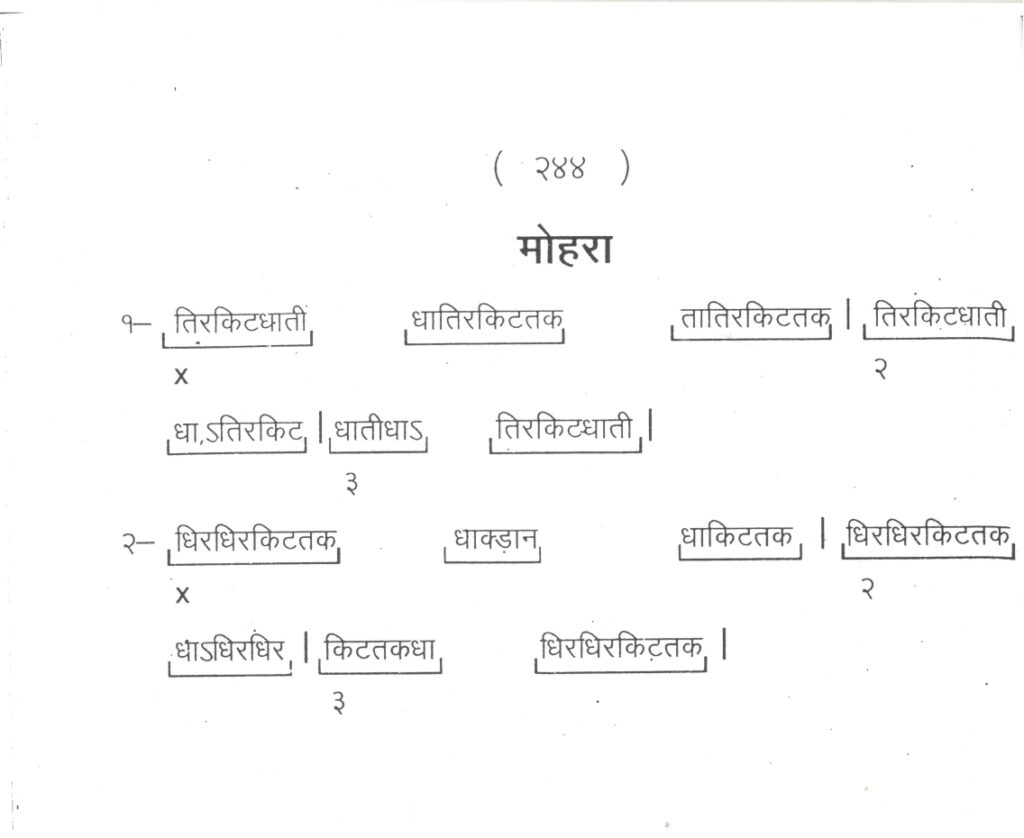
🌊 Mohra — The Flowing Bridge Between Compositions
A Mohra is longer than a Mukhda and often used to transition from one part of a solo to another. In Rupak, Mohras are especially expressive because the taal’s 7-beat cycle allows unusual flows.
Why Mohras Shine in Rupak:
- Can be stretched with layakari
- Allow creative combinations of bols
- Act as melodic bridges in Kathak and tabla solos
A well-crafted Mohra showcases the player’s control and elegance.
🎧 How to Start Learning Rupak Taal Effectively
Here’s a step-by-step approach:
- Clap the 3-2-2 structure until it feels natural
- Practice the basic theka (Tin Tin Na | Dhin Na | Dhin Na)
- Add variations like Dha Ge Na or Dha Ti Na
- Start with short tihais and gradually increase complexity
- Record yourself to check sam alignment
- Play with lehra (melodic loop) for real-world feel
🔥 Why Every Tabla Player Must Learn Rupak Taal
Rupak builds:
- Precision (because of odd beats)
- Creativity (unique structure encourages experimentation)
- Performance strength (tihais sound fantastic in solo or accompaniment)
- Musical sensitivity (helps in Ghazal, Thumri & fusion genres)
Many legendary tabla maestros—including Ustad Zakir Hussain, Pandit Anindo Chatterjee, and Pandit Swapan Chaudhuri—often feature Rupak in their solos because it offers unlimited improvisational freedom.
🎤 Try This Mini Challenge!
Can you clap and recite this simple Rupak tihai?
Dha Ge Ti Ta | Dha Ge Ti Ta | Dha Ge Ti Ta
Try it with a lehra—land on sam—and feel the rhythm unlock inside you!
🏁 Conclusion: The Magic of Rupak Lives in Its Flow
Rupak Taal is more than a 7-beat cycle—it’s an artistic playground. The Damdaar and Bedam Tihais give dramatic flair, while the Mukhda and Mohra bring grace and expression. Whether you’re performing, practicing, or composing, Rupak allows you to explore rhythm in a fresh, exciting way.
https://www.youtube.com/@BhagawanSingh