
Introducing the-Master the 7-Beat Rhythm: Rupak Taal’s Explosive $Dha$ $Tirkit$ $Dha$ $Dha$ $Dha$ Kayda
Master the 7-Beat Rhythm: Rupak Taal’s Explosive Dha Tirkit Dha Dha Kayda
If there is any taal that instantly grabs a listener’s attention with its asymmetry, crispness, and playful flow, it is Rupak Taal—a 7-beat rhythmic cycle that challenges beginners and excites maestros. And when paired with the energetic Dha Tirkit Dha Dha kayda, Rupak transforms into a dynamic rhythmic experience full of bounce, sharpness, and fireworks. Whether you’re a tabla student, rhythm enthusiast, or Indian classical music lover, mastering this kayda can elevate your playing and deepen your understanding of complex taals.
Understanding Rupak Taal: The Asymmetric Beauty
Rupak Taal is unique because:
- It has 7 beats
- Divided into 3 + 2 + 2
- AND — unlike most taals — it begins with a Khali (an empty beat)
Theka of Rupak Taal
Tin  |  Tin  Na  |  Dhin  Na
(3)     (2)          (2)
Its light, open-hand feel allows both tabla and vocalists to explore subtle rhythmic expressions. The taal is a staple in thumri, dadra, ghazal, and light classical performances, but modern fusion artists have also embraced it for its groovy, off-center pulse.
Kayda in Focus: Dha Tirkit Dha Dha
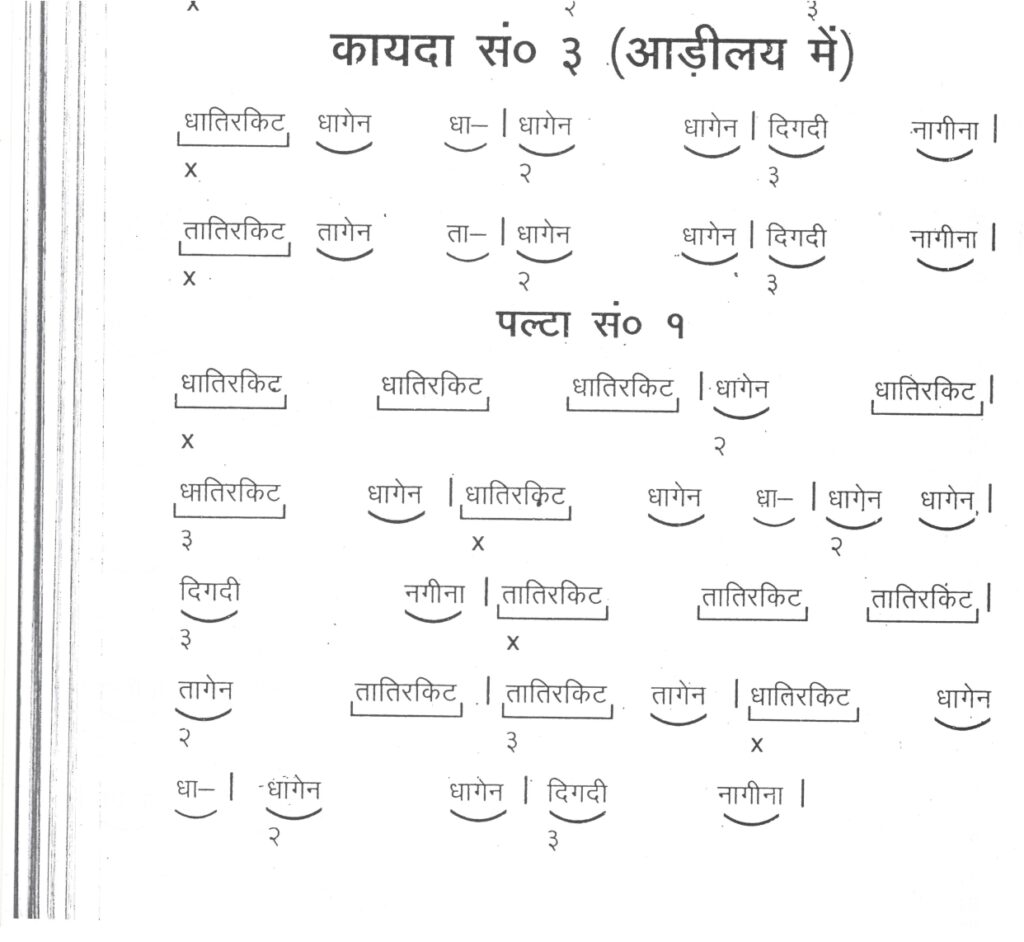
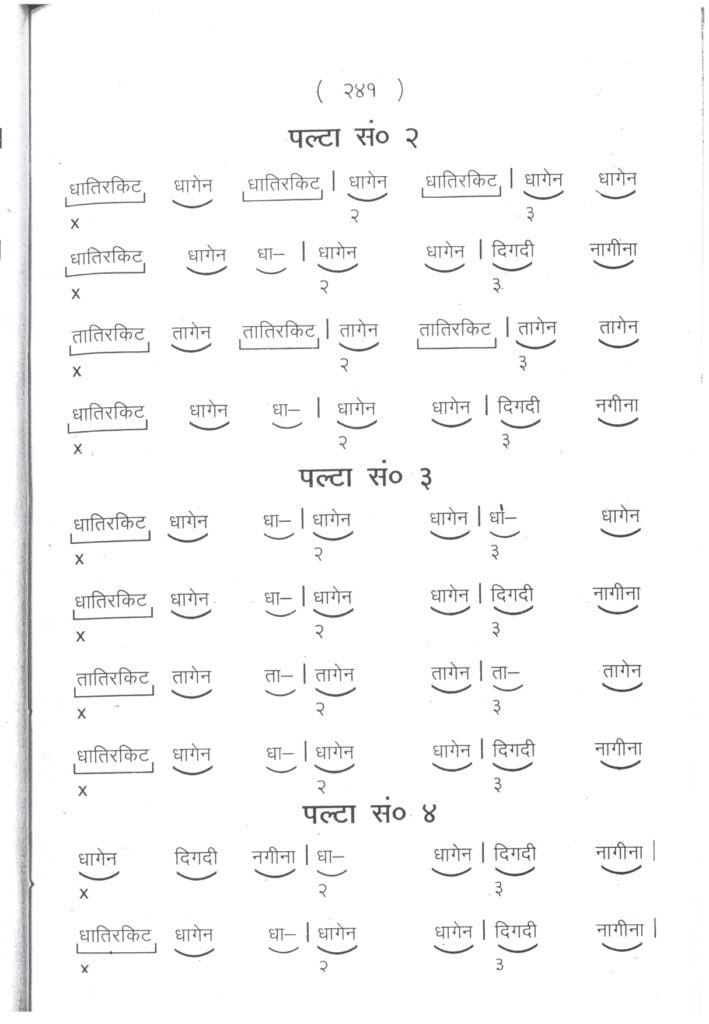
A kayda is a structured composition built around a fixed theme (mukh), followed by variations (paltas). The Dha Tirkit Dha Dha kayda stands out for its explosive articulation and clarity.
Mukh (Theme)
Dha Tirkit Dha Dha | Dha Tirkit Dha Dha
This theme repeats neatly across the 7-beat cycle, giving a tight rhythmic frame.
Bol Breakdown
- Dha — a full stroke (Na + Ge), powerful and resonant
- Tirkit — a rapid, three-part phrase: Trit (or Teen) + Kit
- Dha Dha — ending with double strokes providing symmetry and impact
Together, these bols create a combination of speed + strength + precision.
How the Kayda Fits into Rupak Taal
Because Rupak has an uneven structure, any kayda practiced inside it develops:
- Timing accuracy
- Layakari awareness
- Internal pulse clarity
- Improvisation adaptability
This kayda, with its repeating Dha–Tirkit motif, sits naturally inside the 7-beat cycle, giving students an anchor while allowing room for adventurous variations.
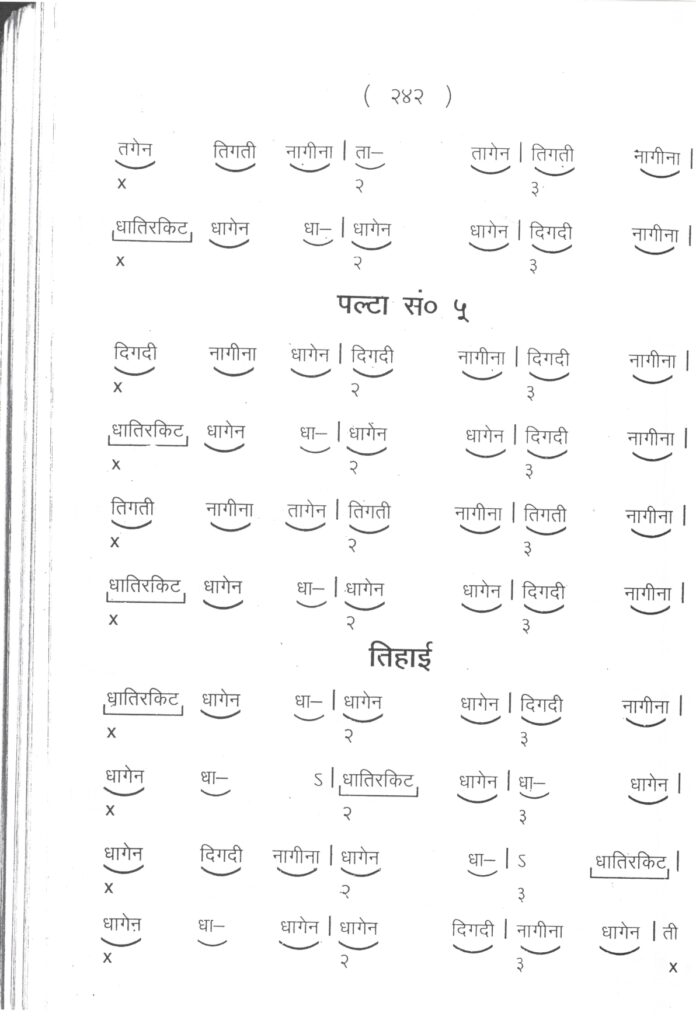
Sample Paltas (Variations)
Here are beginner-friendly paltas to get you started:
Palta 1
Dha Tirkit Dha Dha | Tirkit Dha Tirkit Dha
Palta 2
Dha Tirkit Tirkit Dha | Dha Dha Tirkit Dha
Palta 3
Tirkit Dha Tirkit Dha | Dha Tirkit Dha Dha
Each palta preserves the theme but rearranges the bols to build dexterity and confidence.
Practice Tips for Fluency
1. Start Slow (Bara Laya)
Use a metronome or tabla app
Set tempo: 52–60 BPM
Focus on clarity—especially the Tirkit.
2. Use Counting
Count the 7 beats clearly:
1 2 3 | 4 5 | 6 7
Internal counting prevents drift.
3. Gradually Move to Drut (Fast Tempos)
Once your strokes sound crisp, increase speed.
The kayda becomes exciting only when the Tirkit shines.
4. Record Yourself
Rupak exposes timing errors easily.
Listening back helps refine precision.
Where Rupak Taal Appears in Music
Though classical in origin, Rupak Taal appears in:
- Thumri by legends like Girija Devi
- Instrumental jugalbandis featuring tabla greats
- Ghungroo-based film songs
- Fusion music blending classical and electronic sounds
Artists like Zakir Hussain, Anindo Chatterjee, and Satyajit Talwalkar have performed stunning Rupak improvisations that continue to inspire learners.
Mini-Exercise: Rupak Clap–Wave Pattern
Try this using hand gestures:
- Beat 1: Wave (Khali)
- Beats 2–7: Clap or tap
This bodily rhythm helps internalize the cycle before playing.
Why This Kayda Is a Game-Changer
This specific kayda is a favorite in classrooms and performances because it:
- Sharpens speed control
- Strengthens right-hand dexterity
- Improves sync between bols and taal
- Makes improvisation feel natural
- Develops a player’s signature phrasing
Once mastered, performers often insert tihais (threefold phrases) at the sam, making the composition even more thrilling.
Conclusion: Step Into the Flow of Rupak
The 7-beat Rupak Taal is a rhythmic playground full of surprises. Its lightness, odd structure, and graceful flow make it one of the most expressive taals in Indian music. The Dha Tirkit Dha Dha kayda—energetic, sharp, and beautifully crafted—is your gateway into mastering this taal.
Whether you’re practicing slowly at home, improvising on stage, or exploring fusion rhythms, this kayda offers endless creative possibilities.
So sit down with your tabla, tune your dayan, take a deep breath—and let the 7-beat cycle take you on a rhythmic adventure.
https://www.youtube.com/@BhagawanSingh
https://www.facebook.com/sbsinghtablaguru