
Introducing the- Master the 7-Beat Cycle: Unlock the POWERFUL Rupak Taal Kayda (Dha Tete Ghere)!
Master the 7-Beat Cycle: Unlock the POWERFUL Rupak Taal Kayda (Dha Tete Ghere)! (Tabla Tutorial)
Rhythm is the foundation of the universe, and in Indian Classical Music, the foundation is the Taal. While most beginners start with the familiar 16-beat Teen Taal, true mastery requires venturing into the fascinating world of asymmetric cycles. Among these, the Rupak Taal stands out—a mesmerizing 7-beat rhythm that, despite its short length, offers incredible depth and complexity.
If you’re ready to move beyond the basics and add a powerful, dynamic composition to your repertoire, it’s time to unlock the Rupak Taal Kayda featuring the explosive Bols (syllables) Dha Tete Ghere.
What Makes Rupak Taal So Unique?
Rupak Taal is a 7-Matra (7-beat) cycle known for its distinct rhythmic structure. Unlike almost every other major Taal, Rupak Taal starts with a Khali (empty beat, represented by ‘0’) and then follows with two Talis (claps, represented by ‘1’ and ‘2’).
The Structure of Rupak Taal:
- Matras (Beats): 7
- Vibhags (Divisions): $3 \cdot 2 \cdot 2$
- Theka (Core Bols): Tin Tin Na | Dhin Na | Dhin Na |
- Tali/Khali: 0 | 1 | 2 |
The unique stress pattern (starting from the empty beat) gives Rupak a powerful, slightly off-kilter energy, making it an essential accompaniment for many classical and semi-classical forms like Bhajans, Thumris, and instrumental pieces.
Understanding the Kayda: The Powerhouse of Tabla
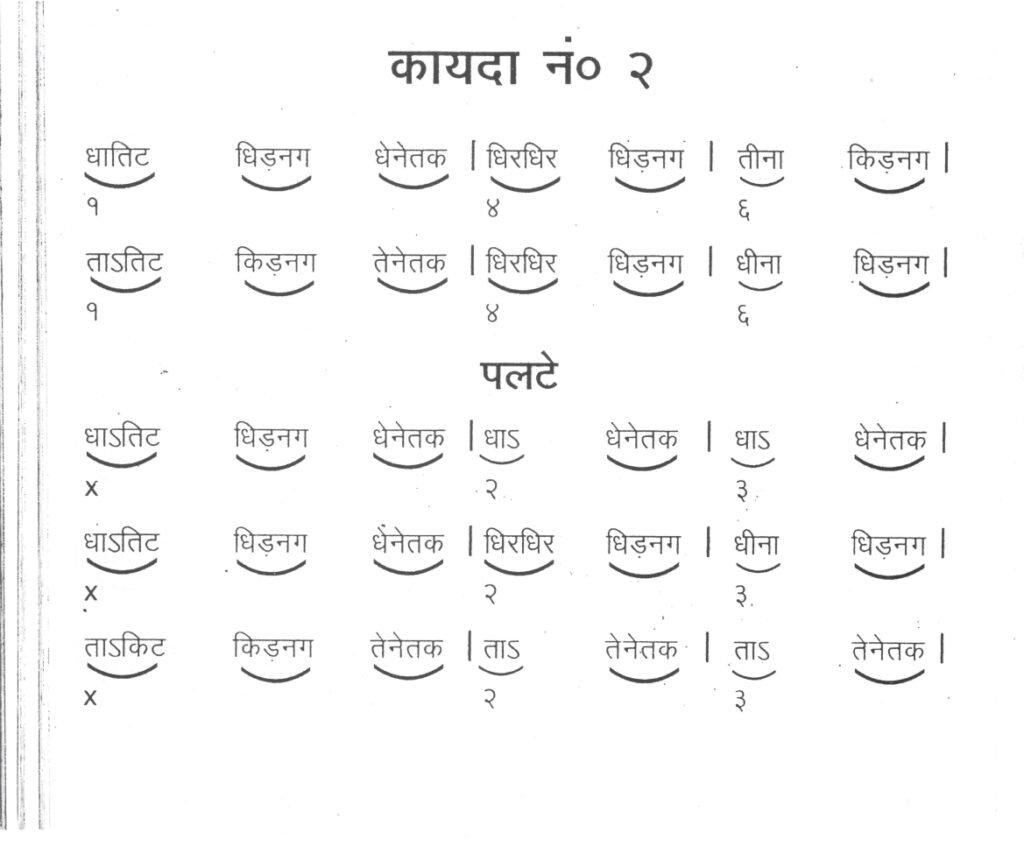
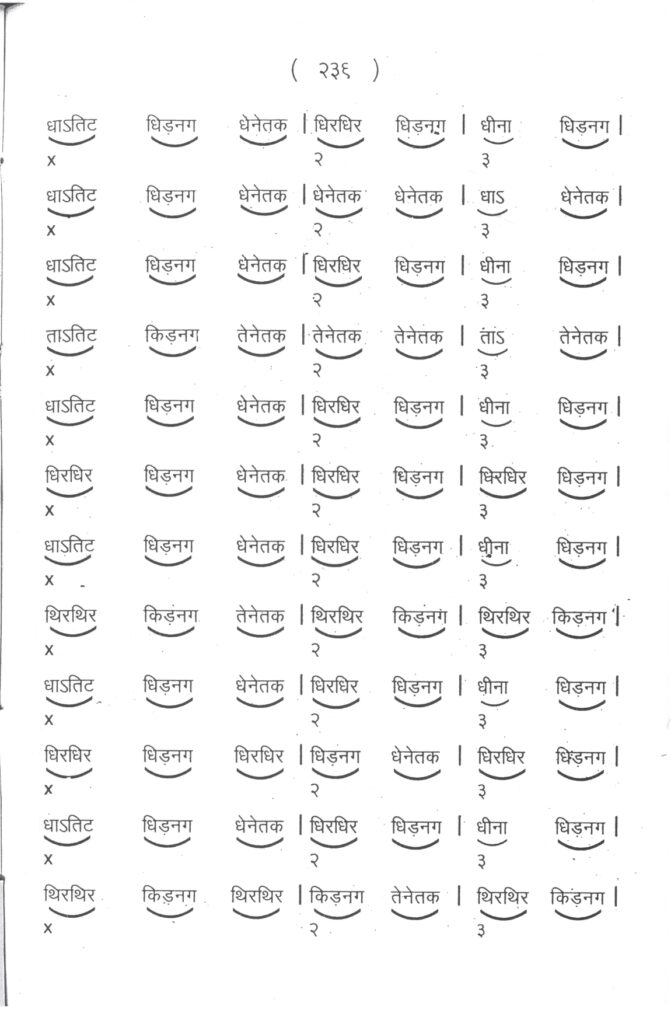
A Kayda is a compositional form built on the basic Theka of a Taal. It involves a core set of Bols (the Mukh or Sthai) that are systematically varied and expanded (Palta) before returning to the original phrase (Mukh or Tihai).
The Kayda we are focusing on—Dha Tete Ghere Nag—is a spectacular composition. It uses the powerful, full-hand Ghere strokes, typical of the more aggressive Kaydas, lending it a percussive intensity that can lift any performance.
🥁 The Core Kayda (Mukh): Dha Tete Ghere Nag
The foundational Bols for this powerful Kayda are:
$$\text{Dha Te Te Ghe Re Na G}$$
Let’s break down the Bols and their feel within the 7-beat structure:
| Beat (Matra) | Bol | Vibhag | Action | Commentary |
| 1 | Dha | 0 (Khali) | Bass/Open | The most powerful stroke, starting the cycle. |
| 2 | Te | Finger Stroke | Light, sharp sound. | |
| 3 | Te | Finger Stroke | Light, sharp sound. | |
| 4 | Ghe | 1 (Tali) | Bass/Full Hand | Heavy, resonating bass sound. |
| 5 | Re | Open Finger | Light, high-pitched stroke. | |
| 6 | Na | 2 (Tali) | Open Finger | Light, high-pitched stroke. |
| 7 | G | Bass/Close | A quick, deep closing bass stroke. |
The full cycle of the Mukh (core phrase) is:
$$\text{Dha Te Te Ghe Re Na G}$$
🔑 Unlocking the Palta (Variation)
The true test of a Kayda is its Palta—the systematic expansion and variation of the core phrase. The Dha Tete Ghere Kayda is often expanded using variations like Dhere Dhere (a rapid, resonant stroke combination) and Dhi Te Te.
A typical first Palta might look like this, maintaining the 7-beat cycle:
$$\text{Dha Te Te Ghe Re Na G | Dhe Re Dhe Re Na G | Dha Te Te Ghe Re Na G | Dhi Te Te Ghi Re Na G}$$
- Practice Tip: Practice each Palta at least four times before moving to the next. Focus on maintaining absolute clarity and evenness in the rapid strokes like Te Te and Dhere Dhere.
⚡ The Tihai: The Grand Finale
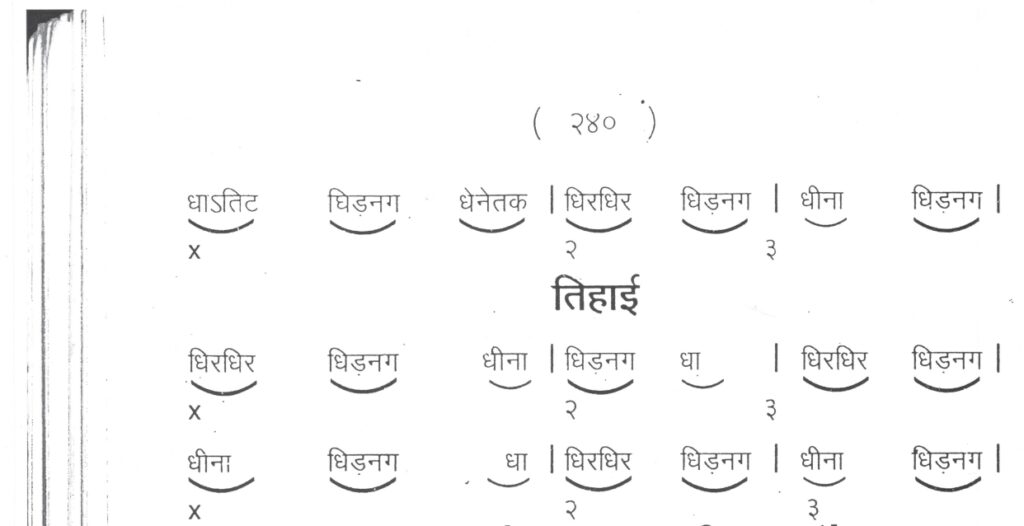
Every good Kayda culminates in a Tihai—a rhythmic phrase played three times, ending precisely on the first beat (Sam) of the subsequent cycle.
For a Kayda of this nature, a simple yet powerful Tihai is often constructed from the Mukh itself. A common Tihai phrase is:
$$\text{Dha Tete Ghe Re Na G | Dha Tete Ghe Re Na G | Dha Tete Ghe Re Na G | Dha}$$
- The Finish: When played correctly, the Kayda flows seamlessly into the Palta, which then flows perfectly into the Tihai, ending with a powerful Dha precisely on the start of the next 7-beat cycle. This moment of rhythmic resolution is highly satisfying for both the player and the audience.
Final Thoughts on Mastery
Mastering the Rupak Taal Kayda is more than just memorizing the Bols; it’s about internalizing the rhythm and feeling the unique pull of the 7-beat cycle. It requires patience, precision, and relentless practice.
By focusing on the clean execution of Dha Tete Ghere Nag, you will not only gain a powerful new composition but you will also significantly enhance your rhythmic vocabulary, allowing you to confidently tackle the asymmetric beauty of other Taals. Start slow, focus on the clarity of each Bol, and let the powerful 7-beat cycle become second nature!
https://www.youtube.com/@BhagawanSingh